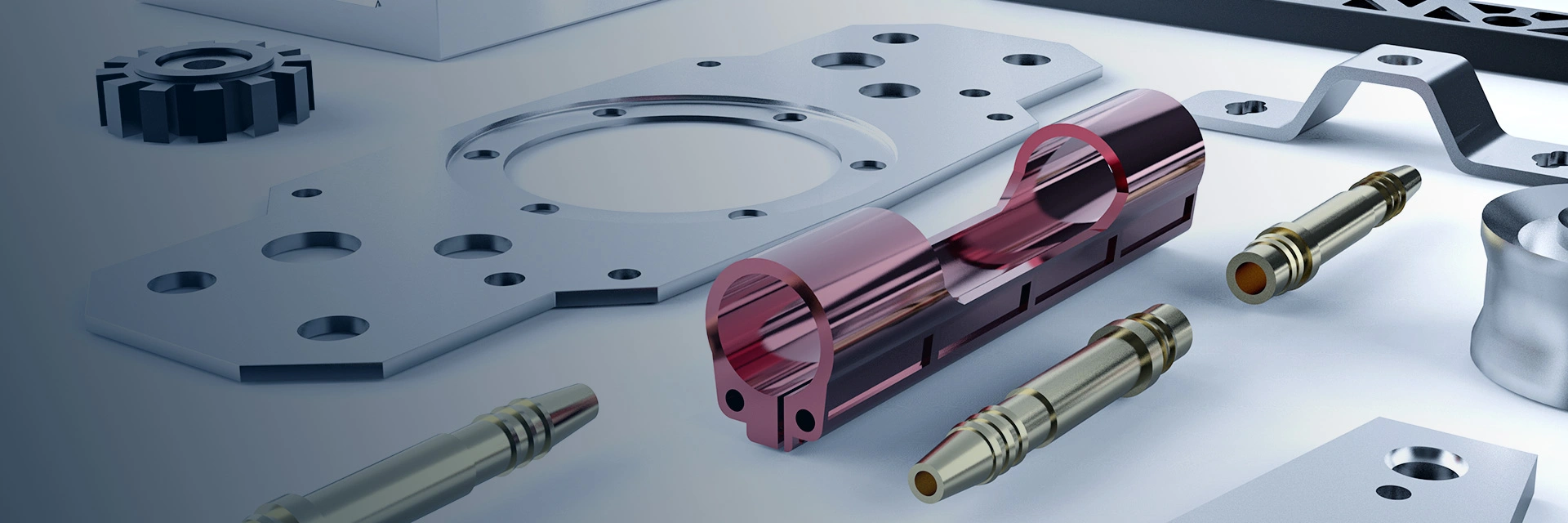
CTT offers a full range of custom metal manufacturing services, including bending, forming, stamping, rolling, shearing, as well as welding and assembly.
Our process advantages are bolstered by cutting-edge technology, including CNC machine tools, laser cutting, and CNC bending. These tools enable us to achieve precise and efficient machining while continuously optimizing our processes to enhance production efficiency and reduce costs.
In the field of printing equipment for sheet metal fabrication industry, CTT pays attention to every production link and strives to create high-quality and efficient products. Use laser cutting technology to accurately cut key components of inkjet printing equipment, so that the size is accurate and the edge is smooth.
In order to meet the needs of different customers and adapt to various application scenarios, CTT will first conduct detailed communication and requirement analysis. Based on this information, they precisely determine the type, specifications and performance requirements of the required stainless steel metal products.
CTT's is dedicated to delivering high-standard yellow anodizing services that meet the stringent performance and aesthetic demands across various industries. We ensure that the end product is not only durable but also visually captivating.
CTT upholds stringent quality control measures, conducting thorough inspections to guarantee that each product meets or surpasses the set benchmarks prior to dispatch.
Because the shape and size of the manifold base may vary depending on the engine type and application scenario, it can be compatible with a variety of specifications and shapes of the manifold base.
By leveraging advanced CNC technology,CTT is able to machine parts with extremely fine tolerances and smooth surfaces, ensuring substrate consistency for inkjet marking.
Inkjet printer parts, such as the print head, require precise micro-features like tiny ink channels, nozzles, and chambers. The casting process allows for the accurate creation of these microscopic components with exact dimensions and smooth surfaces, ensuring ink flows predictably and consistently during printing.
It cannot be overstated that the application of precision drawing technology and fine polishing techniques has significantly enhanced the product's appearance, rendering it more appealing and competitive in the market.
Sheet metal machining is a reduction manufacturing process that involves cutting, bending, folding, stamping and assembling thin metal sheets into parts. Sheet metal can be cut, bent, or stretched into almost any shape, usually by cutting and burning the metal. According to the programmed part pattern, the desired shape is formed by cutting tools.
CTT specializes in the precision manufacturing of key metal components for inkjet printers, such as print heads, rails, and brackets, ensuring their durability and reliability.
Often boasting excellent corrosion resistance, metal materials allow the printers to operate reliably in diverse environments, including those that are humid or chemically contaminated.
CTT's has mastered the art of crafting exquisite blue anodized aluminum components through a specialized technique that deposits a consistent and compact oxide layer on the metal's surface.
Inkjet printing accessories also encompass auxiliary parts like circuit boards, sensors, and motors. The manufacturing process of these components is crucial, as they must seamlessly integrate with core components, such as nozzles and ink cartridges, to ensure the smooth operation of the entire inkjet system.
To increase the professionalism and depth of the content, we can delve into specific technical details, materials science, and engineering methods utilized by CTT in the fabrication of custom metal enclosures for inkjet printers.
Cutting links use cutting-edge laser technology to ensure the precision and efficiency of the cutting, so that each cutting result is accurate and quickly completed.
First of all, according to the product design requirements, the corresponding material is selected, and the mold is used to cut the material. The basic shape after blanking is processed through the rolling process to ensure that the surface is smooth and in line with the size and shape of the product requirements.
The precise performance of the laser marking machine is largely dependent on its supporting positioning auxiliary equipment—the laser marking frame. Constructed from metal or strong plastic, these frames are designed with a high degree of adjustability to accommodate a variety of workpiece sizes and shapes.
Privacy statement: Your privacy is very important to Us. Our company promises not to
disclose your personal information to any external company with out your explicit
permission.