In general, an inkjet printer is a device that uses inkjet technology to mark a product. Its role is to provide clear and long-lasting identification for products, so it is easy to trace and manage.Therefore, it is widely used in food, beverage, medicine, cosmetics, electronic products and other industries.
At present, the common inkjet printer brands we can seen in the market are:Videojet, Keyence, KGK, Linx, etc. In 1969, Videojet was the first company in the world to which had successfully developed the first industrial inkjet printer and brought it to market that same year. Videojet's printers have earned the appreciation and trust of users in many different industries for their distinct and stable printing results.
Next, we'll introduce the benefits of Videojet's inkjet printers and the technics behind them.

Videojet: The industry pioneer in inkjet printers
As a well-known brand in the inkjet printer industry, Videojet Technology Co., Ltd. has a long history and excellent technology. Over the years, Videojet printers have earned a reputation for their independent R&D capabilities, diverse devices, and distinct and stable print results, which has led to the use of Videojet printers around the world.
Videojet's comprehensive line of inkjet printers includes a wide range of continuous inkjet,
Large Character Printers, laser coders, thermal transfer surface printers, postal printing systems and more. Among them, the top of sales is undoubtedly the continuos inkjet printer:
Wide range of application
The wide range of application has always been the specialty of continuous inkjet printers. Basically, all kinds of food, beverages, daily cosmetics, etc. that we see in life, the identification and coding on these products are handled by small character inkjet printers.
High-speed production
Take the Vediojet 1880HR for example, Its remarkable code quality down to 1.2mm in height and at speeds up to 300 meters per minute, enabling exceptional print quality even with three lines of print and complex 2D codes. In addition, its unique self-cleaning function of the ink accumulation sensor machine greatly reduces the labor maintenance cost in the later stage.
Simple and intelligent
The Vediojet 1880HR also utilizes an intelligent start-stop sequence to extend the nozzle cleaning interval to reduce solvent consumption, and Videojet products are estimated to require only one maintenance per year, in just five minutes per session.
The skilled workmen behind the brilliant brand
In addition to the core technology of the inkjet printer, the processing of its
Chassis casing and internal precision nozzle parts is also very important. Especially when faced with huge printing needs, only high-quality parts that are strong, precise and stable can withstand the test.
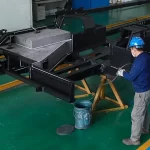
During the processing these parts, sheet metal fabricating manufacturers have encountered many problems. Since the sheet metal fabricating of the chassis shell involves blanking, cutting, welding, die-casting and other technics, dimensional errors reducing, stable surface finishing, tolerance and accuracy controlling are the most basic and common problems.
For nozzle parts, its need more precise manufacturing technology because of which are mostly made by thin plate. The deformation treatment and traceless welding after the thin plate processing are both the most technical work for personnel, and every technics parameter and quality inspection results should be strictly controled, all of which are inseparable from years of technical precipitation.
As a parts processing company of Videojet and other enterprises, CTT (Chuntian Machine) has truly achieved the ideal tolerance and stable consistency of products in the sheet metal fabricating with its strong professional team and years of technical achievements. Continuously providing high-quality, efficient, low-cost products and services is one of the important reasons why CTT can become a long-term partner of Videojet inkjet printers.
"Seeking perfection,tracing excellence" has always been CTT's unswerving business philosophy. To date, CTT has successfully manufactured tens of millions of products, involving medical machinery, production equipment,
Auto parts, food processing, new energy and other industries. In addition, we are actively opening subsidiaries and factories around the world, including in countries such as Thailand, Malaysia, and the United Kingdom. With our excellent logistics advantages, we are able to provide high-quality, efficient, cost-effective services to merchants around the world.
Through the above introduction to the inkjet printer, we can see its importance in modern industry. As a professional OEM supplier, CTT will continue to provide high-quality parts for the inkjet printer industry and help the development of the industry.