







Send Message
Privacy statement: Your privacy is very important to Us. Our company promises not to disclose your personal information to any external company with out your explicit permission.


In life science laboratories, core components such as precision chambers and microporous valve seats are essential for sample processing, and their machining accuracy directly affects the accuracy of experimental data. In medical imaging equipment, if the contour tolerance of positioning brackets exceeds the specified range, imaging deviations can impact diagnostic results. The precision machining of these components has always been a key focus in the industry, as their quality directly affects the stability and reliability of downstream equipment.
However, traditional planing and slotting processes rely on manual adjustments of tool paths and feed speeds. When processing complex internal contours, dimensional errors often exceed 0.05mm, resulting in increased leakage rates after sealing component assemblies. In batch production, consistency between different parts is poor, with rework rates exceeding 30%, which seriously hampers production efficiency.
How can manufacturers improve batch production consistency and efficiency while ensuring machining accuracy? This has become a common challenge in the field of precision machining. The advent of precision manufacturing planing and slotting processes provides a feasible solution to this dilemma.
Traditional planing and slotting processes are primarily manual or semi-automatic, with several bottlenecks that are hard to overcome in precision machining scenarios. Taking micropore processing in the life sciences industry as an example, traditional equipment requires manual knob adjustments for tool feed, which cannot precisely control small displacements, leading to hole depth errors exceeding 0.03mm.

Some parts cannot fit into the pipelines due to excessive hole diameter deviations. When processing polygonal internal holes, manual tool setting errors can cause misalignment of edges, affecting the parallelism and assembly accuracy of components. Additionally, traditional processes are less efficient, with each machine capable of processing only 10 complex parts per day, which cannot meet the growing batch demand of downstream industries. The stability of manual operations is also influenced by operator skill levels and fatigue, causing dimensional fluctuations of up to 0.08mm within the same batch, increasing quality inspection costs and time.
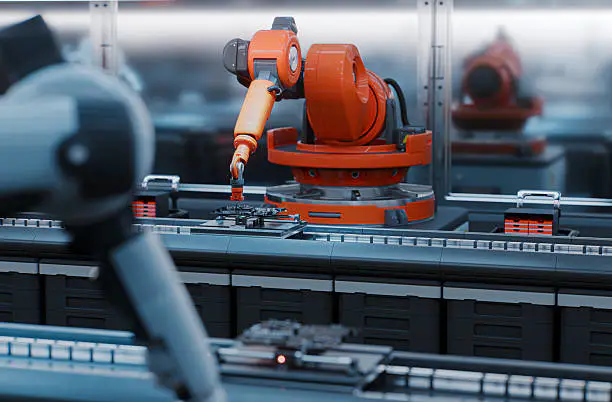
The core difference between precision manufacturing planing and traditional processes lies in the digital control of tool paths and machining parameters, achieving precision and automation during the machining process. In terms of precision, precision manufacturing planing uses a servo-driven system to control feed rates, with positioning accuracy within 0.01mm—far superior to the 0.05mm error range of traditional processes.
Regarding batch production consistency, the program reusability of precision manufacturing systems ensures that machining parameters are identical for every part, reducing rework rates to below 5%. In terms of efficiency, precision manufacturing equipment supports 24-hour continuous processing, increasing daily production to 25–30 parts per machine—2–3 times higher than traditional processes.
Moreover, precision manufacturing planing can handle more complex contour shapes, such as keyed slots with slants and non-circular micropores, tasks that traditional processes struggle to achieve with high precision.
The core of precision manufacturing planing is the precision interpolation technology, which essentially involves a data densification process. Before machining, operators create a precision manufacturing program based on the part’s CAD drawing. After inputting the program into the system, the precision manufacturing system calculates the coordinates of intermediate points between the start and end points of the contour using interpolation algorithms.

The tool’s movement path is then generated by fitting straight lines or arcs, enabling precise machining of complex contours. During this process, the efficiency and precision of the interpolation algorithm directly affect machining quality: linear interpolation is used for simple contours, while arc interpolation is used for curved processing. The combination of both can meet the machining needs of most precision components. The core components of precision manufacturing planing equipment include the servo drive system, precision guide rails, precision manufacturing control system, and tool system. The servo drive system converts program instructions into actual tool movement, and its response speed determines machining smoothness.
The precision guide rails use a rolling friction design with a gap controlled to within 0.002mm to ensure repeatable positioning accuracy. The precision manufacturing control system is the "brain" of the equipment, integrating interpolation algorithms, parameter adjustments, and status monitoring functions. It supports real-time modification of machining parameters to adapt to different materials.
The application advantages of precision manufacturing planing are most evident in the precision machining field. For example, in the life sciences industry, the core chamber of a PCR thermal cycling module requires a surface roughness of Ra ≤ 0.8μm to reduce sample residue and improve heat transfer efficiency.
Precision manufacturing planing can stably achieve this, with the chamber’s dimensional tolerance controlled within ±0.01mm to meet sealing requirements. In batch production scenarios, precision manufacturing planing equipment is highly automated, enabling 24-hour continuous processing that reduces the time cost and error risk of manual operations. Core components like precision guide rails use imported alloy materials and are hardened to improve durability by 50%, with an average failure-free operating time of over 8,000 hours.
The R&D team continuously optimizes interpolation algorithms and equipment structures, developing specialized processing parameter libraries for materials like PEEK and stainless steel 316L, which are commonly used in life science and medical device sectors, ensuring stable machining quality. A leading domestic medical equipment manufacturer increased the machining efficiency of its core components by 2x after introducing precision manufacturing planing equipment. The defect rate dropped from 12% to 3%, and product delivery cycles were reduced by 40%, significantly enhancing market competitiveness.
As downstream industries continue to demand higher precision machining, the market for precision manufacturing planing is rapidly expanding. According to industry research reports, the global precision machining equipment market reached $28 billion in 2023, and is expected to exceed $32 billion by 2025, with a compound annual growth rate (CAGR) of over 10%.
The market share of precision manufacturing planing equipment is projected to increase from the current 15% to 20%, primarily driven by growth in demand from life science and medical device industries. In the life sciences sector, the widespread use of gene sequencing equipment and cell culture systems requires higher machining precision for components.
In the medical equipment industry, the development of minimally invasive surgical instruments and implantable devices increases the demand for complex contour parts, providing vast application space for precision manufacturing planing. For precision machining companies, upgrading to precision manufacturing planing equipment not only improves product quality but also reduces production costs and enhances market competitiveness, making it an inevitable choice for adapting to industry development trends.
Precision manufacturing planing technology solves the accuracy, efficiency, and consistency challenges of traditional processes through digital technology. It has become one of the core technologies in modern precision machining. Its application in the manufacturing of life science components and medical device parts provides downstream industries with high-quality and high-stability product support.
As industry technologies continue to advance, precision manufacturing planing will evolve toward even higher precision and efficiency, further meeting market demands. For companies engaged in precision machining, adopting precision manufacturing planing equipment is an effective way to improve production levels and compete in the market.
Explore aerospace sheet metal processing, from precision cutting and forming to welding and finishing, for reliable custom aerospace components.
Discover how advanced CNC technology is transforming custom machined parts with higher precision, faster production, flexible volumes, and smarter manufacturing.
Learn how CNC machining tolerances impact automotive component accuracy and reliability, including standards, key factors, and precision manufacturing solutions.
Discover how precision machining supports HPP equipment manufacturing with high-quality custom metal parts, CNC machining, and sheet metal fabrication solutions.
Email to this supplier
Author:
Ms. CTT TECHNOLOGY (UK) LIMITED
E-mail:
Phone/WhatsApp:

Privacy statement: Your privacy is very important to Us. Our company promises not to disclose your personal information to any external company with out your explicit permission.