








Send Message
Privacy statement: Your privacy is very important to Us. Our company promises not to disclose your personal information to any external company with out your explicit permission.


In today's manufacturing industry, which is transforming towards intelligent and customized production, "precision" and "flexibility" are no longer opposing concepts. The emergence of precision flexible intelligent manufacturing platforms has broken down the barriers between traditional manufacturing's "standardized mass production" and "personalized customization," becoming a core competitive advantage in high-end equipment, life sciences, and new energy fields. Many manufacturing companies are wondering: what exactly is this platform, what industry pain points does it solve, and how can it be implemented? Today, we'll delve into the core value and industry applications of precision flexible intelligent manufacturing platforms.
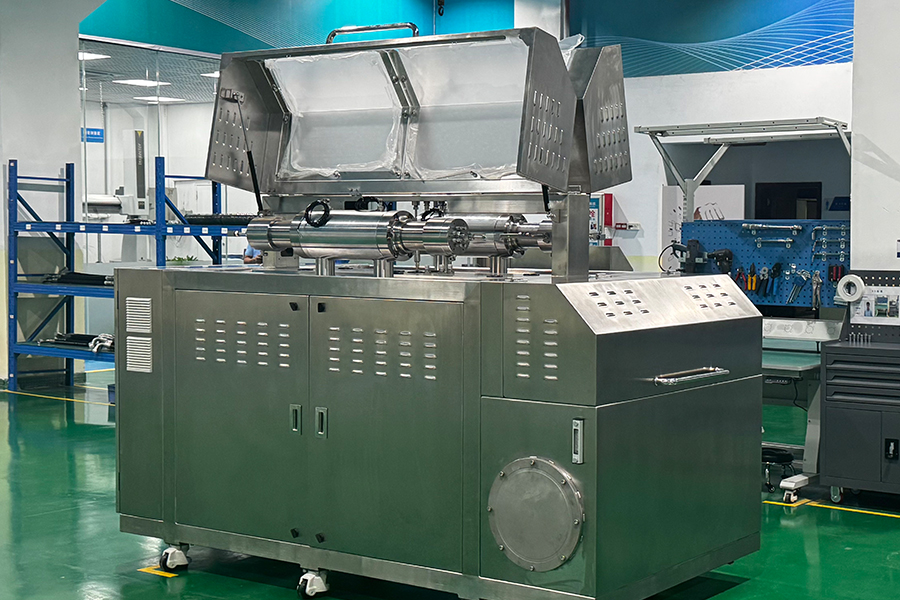
First, let's clarify the core definition: A precision flexible intelligent manufacturing platform is a highly integrated, technology-driven solution that combines precision machining, automated production, digital software, and customized services. It can achieve ultra-high precision production down to the micron level while flexibly responding to diverse, small-batch customer needs, spanning the entire process from product development concept to mass production. Compared to traditional intelligent manufacturing platforms, its core advantages lie in "flexible adaptation" and "full-chain empowerment," rather than the automation upgrade of a single link.

For manufacturing enterprises, the core value of the precision flexible intelligent manufacturing platform lies in addressing three major pain points.
Solving the problem of "imbalance between customization and efficiency"—In traditional manufacturing, personalized customization often means reduced production capacity and increased costs. This platform, through its intelligent scheduling system and modular hardware design, can quickly switch production plans, such as from automotive precision parts to aerospace modules, without large-scale adjustments to production lines, balancing customization and production efficiency.
Lowering the technical threshold for high-end manufacturing: The platform integrates core capabilities such as precision parts processing, high-value-added complete equipment R&D, and digital intelligent management. Small and medium-sized manufacturing enterprises can upgrade their products by relying on the platform without investing heavily in separate R&D.
Shortening the cycle from R&D to mass production: Through the integration of AI intelligent monitoring and rapid prototyping technology, product design can be optimized during the R&D stage, sample verification can be completed quickly, and product launch speed can be accelerated.

From an industry application perspective, the penetration scenarios of the precision flexible intelligent manufacturing platform are constantly expanding. In the life sciences field, it can provide customized R&D and integration services for core equipment such as bioreactors and chromatography systems, meeting the biopharmaceutical industry's demands for high precision and compliance. In the new energy field, it can be adapted to the precision manufacturing of solid-state battery electrode materials and ultra-high voltage equipment, contributing to industrial upgrading. In the automotive and aerospace fields, its flexible production capabilities can meet the small-batch customization and high-precision requirements of high-end components, promoting the localization of high-end manufacturing.
In the future, with the continuous iteration of technologies such as AI, big data, and ultra-high voltage, precision flexible intelligent manufacturing platforms will exhibit three major development trends: first, the localization of core technologies, accelerating the localization of core components such as high-pressure vessels and intelligent control systems; second, deeper cross-industry integration, extending from single-domain solutions to multi-domain collaborative empowerment; and third, service model upgrades, transforming from equipment supply to a full lifecycle service encompassing "design-production-operation and maintenance." For manufacturing enterprises, deploying a precision flexible intelligent manufacturing platform is not an optional action, but an essential path to seize the high-end manufacturing track.
Explore aerospace sheet metal processing, from precision cutting and forming to welding and finishing, for reliable custom aerospace components.
Discover how advanced CNC technology is transforming custom machined parts with higher precision, faster production, flexible volumes, and smarter manufacturing.
Learn how CNC machining tolerances impact automotive component accuracy and reliability, including standards, key factors, and precision manufacturing solutions.
Discover how precision machining supports HPP equipment manufacturing with high-quality custom metal parts, CNC machining, and sheet metal fabrication solutions.
Email to this supplier
Author:
Ms. CTT TECHNOLOGY (UK) LIMITED
E-mail:
Phone/WhatsApp:

Privacy statement: Your privacy is very important to Us. Our company promises not to disclose your personal information to any external company with out your explicit permission.