







Send Message
Privacy statement: Your privacy is very important to Us. Our company promises not to disclose your personal information to any external company with out your explicit permission.


As the manufacturing industry undergoes a profound transformation towards digitalization and intelligence, the integration of cutting-edge technologies such as artificial intelligence and big data with industrial scenarios continues to deepen. Precision flexible intelligent manufacturing platforms are experiencing unprecedented rapid development. They have long since shed their label as "exclusive features" of high-end manufacturing, gradually penetrating multiple core fields such as life sciences, the automotive industry, and smart kitchen appliances. They have become a key tool for enterprises to overcome production bottlenecks and enhance their core competitiveness, and a crucial support for promoting collaborative upgrading across the entire industry chain.
Definition of Precision Flexible Intelligent Manufacturing Platform: Accurately defining the core concept is fundamental to understanding precision flexible intelligent manufacturing platforms. Essentially, it is a highly integrated, technology-driven modern manufacturing end-to-end solution that deeply integrates advanced processing technologies, automated production systems, and intelligent management and control systems. Its core objective is to provide flexible, highly customized, and ultra-high-precision end-to-end manufacturing services for enterprises of different industries and sizes.

Compared to traditional standardized and large-scale production models, the precision flexible intelligent manufacturing platform achieves a balance between "mass production efficiency" and "customized needs"—it can meet the efficiency demands of large-scale mass production while rapidly responding to diverse, small-batch personalized orders, achieving seamless integration from product concept development and sample production to mass production. This is its core advantage, distinguishing it from traditional manufacturing platforms and adapting to the needs of the new era's industries. In the current context of increasingly diversified market demands and accelerated technological iteration, this characteristic makes it a core solution for manufacturing transformation.
From a structural perspective, the precision flexible intelligent manufacturing platform is not a single device or software, but a complete system composed of three major components: hardware, digital software, and supporting services. These three components work synergistically to solidify the foundation of intelligent manufacturing.
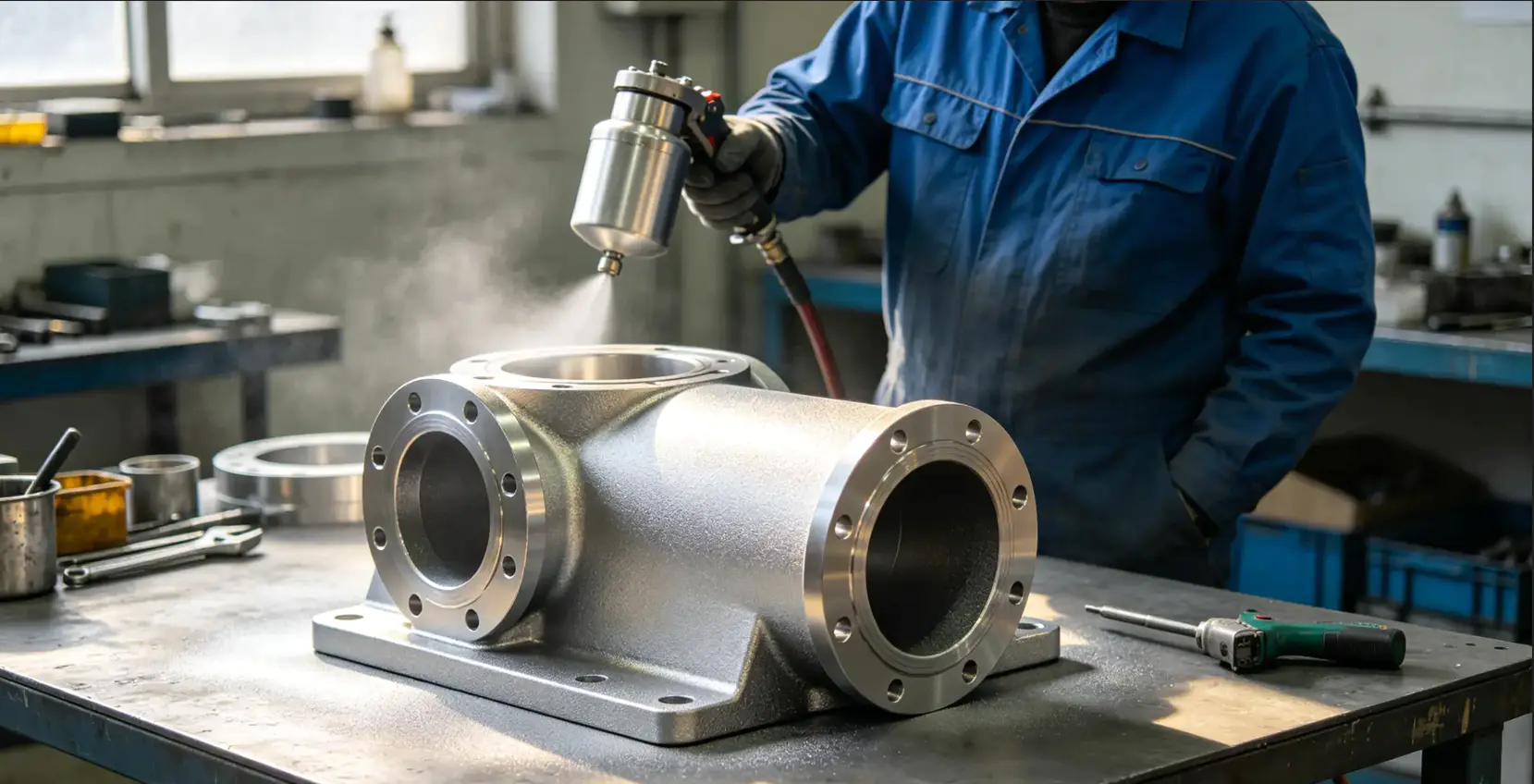
Hardware development and production are the fundamental carriers for the platform's operation and the core support for ensuring production precision. It encompasses the R&D of key production equipment, precision component machining, and high-value-added complete equipment assembly. Leveraging micron-level and even nanometer-level processing technologies, it enables rapid prototyping and high-precision machining of complex structural parts, adapting to the high-end production needs of multiple fields such as automotive parts, aerospace components, and biopharmaceutical equipment.

The core competitiveness of precision flexible intelligent manufacturing platforms is concentrated in three main characteristics:
Against the backdrop of accelerated manufacturing transformation, precision flexible intelligent manufacturing platforms are key to high-quality enterprise development and seizing industry leadership. Their value is reflected at the enterprise, industry, and entire supply chain levels. At the enterprise level, it breaks through the efficiency bottleneck of multi-variety, small-batch production, balances customization and production stability, reduces costs, improves efficiency, and increases profits. It also helps SMEs overcome technological barriers to achieve intelligent upgrades and assists large enterprises in optimizing their layout and enhancing their control over the industrial chain.

At the industry level, its high-precision processing and full-process control capabilities can meet the micron-level or even nanometer-level precision requirements of high-end manufacturing, helping to break through core technology barriers and promoting industrial upgrading in high-end fields such as aerospace. At the entire industrial chain level, the platform connects upstream and downstream information flow, logistics, and capital flow, breaking down information silos, promoting efficient collaborative operation of the industrial chain, and achieving cost reduction, efficiency improvement, and collaborative upgrading across the entire chain.
In conclusion, with the iteration of cutting-edge technologies such as artificial intelligence and big data, and the continuous advancement of industrial upgrading, precision flexible intelligent manufacturing platforms are entering a period of rapid development. It is no longer an "exclusive configuration" for high-end manufacturing, but is gradually penetrating into multiple fields such as life sciences, automotive industry, and smart kitchen appliances, becoming a key to enhancing the core competitiveness of enterprises. Understanding the core logic of precision flexible intelligent manufacturing platforms and proactively developing solutions tailored to one's own needs are essential to gaining a foothold in the wave of manufacturing transformation and seizing industry development opportunities.
Explore aerospace sheet metal processing, from precision cutting and forming to welding and finishing, for reliable custom aerospace components.
Discover how advanced CNC technology is transforming custom machined parts with higher precision, faster production, flexible volumes, and smarter manufacturing.
Learn how CNC machining tolerances impact automotive component accuracy and reliability, including standards, key factors, and precision manufacturing solutions.
Discover how precision machining supports HPP equipment manufacturing with high-quality custom metal parts, CNC machining, and sheet metal fabrication solutions.
Email to this supplier
Author:
Ms. CTT TECHNOLOGY (UK) LIMITED
E-mail:
Phone/WhatsApp:

Privacy statement: Your privacy is very important to Us. Our company promises not to disclose your personal information to any external company with out your explicit permission.