







Send Message
Privacy statement: Your privacy is very important to Us. Our company promises not to disclose your personal information to any external company with out your explicit permission.


Traditional cutting is a broad category that includes mechanical cutting (shearing, sawing, milling for contouring), thermal cutting (flame/oxy-fuel, plasma), and in some cases non-thermal methods such as waterjet. Each has strengths, but when the goal is precision manufacturing, the trade-offs become more visible.
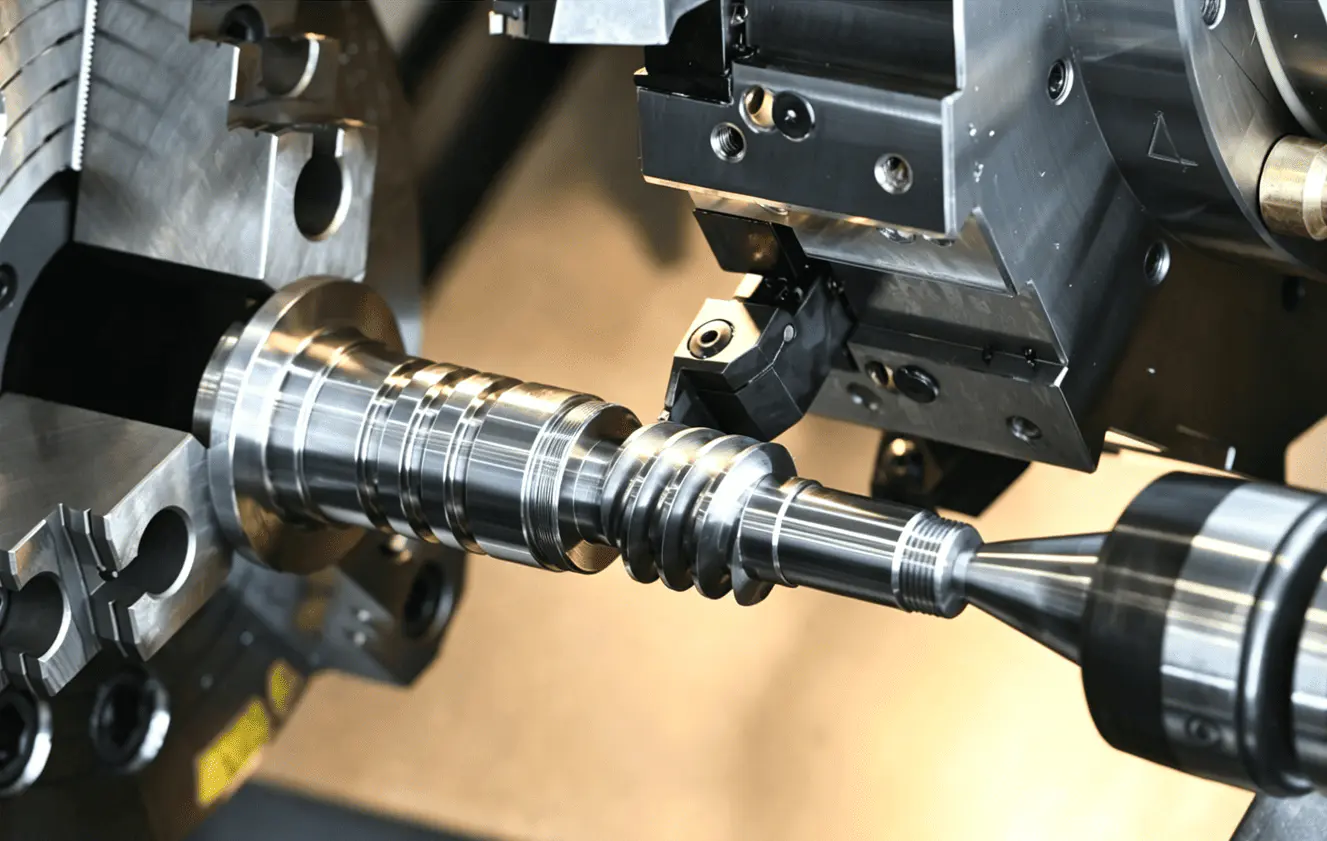
Mechanical cutting relies on physical tool contact. It can be cost-effective for simple straight cuts and high-volume repetitive operations, but it introduces tool wear, potential burr formation, and limitations on tight internal features or very small radii. Tool changes and maintenance add downtime, and forces during cutting can deform thin sheets or delicate structures.
Flame cutting (oxy-fuel) has historically been attractive because equipment investment is relatively low and it performs well on very thick carbon steel. The downside is that heat input is high. That often means a larger heat affected zone, more thermal distortion, wider kerf, more post-processing, and lower suitability for precision parts or thin materials.
Plasma cutting improves on flame cutting in speed and is versatile for conductive metals. Yet it still typically produces a larger heat affected zone than laser cutting, and it can struggle to deliver the same edge quality, squareness, and fine-feature capability required for tight-tolerance components. Consumables cost and process stability also become important cost factors in production.
Waterjet cutting is strong where heat must be avoided entirely and can handle many materials. However, it is often slower, can have higher operating costs depending on abrasive usage, and may not match laser cutting’s throughput for many thin-to-medium metal sheet applications. For many factories, waterjet is a complementary process rather than the default.

Laser cutting differs fundamentally because it concentrates energy into a highly focused beam, removing material with a narrow kerf while minimizing mechanical load on the workpiece. When set up correctly, it provides a stable path to consistent accuracy and production scalability.
Superior precision and tighter tolerances are among the most cited reasons for choosing laser cutting in precision manufacturing. A focused laser beam produces a narrow kerf, enabling fine features, small holes, sharp internal corners (within the limits of beam diameter and process parameters), and intricate contours. Compared with many traditional methods, laser cutting can deliver better repeatability, which is critical when parts must assemble reliably without manual fitting.
Better edge quality and reduced secondary operations can significantly improve total manufacturing cost. Laser cutting often produces cleaner edges with less burr and less dross than many thermal or mechanical alternatives, which can reduce time spent on deburring, grinding, or rework. In precision workflows, fewer corrective steps also means fewer opportunities for dimensional drift.
Lower mechanical stress and less deformation are major benefits, particularly for thin sheet metal and complex geometries. Because laser cutting is non-contact, it avoids cutting forces that can bend or distort parts. While laser cutting is a thermal process and can introduce heat, the heat affected zone is often narrower than flame or plasma cutting. That helps preserve part flatness and dimensional stability, which is especially valuable for enclosures, brackets, precision frames, and parts that must remain true after cutting.

Higher cutting speed and shorter lead time often make laser cutting the practical choice for modern production schedules. Once the program is prepared, laser cutting can switch between different part designs quickly, supporting high-mix, low-volume manufacturing as well as scalable batch production. This flexibility is increasingly important as product lifecycles shrink and customization grows.
Material efficiency and cost control improve through nesting and optimized kerf management. Laser cutting integrates well with automated nesting software, allowing tight part spacing, consistent kerf compensation, and efficient sheet utilization. Reduced scrap is not just a sustainability benefit; it directly lowers cost per part, especially for expensive alloys.
Broad material applicability is another reason laser cutting is frequently the first choice. Depending on laser type and configuration, it can process carbon steel, stainless steel, aluminum, copper alloys (with appropriate equipment), and many non-metals such as plastics, wood, and composites. This versatility allows a single cutting platform to support diverse product lines, simplifying equipment planning.
Precision manufacturing is not only about hitting a dimension on a drawing. It is about maintaining process capability, minimizing variability, and ensuring that quality scales as volume increases. Laser cutting supports these goals in several ways.
Laser cutting is particularly strong for complex 2D profiles, intricate patterns, and parts requiring a high level of repeatability. Industries such as electronics enclosures, medical device components, automotive brackets and reinforcements, aerospace interior structures, and general sheet metal fabrication benefit from its precision and speed.

For thin to medium thickness sheet metal, laser cutting often delivers the best balance of speed and quality. It can produce crisp features without excessive warping, which is critical when parts need to remain flat for forming operations or for direct assembly.
For thicker plate, the decision becomes more nuanced. Flame cutting can remain economical for very thick carbon steel when precision demands are low and post-processing is acceptable. Plasma cutting can be competitive for certain thickness ranges and production requirements. However, high-power laser systems have expanded the practical thickness range for laser cutting and improved edge quality and speed. When the application requires tighter tolerances, better squareness, or reduced downstream machining, laser cutting can still be the preferred choice even as thickness increases.
In many factories, the optimal strategy is not “laser only” but “laser first.” Laser cutting becomes the default for precision parts, high-mix work, and designs with tight tolerances, while plasma or flame may be reserved for heavy plate rough cutting where speed and cost dominate and fine precision is less critical.
CNC is one of the biggest multipliers of laser cutting’s value in precision manufacturing. A CNC laser cutting system translates digital designs into controlled motion and process actions with high repeatability. This reduces dependence on operator skill for cut quality and dimensional outcomes.
CNC control enables consistent kerf compensation, precise contouring, stable acceleration and deceleration around corners, and repeatable piercing. It also supports advanced features such as automatic focus control, real-time monitoring, and parameter libraries matched to material type and thickness.

Automation extends beyond the cutting head. Many laser cutting lines include automated loading and unloading, material storage towers, part sorting, and integration with MES or ERP systems. This reduces idle time, improves throughput, and stabilizes scheduling. In practical terms, CNC-driven laser cutting helps manufacturers meet tight delivery targets without sacrificing quality.
CNC-based nesting is another critical advantage. It improves material utilization while maintaining consistent part spacing and cut order strategies that reduce heat accumulation and distortion. This is where laser cutting becomes not just a cutting process, but a system-level cost optimization tool.
Choosing laser cutting does not eliminate engineering judgment. Laser cutting equipment typically requires higher initial investment than many traditional cutting methods. Operating costs can include assist gases, optics maintenance, and skilled setup for challenging materials such as highly reflective metals. For certain extremely thick sections or rough structural work, flame cutting may remain cost-effective.
However, in precision manufacturing, the decision is rarely made on equipment price alone. Total cost of ownership and total cost per good part matter more. When laser cutting reduces rework, post-processing, scrap, and lead time, it often wins economically even if the machine cost is higher.
Laser cutting continues to advance in power density, process stability, and automation intelligence. Higher power systems expand thickness capability and speed. Better sensors and closed-loop control improve consistency and reduce downtime. Software improvements in nesting, scheduling, and predictive maintenance strengthen the link between cutting and factory-wide productivity.
As manufacturers adopt smarter factories and more flexible production models, laser cutting’s digital nature becomes even more valuable. The ability to switch designs quickly, maintain consistent quality, and integrate with automated material handling positions laser cutting as a core technology for the next stage of precision manufacturing.
Laser cutting is often the first choice in precision manufacturing because it combines high accuracy, excellent edge quality, fast throughput, low deformation risk, and strong compatibility with CNC automation. Compared with traditional cutting methods such as flame and plasma cutting or mechanical cutting, it delivers a more reliable path to tight tolerances, complex geometries, and efficient production. For manufacturers focused on quality, agility, and competitive lead times, laser cutting is not just a cutting method; it is a strategic capability that supports modern product design and scalable operations.
Explore aerospace sheet metal processing, from precision cutting and forming to welding and finishing, for reliable custom aerospace components.
Discover how advanced CNC technology is transforming custom machined parts with higher precision, faster production, flexible volumes, and smarter manufacturing.
Learn how CNC machining tolerances impact automotive component accuracy and reliability, including standards, key factors, and precision manufacturing solutions.
Discover how precision machining supports HPP equipment manufacturing with high-quality custom metal parts, CNC machining, and sheet metal fabrication solutions.
Email to this supplier
Author:
Ms. CTT TECHNOLOGY (UK) LIMITED
E-mail:
Phone/WhatsApp:

Privacy statement: Your privacy is very important to Us. Our company promises not to disclose your personal information to any external company with out your explicit permission.