








Send Message
Privacy statement: Your privacy is very important to Us. Our company promises not to disclose your personal information to any external company with out your explicit permission.


In laboratories, we often see various life science devices: gene sequencers, biosafety cabinets, cell incubators, automated testing equipment…
While they may appear to be simply “metal shells + internal systems,” the stable operation of each device relies heavily on high-standard precision manufacturing processes, especially precision manufacturing itself.
Life science devices often handle cells, proteins, DNA, and trace samples; any tiny error can affect experimental results. Therefore, these devices have extremely high requirements for manufacturing processes:
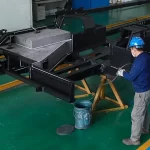
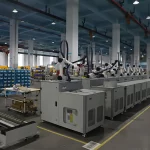
As a precision manufacturing plant, we primarily act as a "manufacturer of the equipment's basic structure." While we don't directly participate in experiments, every precision component we manufacture is fundamental to the reliable operation of the equipment.

Common applications include:
To meet the high demands of the life science industry, precision manufacturing often requires the collaborative completion of multiple intricate processes:
Through multiple inspections, we ensure that every product meets design and industry standards. IV. Why Do Life Science Equipment Manufacturers Prefer Specialized Precision Manufacturing Plants?
Life science equipment is typically produced in small batches, with a wide variety of products and high customization requirements. The requirements for suppliers go beyond simply "being able to make it," they must also "understand the industry."
Specialized precision manufacturing plants possess:
This is why more and more life science equipment manufacturers are choosing to cooperate long-term with factories possessing precision manufacturing capabilities.
The development of life sciences cannot be separated from cutting-edge technology, nor from a reliable manufacturing foundation.
Unseen, precision structures silently support complex experimental systems, ensuring stable equipment operation. As a precision manufacturing plant, we hope to provide a solid "skeleton" for life science equipment through stable, precise, and reliable manufacturing processes, allowing researchers to focus more on exploring life itself.
Explore aerospace sheet metal processing, from precision cutting and forming to welding and finishing, for reliable custom aerospace components.
Discover how advanced CNC technology is transforming custom machined parts with higher precision, faster production, flexible volumes, and smarter manufacturing.
Learn how CNC machining tolerances impact automotive component accuracy and reliability, including standards, key factors, and precision manufacturing solutions.
Discover how precision machining supports HPP equipment manufacturing with high-quality custom metal parts, CNC machining, and sheet metal fabrication solutions.
Email to this supplier
Author:
Ms. CTT TECHNOLOGY (UK) LIMITED
E-mail:
Phone/WhatsApp:

Privacy statement: Your privacy is very important to Us. Our company promises not to disclose your personal information to any external company with out your explicit permission.