








Send Message
Privacy statement: Your privacy is very important to Us. Our company promises not to disclose your personal information to any external company with out your explicit permission.


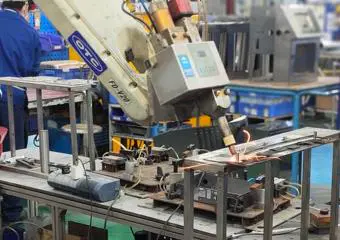
Medical sheet metal processing plays a foundational role in the development of modern medical devices and equipment. Through techniques such as cutting, bending, welding, and CNC machining, raw metal sheets are transformed into precise, functional components that meet strict healthcare industry standards. The combination of craftsmanship and advanced technology ensures safe, durable, and reliable products essential to patient care.
Medical sheet metal fabrication serves a wide range of healthcare applications, including:
Surgical instruments
Diagnostic and imaging equipment
Hospital furniture and support structures
Implantable medical devices
These precision-engineered components are integral to life-saving procedures and everyday medical operations, reinforcing the importance of quality, durability, and safety in fabrication.

Precision is critical in medical device manufacturing. Even tiny deviations can affect safety and performance. Advanced technologies such as laser cutting, CNC machining, and high-accuracy welding ensure that each component adheres to exact specifications, supporting both reliability and patient safety.
Stainless steel: High corrosion resistance, ideal for surgical tools and implants
Aluminum: Lightweight and durable, improves equipment portability
Titanium: Exceptional biocompatibility, widely used in implants
Stainless steel supports rigorous sterilization
Aluminum reduces operator fatigue
Titanium integrates well with human bone, improving patient outcomes
Manufacturers increasingly incorporate recycled metals and eco-conscious materials, reducing environmental impact while maintaining compliance with medical standards.

Key methods include:
Laser cutting for intricate shapes
CNC machining for repeatable precision
TIG welding for strong, clean joints
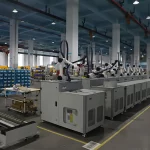
Automation and robotics to boost efficiency and reduce human error
These processes enhance product consistency and support the demanding needs of healthcare manufacturing.
Strict quality control ensures safety and reliability through:
Multi-stage inspections
Statistical quality control
ISO-compliant procedures
Destructive & non-destructive testing
Full component traceability
Quality assurance is essential to meeting global healthcare regulations.
Future trends include:
Automation and robotics for higher precision
Digital twin technology for process simulation
Cloud-based manufacturing and remote collaboration
Increased customization for patient-specific devices
Sustainable manufacturing and recyclable materials
These advancements strengthen production efficiency and raise healthcare standards worldwide.
Medical sheet metal processing is a crucial element of modern healthcare. Through continuous innovation, precision engineering, and sustainable practices, the industry delivers high-quality components that support medical professionals and improve patient outcomes. As technology evolves, the role of sheet metal fabrication will continue to expand, driving healthcare forward.
Explore aerospace sheet metal processing, from precision cutting and forming to welding and finishing, for reliable custom aerospace components.
Discover how advanced CNC technology is transforming custom machined parts with higher precision, faster production, flexible volumes, and smarter manufacturing.
Learn how CNC machining tolerances impact automotive component accuracy and reliability, including standards, key factors, and precision manufacturing solutions.
Discover how precision machining supports HPP equipment manufacturing with high-quality custom metal parts, CNC machining, and sheet metal fabrication solutions.
Email to this supplier
Author:
Ms. CTT TECHNOLOGY (UK) LIMITED
E-mail:
Phone/WhatsApp:

Privacy statement: Your privacy is very important to Us. Our company promises not to disclose your personal information to any external company with out your explicit permission.