







Send Message
Privacy statement: Your privacy is very important to Us. Our company promises not to disclose your personal information to any external company with out your explicit permission.


In modern precision manufacturing systems, the precision and efficiency of material processing directly determine the final quality of products. Laser cutting, as a representative of non-contact processing, is gradually becoming a core technological support in the field of precision manufacturing.
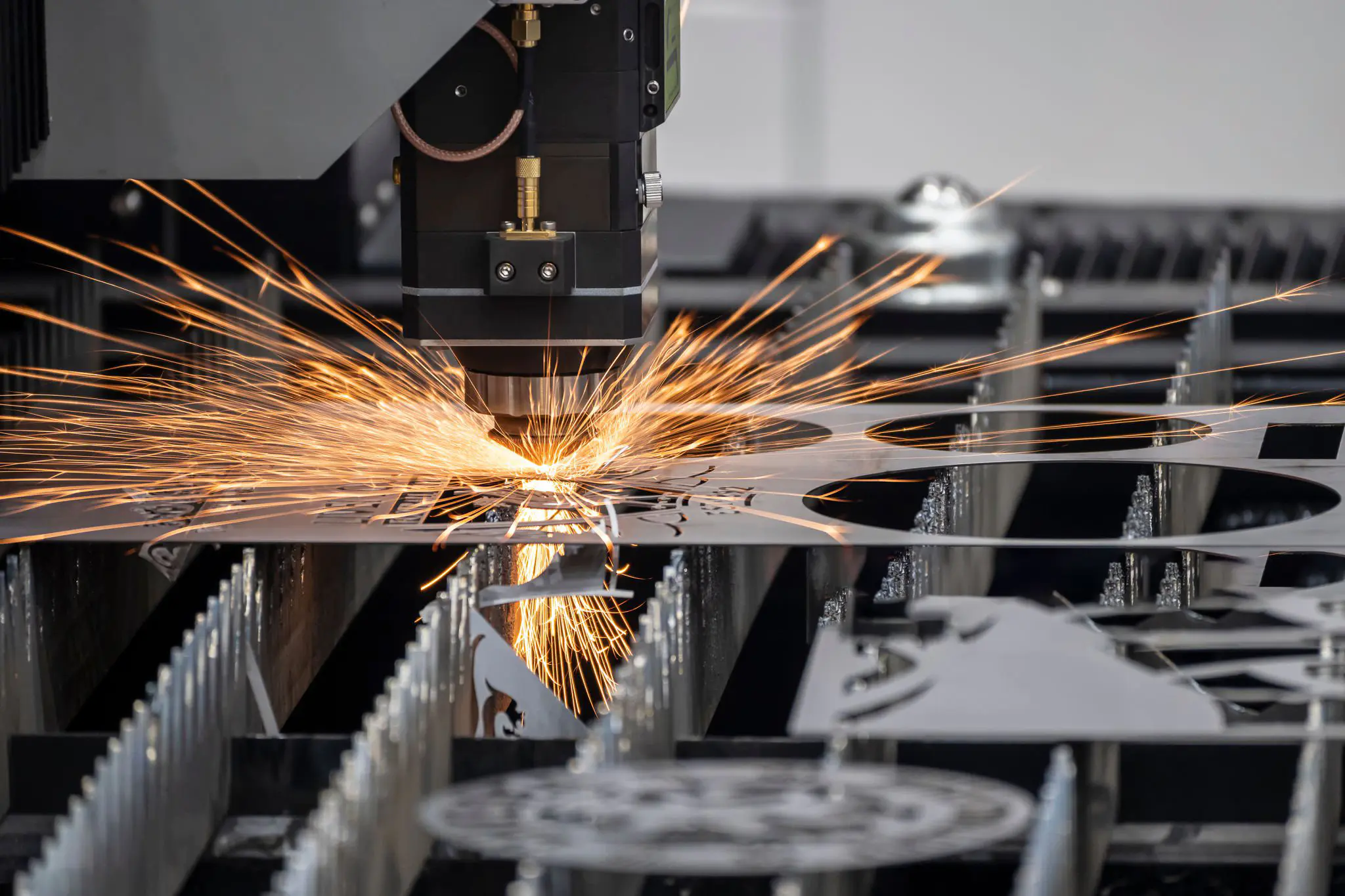
Unlike traditional machining methods, laser cutting utilizes a high-energy-density laser beam to instantly melt or vaporize materials, achieving precise material separation. This processing method eliminates direct contact with the workpiece, avoiding the problems of tool wear and workpiece deformation associated with traditional methods, making it more suitable for the mass production of high-precision parts.
In the development of precision manufacturing, the widespread adoption of laser cutting has propelled processing precision from the millimeter level to the micrometer level, providing reliable technical solutions for high-end fields such as aerospace, medical devices, and electronic equipment.
The core principle of laser cutting is to use a high-power-density laser beam generated by a laser generator, focused onto the material surface through an optical system, rapidly heating the material to its melting or boiling point. Simultaneously, an auxiliary gas is used to blow away the molten or vaporized material, thus forming a kerf.
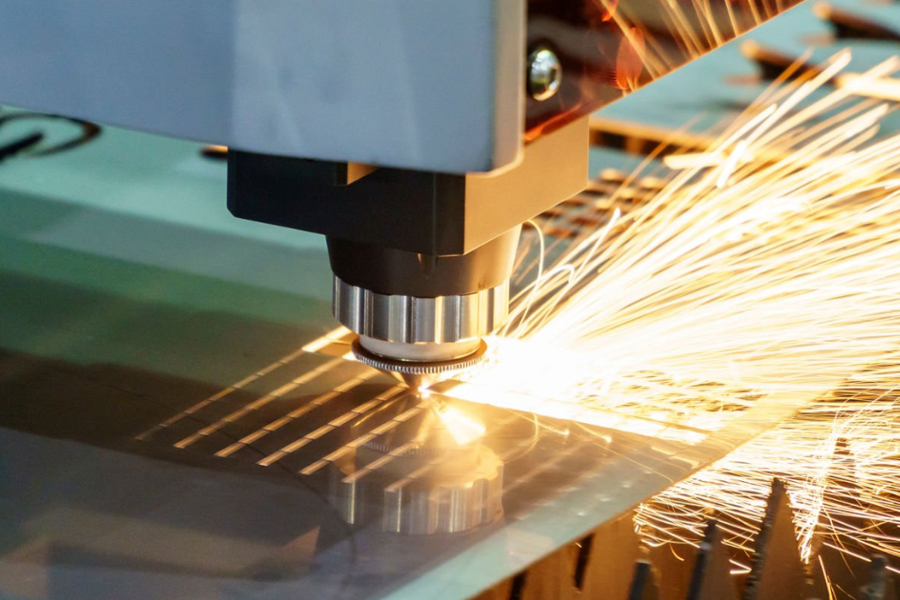
Depending on the material being processed, laser cutting is mainly divided into three modes: melting cutting, vaporization cutting, and oxidation cutting. Melting cutting is suitable for metals such as stainless steel and aluminum. A laser beam melts the material, and then an inert gas blows the molten metal away from the cut. Vaporization cutting is for easily vaporized materials such as wood and plastics, directly converting the material into a gaseous state and expelling it. Oxidation cutting is mainly used for carbon steel, utilizing the oxidation reaction between oxygen and the high-temperature metal to further improve cutting efficiency.
The entire process is precisely controlled by a CNC system. Parameters such as the laser head's movement path, power, and gas flow rate can be programmed and adjusted to ensure cutting accuracy at the ±0.02 mm level, meeting the stringent requirements of precision manufacturing.
Ultra-high precision and extremely small heat-affected zone: The focused spot diameter of laser cutting can be as small as tens of micrometers, and the kerf width is typically between 0.1-0.3 mm, far smaller than traditional plasma cutting or sawing methods. Simultaneously, due to the concentrated laser energy, the heat-affected zone in the processing area is extremely small, effectively avoiding material deformation and metallographic changes, making it particularly suitable for processing thin-walled, precision parts.
Aerospace field: Aerospace parts have extremely high requirements for precision and strength. Laser cutting technology can be used for the precision forming of difficult-to-machine materials such as titanium alloys and high-temperature alloys. For example, the machining of cooling channels for engine blades and irregularly shaped holes in fuselage frames both require laser cutting to achieve micron-level precision.
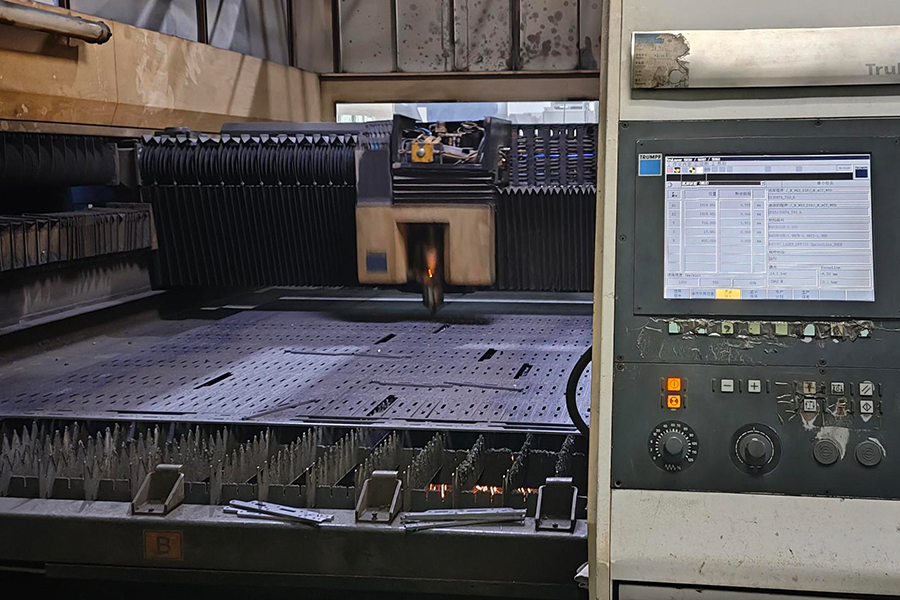
With the continuous iteration of precision manufacturing technology, laser cutting technology is developing towards higher precision, faster speed, and greater intelligence:
Furthermore, the popularization of green manufacturing concepts has also promoted the environmental upgrade of laser cutting technology. Low-energy-consumption and low-emission equipment will become the mainstream in the future, injecting new impetus into the sustainable development of the precision manufacturing industry.
In summary, as one of the core technologies in the field of precision manufacturing, laser cutting technology, with its advantages of high precision, high flexibility, and non-contact operation, is reshaping the production model of modern manufacturing. From aerospace to medical devices, from electronic equipment to new energy equipment, the application scenarios of laser cutting technology are constantly expanding, becoming a key force driving precision manufacturing to a higher level.
Learn how DFM improves CNC bending accuracy, reduces defects, and lowers production costs with practical sheet metal design tips.
Learn everything about GD&T in CNC machining, including symbols, benefits, and best practices. Improve CNC machining precision and optimize CNC machining tolerances.
Learn essential sheet metal design guidelines for bends, DFM principles, and aluminum part fabrication. Discover how CNC bending, precision sheet metal processing, and CNC sheet metal bending improve manufacturability, accuracy, and production efficiency.
Learn how Design for Manufacturing (DFM) reduces production costs, improves quality, and optimizes sheet metal fabrication, laser cutting tolerances, and CNC machining.
Email to this supplier
Author:
Ms. CTT TECHNOLOGY (UK) LIMITED
E-mail:
Phone/WhatsApp:

Privacy statement: Your privacy is very important to Us. Our company promises not to disclose your personal information to any external company with out your explicit permission.