









Send Message
Privacy statement: Your privacy is very important to Us. Our company promises not to disclose your personal information to any external company with out your explicit permission.


Life science instruments operate in highly demanding environments where precision, stability, and reliability are critical. Whether used in diagnostic laboratories, pharmaceutical production, or biotechnology research, these systems depend on accurately manufactured components to maintain consistent performance.
Among all structural elements, precision enclosures play a key role in ensuring mechanical stability, protecting sensitive internal modules, and supporting thermal and environmental control. As instruments become more compact and automated, the requirements for enclosure design and manufacturing have become increasingly strict.
This article focuses on how precision enclosures for life science instruments are manufactured, covering key processes, materials, and engineering considerations.
Life science instruments are specialized laboratory devices used to analyze biological, chemical, and medical samples. They support research, testing, and production processes in life science industries.
Common examples include PCR machines, microscopes, flow cytometers, centrifuges, and laboratory automation systems. These instruments require high precision, stable performance, and strict environmental control.
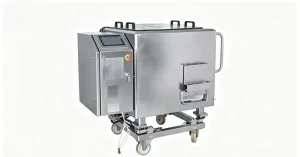
The manufacturing of precision enclosures is critical for life science instruments because they directly impact:
Poor enclosure quality can lead to performance instability, reduced accuracy, and shortened equipment lifespan. High-precision manufacturing ensures consistent performance and reliable operation in demanding laboratory environments.
Life science equipment often operates in highly controlled laboratory environments. As a result, enclosure manufacturing must meet several critical requirements:
CNC machining is widely used for producing high-precision structural components with tight tolerances.
Typical parts include:
It is suitable for prototypes, custom parts, and low-to-medium volume production.
Sheet Metal Fabrication
Sheet metal fabrication is commonly used for enclosure panels and structural housings.
Main processes include:
It offers a balance between strength, weight, and cost efficiency, making it ideal for laboratory equipment enclosures.
Aluminum – Lightweight, corrosion-resistant, and easy to machine.
Stainless Steel – High strength and excellent chemical resistance for cleanroom environments.
Carbon Steel – Cost-effective structural material with protective coating.
PEEK – High-performance polymer with excellent chemical and thermal resistance.
ABS / Polycarbonate – Used for lightweight covers, insulation, and transparent components.
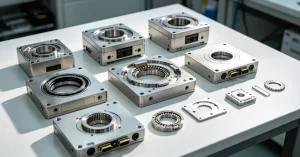
Surface finishing improves durability, cleanliness, and appearance of precision enclosures. The common finishes:
Anodizing – Improves corrosion resistance and hardness of aluminum parts.
Powder Coating – Provides durable and customizable protective coating.
Electropolishing – Creates smooth and clean stainless steel surfaces.
Sandblasting – Produces uniform matte texture.
Brushing – Offers a refined industrial metal appearance.
Painting – Adds protection and visual customization.
Thermal Management
Life science instruments often generate heat during operation. Proper airflow design, heat dissipation structures, and ventilation are required to ensure system stability.
Electromagnetic Shielding
Sensitive electronic systems may require EMI protection to avoid signal interference.
Modular Design
Modular structures improve maintenance, upgrades, and assembly efficiency.
Ease of Assembly
Design should consider fastener accessibility, cable routing, and internal component installation.
Strict quality control ensures precision, reliability, and consistency in production. Common inspection methods include:
These processes ensure that each enclosure meets strict technical and performance requirements.
Manufacturing precision enclosures for life science instruments requires a combination of advanced materials, precision machining, and strict engineering control. From CNC machining and sheet metal fabrication to surface finishing and quality inspection, every step plays a critical role in ensuring instrument performance and reliability. As life science technologies continue to evolve, the demand for high-precision, durable, and well-designed enclosures will continue to grow.
Learn how DFM improves CNC bending accuracy, reduces defects, and lowers production costs with practical sheet metal design tips.
Learn everything about GD&T in CNC machining, including symbols, benefits, and best practices. Improve CNC machining precision and optimize CNC machining tolerances.
Learn essential sheet metal design guidelines for bends, DFM principles, and aluminum part fabrication. Discover how CNC bending, precision sheet metal processing, and CNC sheet metal bending improve manufacturability, accuracy, and production efficiency.
Learn how Design for Manufacturing (DFM) reduces production costs, improves quality, and optimizes sheet metal fabrication, laser cutting tolerances, and CNC machining.
Email to this supplier
Author:
Ms. CTT TECHNOLOGY (UK) LIMITED
E-mail:
Phone/WhatsApp:

Privacy statement: Your privacy is very important to Us. Our company promises not to disclose your personal information to any external company with out your explicit permission.