






Send Message
Privacy statement: Your privacy is very important to Us. Our company promises not to disclose your personal information to any external company with out your explicit permission.


In metal machining, achieving high precision is crucial for functional, reliable, and durable components. Whether you are producing automotive parts, aerospace components, or industrial machinery, precise machining ensures proper fit, smooth operation, and consistent quality.
Metal machining is a manufacturing process that involves shaping and forming metal parts by removing excess material using cutting tools, drills, or milling machines. Common metal machining methods include CNC turning, CNC milling, drilling, grinding, and tapping. This process allows manufacturers to produce components with precise dimensions, smooth surfaces, and complex geometries suitable for a wide range of industries, including automotive, aerospace, electronics, and industrial machinery.
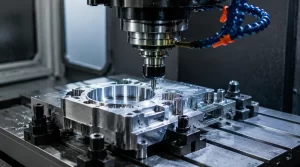
Precision in metal machining is critical because even minor deviations can compromise the functionality, durability, and safety of a part. High-precision components ensure proper fit and assembly, reduce wear and tear, improve operational efficiency, and maintain consistency across production batches. For industries with stringent standards, such as aerospace or medical devices, maintaining tight tolerances is not just a preference—it is essential for safety and compliance.
Here are some essential strategies to maintain precision in metal machining parts:
The choice of material significantly impacts machining precision. Materials with uniform hardness, minimal internal stress, and stable thermal properties are easier to machine accurately. For example, alloys designed for machining often yield better dimensional consistency than untreated metals.
High-quality cutting tools with sharp edges and appropriate coatings reduce vibration, heat buildup, and wear, which directly affects the precision of the part. Using the right tool for the material and operation—whether turning, milling, or drilling—ensures cleaner cuts and tighter tolerances.
Regular maintenance and calibration of CNC machines or manual equipment are vital. Misaligned spindles, worn bearings, or loose fixtures can result in inaccuracies. Routine inspections, alignment checks, and machine calibration prevent cumulative errors over multiple production runs.
Temperature fluctuations, humidity, and vibration in the workshop can affect metal expansion and machine stability. Using climate-controlled environments, vibration isolation, and stable fixtures helps maintain precision.
Use measurement tools such as micrometers, calipers, coordinate measuring machines (CMM), and laser scanners to monitor part dimensions. Inspections at different stages of production catch deviations early, reducing scrap and rework.
Speed, feed rate, depth of cut, and coolant usage all influence machining accuracy. Proper optimization reduces tool deflection, heat generation, and surface irregularities, resulting in higher-quality, precise parts.
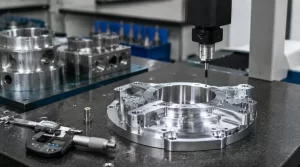
Ensuring precision in metal machining requires a holistic approach that addresses all stages of production. This includes selecting the right material, choosing high-quality cutting tools, maintaining and calibrating machines regularly, and optimizing machining parameters such as feed rate, cutting speed, and depth of cut. Controlling environmental factors like temperature, humidity, and vibration is also essential to prevent deviations and ensure consistency.
Implementing these best practices, along with rigorous quality control procedures, allows manufacturers to produce high-quality, reliable, and durable metal parts. Precision machining not only enhances product performance but also reduces waste, minimizes rework, and ensures components meet the most stringent specifications across industries such as aerospace, automotive, and medical devices.
Explore aerospace sheet metal processing, from precision cutting and forming to welding and finishing, for reliable custom aerospace components.
Discover how advanced CNC technology is transforming custom machined parts with higher precision, faster production, flexible volumes, and smarter manufacturing.
Learn how DFM improves CNC bending accuracy, reduces defects, and lowers production costs with practical sheet metal design tips.
Learn how CNC machining tolerances impact automotive component accuracy and reliability, including standards, key factors, and precision manufacturing solutions.
Email to this supplier
Author:
Ms. CTT TECHNOLOGY (UK) LIMITED
E-mail:
Phone/WhatsApp:

Privacy statement: Your privacy is very important to Us. Our company promises not to disclose your personal information to any external company with out your explicit permission.