










Send Message
Privacy statement: Your privacy is very important to Us. Our company promises not to disclose your personal information to any external company with out your explicit permission.


In the highly regulated and precision-driven healthcare sector, selecting the right medical CNC machining partner is a mission-critical decision. From surgical instruments to implantable components, every part must meet extremely tight tolerances, strict regulatory standards, and uncompromising quality requirements.
Modern medical device machining relies heavily on advanced CNC technology to ensure repeatability, biocompatibility, and production scalability. However, not all suppliers are capable of meeting the demands of the CNC machining medical industry.
This article outlines 8 essential factors to help you choose the right machining partner for medical applications.
Medical manufacturing is heavily regulated. A qualified partner should comply with:
Without strict compliance, even high-precision parts may fail regulatory approval.
A strong supplier should have experience with:
Material selection directly affects biocompatibility, durability, and regulatory approval.
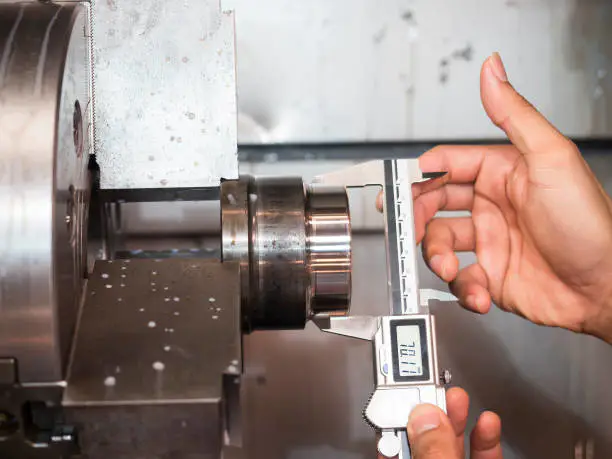
Medical CNC machining tolerances often fall within ±0.001 inch (0.025 mm) or tighter, with some micro‑machining features down to a few microns. Evaluate the partner’s machine park: 5‑axis machining centers, Swiss‑type lathes, EDM (electrical discharge machining), and laser cutting/welding equipment indicate advanced capability.
But machines alone are not enough. Ask about in‑process inspection—do they use CMM (coordinate measuring machines), optical comparators, and vision systems? Real‑time statistical process control (SPC) is a strong indicator of a mature quality culture.
For implantables and surgical tools, cleanliness is as critical as dimensional accuracy. Particles, burrs, or residual cutting fluids can cause adverse tissue reactions or device failure. Your partner should operate in a cleanroom environment (ISO Class 7 or better) for final cleaning, assembly, and packaging.
Post‑machining processes like ultrasonic cleaning, degreasing, and passivation must be validated. Ask for particle count data and cleanliness verification reports per ISO 19227 (for implants) or similar standards.
The best CNC machining in the medical industry partners act as extensions of your R&D team. They should provide early DFM feedback to simplify geometries, reduce stress risers, improve tool access, and suggest alternative materials or coatings that lower cost without sacrificing performance.
Look for partners with in‑house engineering staff who understand surgical ergonomics, sterility requirements, and fatigue life calculations. Their ability to collaborate during the prototype phase directly impacts your time‑to‑market.
Your needs may start with 5‑10 prototype units but ramp to thousands or millions annually. A partner should offer seamless transition—using the same CAM programs, fixtures, and inspection protocols from first‑article to full‑rate production.
However, scaling is not just about capacity. It requires supply chain robustness, secondary operations (anodizing, plating, sterilization packaging), and kanban/JIT delivery systems. Evaluate their production planning and how they handle demand surges.
In medical device manufacturing, delayed shipments can derail clinical trials or surgical schedules. Your partner must demonstrate a track record of on‑time delivery (OTD) >98%. Request quarterly OTD reports.
Transparency extends to raw material sourcing—do they have approved vendor lists (AVLs) and buffer stock agreements? Ask about their contingency plans for machine breakdowns, material shortages, or geopolitical disruptions.
Medical device designs are among your most valuable IP assets. Your partner must sign strict NDAs and have cybersecurity measures in place—encrypted file transfers, access‑controlled servers, and secure data destruction protocols for obsolete projects.
Also verify their compliance with GDPR or HIPAA if patient data or clinical trial identifiers are involved (even indirectly). A breach here is not just costly—it can destroy trust.

Choosing the right medical CNC machining partner is not just about cost—it is about precision, compliance, engineering capability, and long-term reliability.
A strong medical device machining supplier enables faster product development, safer devices, and more efficient scaling in the highly competitive CNC machining medical industry.
At CTT Technology, we support customers across the medical, aerospace, electronics, and industrial sectors with high-precision CNC manufacturing solutions tailored to demanding engineering requirements.
Learn how DFM improves CNC bending accuracy, reduces defects, and lowers production costs with practical sheet metal design tips.
Learn essential sheet metal design guidelines for bends, DFM principles, and aluminum part fabrication. Discover how CNC bending, precision sheet metal processing, and CNC sheet metal bending improve manufacturability, accuracy, and production efficiency.
Learn how Design for Manufacturing (DFM) reduces production costs, improves quality, and optimizes sheet metal fabrication, laser cutting tolerances, and CNC machining.
Learn everything about CNC machining tolerances, including standard tolerance ranges, ISO standards, GD&T, cost factors, and how precision CNC machining improves quality.
Email to this supplier
Author:
Ms. CTT TECHNOLOGY (UK) LIMITED
E-mail:
Phone/WhatsApp:

Privacy statement: Your privacy is very important to Us. Our company promises not to disclose your personal information to any external company with out your explicit permission.