










Send Message
Privacy statement: Your privacy is very important to Us. Our company promises not to disclose your personal information to any external company with out your explicit permission.


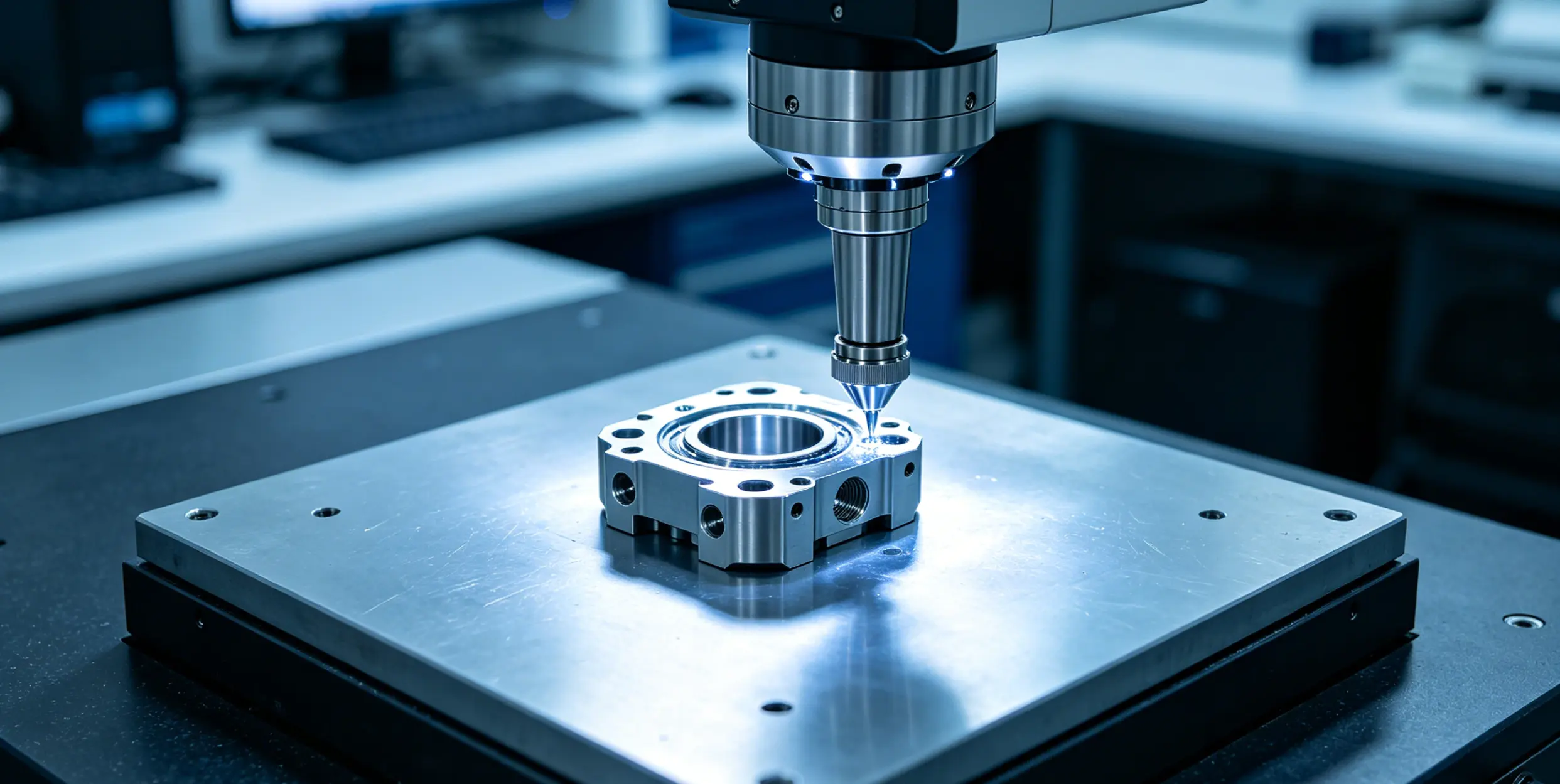
Precision is one of the most critical requirements in medical manufacturing. Whether producing surgical instruments, orthopedic implants, diagnostic equipment components, or laboratory devices, even the smallest dimensional variation can affect product performance, patient safety, and regulatory compliance.
This is why tolerance control plays a central role in medical CNC machining. However, many engineers and procurement teams face an important question: How tight is tight enough? While extremely tight tolerances may seem desirable, they often increase manufacturing costs, lead times, and inspection requirements without necessarily improving functionality. Understanding how to specify the right tolerance for a medical application is essential for balancing quality, performance, and production efficiency.
This article explores tolerance requirements in c machining, common industry standards, and practical guidelines for determining the optimal tolerance range for medical components.
A machining tolerance defines the acceptable variation from a specified dimension.
For example:
Acceptable dimensions:
In CNC machining, achieving tighter tolerances requires more advanced equipment, optimized tooling, temperature control, and extensive inspection processes.
For manufacturers serving the CNC machining medical industry, tolerance control is especially important because medical components often interact directly with patients or critical healthcare equipment.
Medical devices operate under strict performance and safety requirements.
Poor tolerance control can lead to:
Examples include:
Hip and knee implants require extremely accurate geometries to ensure proper fit and long-term functionality.
Misalignment of only a few microns may affect cutting precision or instrument articulation.
Precision-machined housings and assemblies must maintain exact positioning for sensors and optical components.
In all these applications, precision medical device machining directly impacts product performance.
The required tolerance depends on the component function, material, and application.
| Tolerance Range | Typical Application |
|---|---|
| ±0.10 mm | General housings and brackets |
| ±0.05 mm | Standard medical components |
| ±0.025 mm | Precision assemblies |
| ±0.01 mm | Surgical instruments |
| ±0.005 mm | Implant interfaces |
| ±0.002 mm or tighter | Specialized critical components |
Most medical CNC machining projects fall within ±0.01 mm to ±0.05 mm. Only a small percentage of parts require ultra-tight tolerances below ±0.005 mm.
Tolerance requirements should always be determined by the intended function of the component. Different medical parts have different performance demands, and the required machining accuracy should reflect their specific application. For example, a medical equipment enclosure may operate reliably with a tolerance of ±0.05 mm, while a critical implant connection feature may require a much tighter tolerance of ±0.005 mm. Rather than applying the tightest possible tolerance to every feature, manufacturers should align tolerance specifications with the functional requirements of the part.
Medical devices are typically assembled from multiple precision components, making proper fit and interaction between parts essential. Tolerance variations can accumulate throughout an assembly and influence factors such as alignment, movement, sealing effectiveness, and overall performance. As a result, features that directly interact with mating components usually require stricter tolerance control, while non-critical or cosmetic features can often be manufactured with wider tolerances without affecting device functionality.
Different materials respond differently during machining.
Common medical materials include:
Material properties such as thermal expansion and hardness influence achievable tolerances.
Many medical products must comply with:
Tolerance specifications often form part of documented quality control procedures.
One of the most common misconceptions in medical manufacturing is that tighter tolerances always mean better quality.
In reality, tighter tolerances significantly increase:
For example:
Reducing a tolerance from ±0.05 mm to ±0.01 mm may increase manufacturing costs by 30–100%, depending on geometry and material.
Reducing further to ±0.005 mm can increase costs dramatically due to specialized machining and metrology requirements.
Therefore, manufacturers should specify the tightest tolerance that is functionally necessary—not the tightest possible.
Leading medical device machining suppliers employ several strategies to maintain dimensional accuracy.
Modern 5-axis machining centers provide:
Temperature fluctuations can affect dimensional accuracy.
Climate-controlled machining environments help maintain process stability.
Probe systems allow real-time measurement and tool compensation during machining.
CMM inspection verifies critical dimensions and supports medical quality documentation.
SPC methods help identify process variation before defects occur.
Design engineers can improve both quality and cost efficiency by applying Design for Manufacturability (DFM) principles.
Best practices include:
Effective DFM can significantly reduce production costs while maintaining medical performance requirements.

When selecting a supplier for medical CNC machining, evaluate:
A qualified machining partner can help optimize tolerance specifications while maintaining compliance and cost efficiency.
Tolerance selection is one of the most important decisions in medical component manufacturing. While tight tolerances are essential for many critical applications, specifying tolerances tighter than necessary can significantly increase production costs and complexity.
Successful medical CNC machining requires balancing functionality, manufacturability, regulatory requirements, and cost. By understanding application-specific requirements and working with an experienced medical device machining supplier, manufacturers can achieve the precision needed without overengineering their parts.
Ultimately, the goal is not to achieve the tightest tolerance possible—it is to achieve the right tolerance for the application.
Explore aerospace sheet metal processing, from precision cutting and forming to welding and finishing, for reliable custom aerospace components.
Discover how advanced CNC technology is transforming custom machined parts with higher precision, faster production, flexible volumes, and smarter manufacturing.
Learn how CNC machining tolerances impact automotive component accuracy and reliability, including standards, key factors, and precision manufacturing solutions.
Discover how precision machining supports HPP equipment manufacturing with high-quality custom metal parts, CNC machining, and sheet metal fabrication solutions.
Email to this supplier
Author:
Ms. CTT TECHNOLOGY (UK) LIMITED
E-mail:
Phone/WhatsApp:

Privacy statement: Your privacy is very important to Us. Our company promises not to disclose your personal information to any external company with out your explicit permission.