








Send Message
Privacy statement: Your privacy is very important to Us. Our company promises not to disclose your personal information to any external company with out your explicit permission.


The medical device industry faces constant pressure to deliver innovative products while maintaining strict quality standards and controlling manufacturing expenses. Whether producing surgical instruments, diagnostic equipment, implantable components, or laboratory devices, manufacturers must balance precision, compliance, and cost-effectiveness.
One of the most effective ways to achieve these goals is through CNC machining. Modern medical CNC machining technologies allow manufacturers to produce highly accurate components while reducing waste, shortening lead times, and improving overall operational efficiency.
In this article, we explore how CNC machining helps medical device manufacturers reduce costs without compromising quality or patient safety.
The medical device industry is under increasing pressure to deliver innovative products while maintaining strict quality standards and competitive pricing. Healthcare providers, regulatory agencies, and patients all expect medical devices to be safe, reliable, and affordable. At the same time, manufacturers must navigate rising material costs, complex regulatory requirements, and shorter product development cycles. The growing demand for personalized medical devices and advanced healthcare technologies further adds to production challenges. As a result, improving manufacturing efficiency has become a critical priority for medical device companies seeking to reduce costs without compromising quality. CNC machining has emerged as a highly effective solution, enabling manufacturers to streamline production, minimize waste, and accelerate time-to-market while meeting the demanding requirements of the medical industry.
Precision, consistency, and reliability are fundamental requirements in medical device manufacturing, where even the smallest deviation can affect product performance and patient safety. Medical device machining often involves producing components with complex geometries, intricate features, and extremely tight tolerances that must meet stringent industry standards. CNC machining has become an essential manufacturing technology because it delivers the accuracy and repeatability required for these demanding applications. By using computer-controlled equipment, manufacturers can consistently produce high-quality parts with minimal variation, ensuring reliable performance across every production batch. From surgical instruments and orthopedic implants to diagnostic equipment and robotic surgery systems, CNC machining supports the production of critical medical components while maintaining the high levels of quality, traceability, and efficiency expected throughout the medical industry.
Material costs represent a significant portion of medical device production expenses. Many medical-grade materials are expensive, including:
Medical CNC machining minimizes waste by removing only the required amount of material according to highly accurate digital designs.
Cost Benefits:
For manufacturers producing implantable devices or high-value surgical components, even small reductions in waste can generate substantial savings over large production volumes.
Medical product development often involves multiple design iterations before regulatory approval and commercialization.
Traditional manufacturing methods may require expensive tooling and lengthy setup times. CNC machining enables rapid prototyping directly from CAD models.
Advantages for Medical Device Development:
By shortening development cycles, manufacturers can bring products to market faster and begin generating revenue sooner.
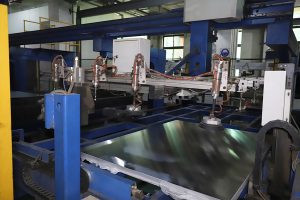
Many medical devices are produced in low-to-medium volumes, especially during early market introduction.
Injection molding and die casting often require significant upfront tooling investments. CNC machining eliminates these costs because parts are manufactured directly from digital files.
Financial Benefits:
This makes CNC machining particularly attractive for startups, specialized medical equipment manufacturers, and custom medical device producers.
Defective components can be extremely costly in the medical industry. A single non-conforming part may result in:
Medical CNC machining achieves extremely tight tolerances, often within ±0.001 inches or better, depending on design requirements.
Quality Advantages:
Higher first-pass yield directly translates into lower manufacturing costs.
Modern medical devices continue to become smaller, lighter, and more sophisticated.
Advanced CNC equipment can produce:
The ability to manufacture complex designs without multiple secondary operations helps reduce labor requirements and production expenses.
Applications:
Demand in the medical market can change rapidly due to new regulations, clinical adoption rates, or healthcare trends.
One major advantage of CNC machining in the medical industry is production flexibility.
Manufacturers can efficiently produce:
This flexibility helps companies avoid excess inventory and reduce warehousing costs.
Advanced CNC machines automate many manufacturing processes that would otherwise require skilled manual labor.
Automation delivers:
For medical manufacturers facing labor shortages or rising labor costs, automation can significantly improve profitability.
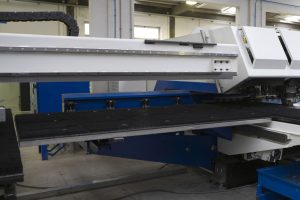
Supply chain disruptions can dramatically increase manufacturing expenses.
By partnering with an experienced CNC machining supplier, medical device companies can benefit from:
A dependable machining partner helps maintain production continuity and minimizes costly delays.
The following sectors within the medical field commonly leverage CNC technology to reduce manufacturing costs:
| Medical Sector | Common Applications |
|---|---|
| Orthopedics | Joint implants, bone screws |
| Dental | Abutments, implants, surgical guides |
| Surgical Devices | Forceps, clamps, scalpels |
| Diagnostics | Imaging system components |
| Laboratory Equipment | Precision instrument parts |
| Robotic Surgery | High-precision mechanical assemblies |
Not all machining suppliers possess the capabilities required for medical applications.
When selecting a medical device machining partner, manufacturers should evaluate:
The right supplier can become a strategic partner in reducing manufacturing costs while maintaining the highest standards of quality.
As healthcare technologies continue to evolve, controlling manufacturing costs remains a top priority for medical device companies.
Medical CNC machining offers a powerful solution by reducing material waste, eliminating tooling expenses, improving quality, accelerating product development, and supporting flexible production requirements.
Whether manufacturing surgical instruments, diagnostic equipment, implant components, or advanced medical systems, CNC machining helps organizations achieve both cost efficiency and precision.
For companies seeking a competitive advantage in the CNC machining medical industry, partnering with an experienced precision machining provider can deliver significant long-term savings while ensuring the reliability and quality that medical applications demand.
Explore aerospace sheet metal processing, from precision cutting and forming to welding and finishing, for reliable custom aerospace components.
Discover how advanced CNC technology is transforming custom machined parts with higher precision, faster production, flexible volumes, and smarter manufacturing.
Learn how CNC machining tolerances impact automotive component accuracy and reliability, including standards, key factors, and precision manufacturing solutions.
Discover how precision machining supports HPP equipment manufacturing with high-quality custom metal parts, CNC machining, and sheet metal fabrication solutions.
Email to this supplier
Author:
Ms. CTT TECHNOLOGY (UK) LIMITED
E-mail:
Phone/WhatsApp:

Privacy statement: Your privacy is very important to Us. Our company promises not to disclose your personal information to any external company with out your explicit permission.