







Send Message
Privacy statement: Your privacy is very important to Us. Our company promises not to disclose your personal information to any external company with out your explicit permission.


With the rapid development of the global medical device industry, the demand for high-precision, highly reliable, and fully compliant components has reached unprecedented levels. Imaging systems, in vitro diagnostic devices, life science instruments, and rehabilitation equipment all rely on precision-machined parts that directly impact performance stability and patient safety.
Unlike general industrial applications, medical device manufacturing operates under strict regulatory frameworks. Every component must meet rigorous standards for traceability, safety, and consistency. As a result, choosing a manufacturing partner capable of full-process compliance control and customized engineering support has become a critical factor for medical device companies aiming for successful product registration and scalable production.

In the medical industry, compliance is not an optional requirement—it is the foundation of product safety and market approval. Every stage of production, from raw material selection to final inspection, must align with regulatory requirements such as ISO standards and medical device quality management systems.
A compliant manufacturing process ensures full traceability, documentation integrity, and risk control. At the early development stage, engineering collaboration is essential to ensure that design decisions align with regulatory expectations, reducing the risk of delays during product certification or approval.
Throughout production, strict documentation systems and process controls ensure that every component can be traced back to its origin, supporting audit readiness and regulatory inspections.
Medical devices vary significantly in structure, performance requirements, and application environments. Therefore, standardized manufacturing solutions are often insufficient for meeting industry needs.
For imaging diagnostic systems, components must provide exceptional structural stability and long-term precision performance. For in vitro diagnostic and life science instruments, manufacturing must meet strict cleanliness requirements and minimize contamination risks. For home rehabilitation equipment, lightweight design, safety, and cost efficiency become key priorities.
A flexible, engineering-driven approach allows manufacturers to deliver fully customized solutions tailored to each application scenario. From rapid prototyping in early-stage development to full-scale production, close collaboration between engineering teams ensures faster iteration cycles and improved product readiness.
Quality in medical manufacturing directly impacts device safety and clinical performance. Therefore, a multi-layered quality control system is essential throughout the entire production process.
Strict supplier qualification systems ensure that all raw materials meet regulatory and performance standards. Only certified and reliable suppliers are selected, and every incoming batch is verified with full material documentation and compliance reports.
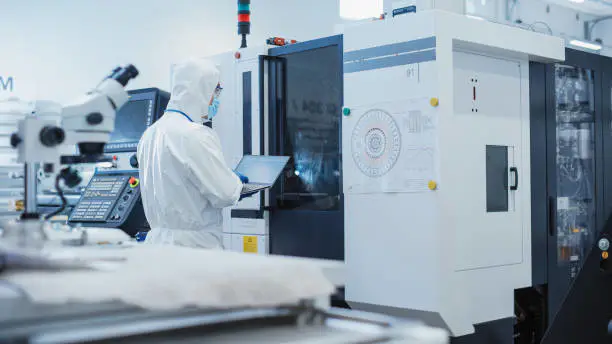
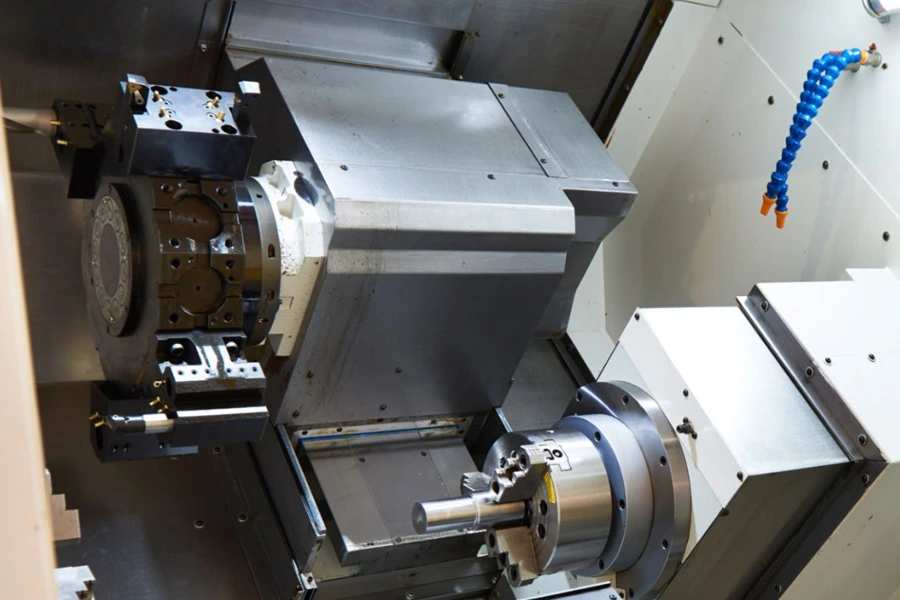
During production, controlled manufacturing environments and precision equipment ensure dimensional accuracy and batch consistency. Digital monitoring systems help maintain process stability and reduce variation.
Before shipment, multiple inspection stages verify key parameters such as dimensional accuracy, material compliance, and structural integrity. Only fully qualified products are released for delivery, ensuring consistent reliability across all batches.
Modern medical manufacturing increasingly relies on intelligent production systems to improve efficiency and consistency. Digital manufacturing platforms enable real-time monitoring of production status, optimized scheduling, and improved resource utilization.
By integrating engineering data with production management systems, manufacturers can achieve better traceability and more efficient workflow coordination. This not only improves delivery stability but also enhances responsiveness to customer-specific requirements.
Intelligent manufacturing systems also reduce human error and improve overall production reliability, especially in high-mix, low-volume medical device manufacturing environments.
Medical device companies require highly stable supply chains to support continuous production and regulatory compliance. Any disruption in material supply or production planning can lead to delays in product registration or market delivery.
A well-structured supply chain system ensures stable raw material availability, predictable lead times, and consistent production capacity. Through standardized production planning and supplier coordination, manufacturers can support both small-batch development and large-scale production with equal reliability.
In addition to precision machining, medical device manufacturers increasingly require integrated support across design optimization, prototyping, production, inspection, and after-sales services.
A one-stop manufacturing approach simplifies supply chain management for customers, reduces communication complexity, and improves overall project efficiency. Engineering teams work closely with customers to refine product design, optimize manufacturability, and accelerate time-to-market.
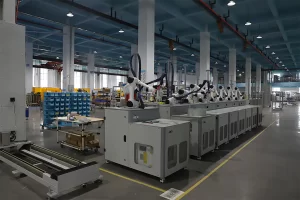
Comprehensive Compliance System:
A fully integrated quality management system aligned with medical device manufacturing standards ensures full-process traceability. This supports customers in completing product registration and regulatory audits smoothly while minimizing compliance risks.
Strong Custom Engineering Capability:
We provide dedicated one-to-one customization services with full engineering support throughout the development process. Our technical team works closely with customers to meet the diverse and application-specific requirements of all types of medical devices, supporting rapid prototyping as well as high-volume production.
Strict Quality Control System:
A dedicated quality assurance system for medical components is implemented, including multiple rounds of comprehensive inspections. This ensures high precision, stability, and safety of products, with strong batch-to-batch consistency.
Stable and Controlled Delivery:
With a well-established production capacity planning and supply chain system, we can flexibly support orders of different scales. Strict production scheduling ensures reliable lead times and smooth execution of customer production plans.
One-Stop Hassle-Free Service:
We provide a full-process, one-stop service covering solution design optimization, manufacturing, inspection, and after-sales support. This simplifies supply chain management for customers while improving efficiency and reducing overall costs.
With years of experience in precision manufacturing, CTT Technology has established long-term and stable partnerships with numerous medical device companies in China. Leveraging a robust compliance system, strong customization capabilities, and consistent product quality, we have earned wide recognition in the medical industry. We consistently adhere to the principles of “Safety First, Compliance as the Foundation, and Quality as the Priority.” Our focus is on providing high-standard, highly adaptable precision manufacturing solutions for medical device companies, fully supporting the high-quality development of the global medical equipment industry.
Explore aerospace sheet metal processing, from precision cutting and forming to welding and finishing, for reliable custom aerospace components.
Discover how advanced CNC technology is transforming custom machined parts with higher precision, faster production, flexible volumes, and smarter manufacturing.
Learn how CNC machining tolerances impact automotive component accuracy and reliability, including standards, key factors, and precision manufacturing solutions.
Discover how precision machining supports HPP equipment manufacturing with high-quality custom metal parts, CNC machining, and sheet metal fabrication solutions.
Email to this supplier
Author:
Ms. CTT TECHNOLOGY (UK) LIMITED
E-mail:
Phone/WhatsApp:

Privacy statement: Your privacy is very important to Us. Our company promises not to disclose your personal information to any external company with out your explicit permission.