







Send Message
Privacy statement: Your privacy is very important to Us. Our company promises not to disclose your personal information to any external company with out your explicit permission.


As renewable energy adoption accelerates and energy storage systems become increasingly important to modern power infrastructure, manufacturers face growing demands for reliable, scalable, and precisely engineered battery PACK solutions. From residential energy storage units to commercial battery cabinets and grid-scale storage installations, every system depends on structural components that support safe assembly, mechanical stability, and long-term operational reliability.
Behind these systems is a manufacturing process that requires more than simply cutting and forming metal. Precision machining and custom sheet metal fabrication play complementary roles in producing battery PACK enclosures, mounting brackets, support frames, cooling system interfaces, and other critical structural components.
For battery manufacturers and energy storage system integrators, selecting the right manufacturing processes and supplier can help improve assembly accuracy, reduce rework, and maintain consistent product quality as production scales.
A battery PACK integrates multiple cells or modules with electrical connections, a battery management system (BMS), thermal management components, and protective structures. Depending on the design, it may also include mounting hardware, busbar supports, cooling plates, and enclosure panels.
These components must work together within a defined mechanical and electrical architecture. Dimensional deviations in brackets, mounting holes, panels, or structural interfaces can complicate assembly, create alignment problems, and increase production costs.
Precision machining helps produce components with controlled dimensions, accurate mounting features, and repeatable geometry. Meanwhile, precision sheet metal fabrication enables manufacturers to create lightweight enclosures, formed panels, and complex structural assemblies.
Key benefits include:
Precision is therefore not simply a dimensional requirement. It is an important consideration in the overall manufacturability, assembly efficiency, and reliability of energy storage equipment.
Battery PACK systems contain a range of metal components with different structural, dimensional, and functional requirements. The appropriate manufacturing process depends on the component geometry, material, tolerances, and intended application.
The enclosure protects internal components from external mechanical influences and provides a defined structure for mounting and integration. Depending on the application, it may also contribute to environmental protection, thermal management, and electrical safety.
Custom sheet metal fabrication is commonly used to produce enclosure panels, covers, access doors, and protective housings. Laser cutting creates accurate profiles and openings, while CNC bending forms panels into the required geometry. Additional welding, hardware installation, and surface finishing can complete the assembly.
Designers should consider panel stiffness, mounting interfaces, ventilation requirements, cable access, and serviceability early in development. Enclosure designs must also account for the specific environmental and protection requirements of the finished battery system.
Mounting brackets, module supports, cross-members, and reinforcement plates help secure battery modules and connect them to the overall PACK structure.
These components often contain multiple mounting holes, slots, bends, or welded interfaces. Accurate feature positioning is particularly important when several components must align during assembly.
Depending on their geometry, brackets and supports can be manufactured through laser cutting, CNC bending, stamping, or CNC machining. Welding may be required for assemblies that combine multiple structural elements.
A manufacturing partner can review the drawings to identify opportunities to simplify geometry, standardize hole patterns, and reduce unnecessary fabrication steps without compromising functional requirements.
Thermal management is essential for maintaining battery performance and controlling operating temperatures. Liquid-cooled systems, for example, may incorporate cooling plates, pipe supports, manifold mounting brackets, and interfaces for thermal management equipment.
Precision-manufactured components help maintain the alignment of these interfaces and support reliable integration with adjacent parts.
However, cooling channels, fluid passages, and pressure-containing components may require specialized machining, sealing design, and leak testing. Their requirements should not be treated as equivalent to those of ordinary sheet metal brackets or covers.
Battery PACKs and energy storage cabinets may include enclosures for electrical distribution components, sensors, communication equipment, and control electronics.
These housings require appropriately positioned mounting features, cable openings, grounding points, and access provisions. Depending on the design, manufacturers may also need to ac
commodate ventilation, electromagnetic compatibility requirements, and protection against dust or moisture.
Precision cutting, forming, machining, and assembly help ensure that the housings integrate correctly with the larger system.
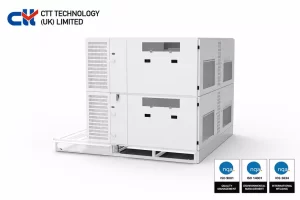
Choosing an appropriate manufacturing process is essential for balancing dimensional accuracy, structural performance, production efficiency, and total cost.
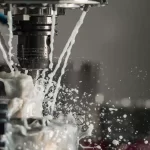
CNC machining removes material from a workpiece using computer-controlled cutting tools. CNC milling, drilling, tapping, and turning are suitable for components that require accurately positioned holes, threads, slots, machined interfaces, or complex three-dimensional geometries.
For energy storage applications, CNC machining may be appropriate for selected mounting blocks, interface components, precision brackets, and specialized structural parts.
Its main advantages include repeatability, design flexibility, and the ability to produce features that are difficult to achieve through sheet metal forming alone. Nevertheless, the process should be selected according to the actual geometry and functional requirements rather than applied to every component.
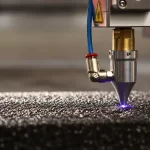
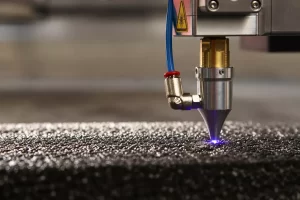
Laser cutting is widely used to produce sheet metal profiles, mounting holes, slots, and panel outlines. CNC bending then transforms flat blanks into three-dimensional parts with defined angles and dimensions.
Together, these processes provide an efficient approach to manufacturing enclosure panels, brackets, covers, and structural supports.
Accurate results depend on material thickness, bend radius, tooling, springback compensation, and the relationship between cut features and bend lines. Engineering review before production helps prevent interference and dimensional problems during assembly.
For components with suitable geometries and repeatable demand, stamping can support efficient production at higher volumes. It is especially useful when parts require consistent profiles and forming features across large production runs.
Tooling costs and development time must be considered when comparing stamping with laser cutting and CNC bending. For prototypes or lower-volume orders, flexible fabrication methods may be more economical. As demand increases, dedicated tooling may offer advantages in cycle time and unit cost.
Welding joins panels, frames, brackets, and other structural elements into more complex assemblies. TIG or MIG welding may be selected according to material, thickness, joint configuration, and quality requirements.
Welding can introduce distortion, so fixture design, weld sequencing, and post-weld inspection are important when dimensional accuracy affects downstream assembly.
Surface treatments, such as powder coating, painting, or other specified finishes, may improve corrosion resistance and appearance. Their suitability depends on the operating environment, material compatibility, electrical grounding requirements, and any thermal or chemical exposure.
Integrating fabrication, welding, finishing, and assembly within a coordinated manufacturing workflow can also reduce supplier handoffs and simplify quality management.
Material selection affects component weight, stiffness, corrosion resistance, manufacturability, and cost. The right material depends on the intended application and the performance requirements of the finished system.
Common options include:
Material choice should be evaluated alongside thickness, load conditions, joining methods, thermal requirements, and the intended service environment. For components near electrical connections, engineers should also consider insulation, grounding, and isolation requirements.
A design-for-manufacturing review can help identify a practical combination of material, geometry, and process before production begins.
A component that performs well in a CAD model may still present manufacturing challenges if its geometry, tolerances, or assembly interfaces are difficult to produce consistently.
Several considerations are particularly important.
Dimensional tolerances and datum control: Define tight tolerances only where required for fit, function, or safety. Establishing clear datums and consistent measurement references helps suppliers manufacture and inspect parts more effectively.
Bend geometry and hole positioning: Holes placed too close to bend lines may deform during forming. Bend radius, material thickness, tooling, and springback should be considered during design.
Weld accessibility and distortion: Joint design should allow practical access for welding and inspection. Where necessary, fixtures and controlled welding sequences can help limit distortion.
Assembly and serviceability: Consider tool access, fastener installation, cable routing, and the replacement of serviceable components. A design that simplifies assembly can reduce labor and rework.
Corrosion protection and electrical safety: Specify finishes, grounding points, insulation interfaces, and environmental protection requirements according to the intended application.
These considerations are best addressed through early collaboration between product engineers and the manufacturing supplier, before drawings are released for production.
Battery PACK development often involves several stages, from initial concept evaluation to pilot builds and commercial production. Manufacturing requirements change as designs mature and demand increases.
Rapid prototyping allows engineering teams to evaluate fit, geometry, mounting interfaces, and assembly procedures before committing to larger quantities. Low-volume manufacturing supports design validation, pilot production, and customized system configurations.
Once the design is stable, production can be optimized through standardized tooling, repeatable process parameters, inspection plans, and appropriate automation.
A capable manufacturing partner should be able to support this transition while maintaining consistent specifications across production stages.
CTT Technology provides custom sheet metal fabrication for rapid prototypes, small-batch orders, and high-volume production. Its manufacturing capabilities include laser cutting, CNC bending, stamping, TIG and MIG welding, precision inspection, surface finishing, and assembly. These processes support the production of custom brackets, enclosures, panels, and welded assemblies for industrial equipment and energy storage applications.
By coordinating manufacturing methods with the customer's drawings and specifications, suppliers can help identify production risks early and establish a more predictable path from prototype to repeat orders.
Selecting a supplier involves more than comparing the quoted unit price. Battery PACK components must meet defined engineering requirements while fitting within the project's delivery schedule and production budget.
When evaluating a manufacturing partner, consider the following factors:
It is also important to clarify inspection criteria, packaging requirements, traceability needs, and acceptance standards before production begins. For safety-critical components, verification should follow the relevant engineering specifications and applicable industry requirements.
The most suitable supplier is one whose technical capabilities, quality processes, and production model match the actual needs of the project.
Precision machining and custom sheet metal fabrication are important manufacturing solutions for energy storage battery PACK systems. From protective enclosures and structural supports to mounting interfaces and control system housings, accurately manufactured components help improve assembly consistency and support reliable system integration.
Choosing the right process, material, and manufacturing partner can also reduce avoidable rework and make the transition from rapid prototyping to larger production runs more manageable.
For battery manufacturers and energy storage system integrators, early manufacturing collaboration is an effective way to align component design with production requirements.
Discover how precision machining and custom sheet metal fabrication improve battery PACK enclosures, structural integrity, and manufacturing consistency.
Discover how CNC machining supports cell culture and bioprocessing equipment with precision components, custom sheet metal fabrication, and scalable manufacturing.
Explore precision machining for biopharmaceutical equipment, including material selection, design optimization, sheet metal fabrication, and quality control.
Explore aerospace sheet metal processing, from precision cutting and forming to welding and finishing, for reliable custom aerospace components.
Email to this supplier
Author:
Ms. CTT TECHNOLOGY (UK) LIMITED
E-mail:
Phone/WhatsApp:

Privacy statement: Your privacy is very important to Us. Our company promises not to disclose your personal information to any external company with out your explicit permission.