






Send Message
Privacy statement: Your privacy is very important to Us. Our company promises not to disclose your personal information to any external company with out your explicit permission.


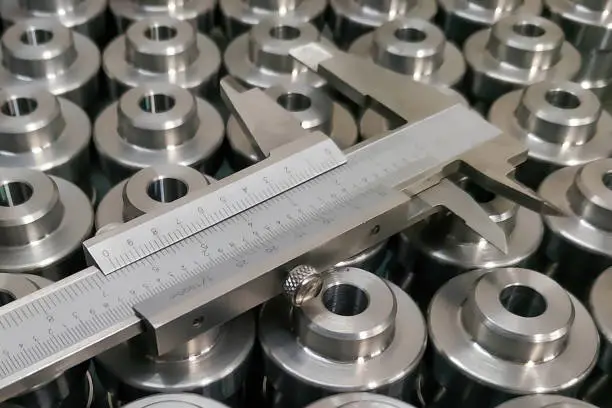
Cell culture and bioprocessing technologies play a critical role in biopharmaceutical research, vaccine development, cell-based therapies, and the production of biologics. As these applications become more sophisticated, equipment manufacturers need components that deliver consistent dimensional accuracy, reliable mechanical performance, and compatibility with demanding operating environments.
CNC machining provides a versatile manufacturing solution for producing precision components used in cell culture systems, bioreactors, fluid handling assemblies, and laboratory instruments. When combined with custom sheet metal fabrication, welding, and surface finishing, it also supports the development of complete equipment structures from prototypes to commercial production.
For equipment OEMs, choosing the right manufacturing partner is not simply about producing individual parts. It is about ensuring that components fit correctly, meet functional requirements, integrate efficiently into assemblies, and remain consistent as production scales.
The components used in cell culture and bioprocessing systems vary considerably in size, geometry, and functional requirements. Manufacturing methods should therefore be selected according to each component's role within the overall system.
Many of the same manufacturing principles apply to CNC machining for medical devices, particularly when producing precision housings, mounting brackets, structural components, and interfaces for laboratory and diagnostic equipment. Selecting the right machining process helps manufacturers meet functional requirements while maintaining consistent component quality.
Cell culture systems require stable structures to support vessels, monitoring devices, sample handling mechanisms, and associated instrumentation. CNC machining can produce mounting plates, equipment brackets, alignment fixtures, and custom housings that help integrate these components.
In automated laboratory equipment, consistent hole positioning and interface dimensions are particularly important because mechanical misalignment can interfere with module installation or automated movement.
For compact instruments, machined components can also accommodate limited installation space while providing the structural support required for reliable operation.
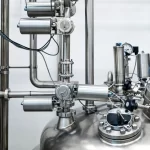
Bioreactors and related process systems combine mechanical structures, monitoring equipment, fluid handling assemblies, and control components.
Depending on the equipment design, CNC-machined parts may include support blocks, mounting interfaces, precision brackets, structural connectors, and custom mechanical components. Sheet metal fabrication can complement these parts by producing equipment frames, access panels, protective covers, and electrical enclosures.
Components that contact process fluids require additional attention to material compatibility, surface finish, cleanability, and the specified cleaning or sterilization procedures. These requirements should be established by the equipment designer according to the intended process.
Not every component needs the same level of precision or surface treatment. Distinguishing product-contact parts from external structural components helps manufacturers apply the appropriate requirements without creating unnecessary cost.
Fluid handling systems may incorporate tubing interfaces, pump mounts, valve supports, connector brackets, and custom manifolds.
For these components, dimensional consistency can affect installation, alignment, sealing, and maintenance. Where a machined part forms part of a fluid pathway, designers should also evaluate the material's compatibility with the process fluid and cleaning agents, as well as the suitability of its surface finish and geometry.
Manufacturers should define critical dimensions, connection specifications, and inspection requirements before production begins. This is especially important when multiple components must fit together within a compact assembly.
Bioprocess monitoring and laboratory automation systems often integrate sensors, optical modules, electronics, and precision mechanical structures.
CNC machining supports the production of sensor mounts, instrument housings, structural plates, and custom fixtures. Depending on the design, aluminum may be appropriate where low weight and efficient heat dissipation are priorities, while stainless steel may be selected for specific strength or corrosion-resistance requirements.
The correct choice depends on the operating environment, mechanical loads, temperature conditions, cleaning procedures, and overall equipment design.

Material selection directly affects component performance, machinability, manufacturing cost, and service life. For cell culture and bioprocessing equipment, materials should be selected according to the component's actual function rather than assuming that one material is suitable for every application.
Stainless steel is commonly considered for components requiring corrosion resistance, durability, or compatibility with specified cleaning procedures. Grades such as 304 and 316L may be relevant, depending on the environment and applicable requirements.
For components exposed to process fluids or aggressive cleaning agents, engineers should evaluate the specific alloy, surface condition, chemical exposure, and operating temperature. Stainless steel alone does not guarantee suitability for every bioprocessing application.
Aluminum alloys are useful for structural plates, equipment frames, instrument housings, and mounting components where weight reduction and machinability are important.
They can support the design of compact laboratory instruments and modular equipment structures. However, coating or finishing requirements should be assessed against the operating environment, cleaning chemicals, and any risk of contamination or material degradation.
Suitable engineering plastics may be used for selected insulating components, guides, fixtures, and parts requiring particular chemical or electrical properties.
The choice should account for temperature limits, mechanical loads, dimensional stability, chemical compatibility, and cleaning or sterilization conditions. Plastics intended for non-product-contact applications should not automatically be assumed suitable for direct contact with process fluids.
Ultimately, material specifications should be documented in the engineering drawings or procurement requirements. Where necessary, manufacturers should confirm material grades and provide the agreed documentation.
A well-designed component is easier to manufacture, inspect, assemble, and maintain. Early collaboration between design engineers and manufacturing specialists can identify potential problems before they lead to expensive revisions.
Not every dimension requires an extremely tight tolerance. Excessive tolerance requirements can increase machining time, inspection costs, and scrap risk without improving equipment performance.
Engineers should identify critical features according to their function. For example, a precision sensor mounting interface may require tighter dimensional control than an external protective cover.
Flatness, perpendicularity, hole position, and the relationship between mating surfaces may also influence assembly accuracy. Clearly documented drawings help manufacturers focus inspection resources on the features that matter most.
Deep pockets, thin walls, narrow slots, and difficult-to-reach features can increase machining complexity. Reviewing these details during the design stage helps balance performance with manufacturing efficiency.
Practical design improvements include using standard fasteners where appropriate, providing adequate tool access, avoiding unnecessarily complex geometries, and maintaining sufficient wall thickness to reduce deformation risks.
For parts that combine machined features with bent or welded sheet metal, designers should also consider the manufacturing sequence and the effect of each process on final dimensions.
Bioprocessing equipment frequently integrates machined parts with sheet metal panels, electrical systems, purchased components, and fluid handling assemblies.
Mounting-hole patterns, cable openings, connector positions, panel clearances, and service access should therefore be considered together. A component that meets its individual drawing requirements may still cause problems if its interfaces are poorly coordinated with adjacent parts.
Early design-for-assembly reviews can help reduce rework and simplify equipment maintenance.
For a broader understanding of material selection, dimensional tolerances, and design for manufacturability, explore our guide to precision machining for biopharmaceutical equipment.
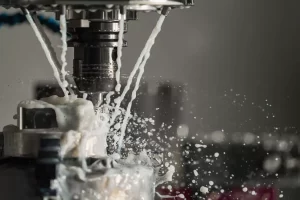
CNC machining is ideal for many precision components, but it is not always the most economical choice for larger enclosures, panels, and equipment frames.
Custom sheet metal fabrication provides an effective complementary solution. Depending on the design, processes may include laser cutting, punching, bending, welding, and surface finishing.
Typical applications include:
For life science equipment manufacturers, these parts must fit accurately with internal mechanical components while meeting requirements for structural strength, appearance, accessibility, and cleaning.
Combining CNC machining with sheet metal fabrication through one coordinated manufacturing partner can simplify supplier management, improve interface coordination, and reduce the time spent transferring drawings and specifications between different vendors.
The most suitable production method depends on geometry, tolerances, material thickness, order quantity, and the required finish. A manufacturing review at the quotation stage can help determine the right process for each component.
In bioprocessing equipment, component quality extends beyond dimensional accuracy. Material selection, surface condition, repeatability, and assembly compatibility can all influence final equipment performance.
A structured quality process should begin with clearly defined drawings, specifications, and acceptance criteria. Depending on the project, inspection may include dimensional measurement, verification of critical features, visual inspection, and review of material or finishing documentation.
For components used in demanding process environments, manufacturers should also confirm that the agreed finishing and cleaning requirements are appropriate for the intended application.
Where the equipment is designed to meet specific hygienic or regulatory requirements, the OEM should define the applicable standards and documentation expectations. Manufacturing capability alone does not automatically establish regulatory compliance for the completed equipment.
Consistency becomes especially important when moving from prototypes to repeat production. Controlled drawings, revision management, defined inspection procedures, and clear communication between engineering and manufacturing teams help reduce variation between batches.
Product development in the life sciences often involves several stages, from concept evaluation and prototype testing to design validation and commercial manufacturing.
A capable manufacturing partner should support these stages without creating unnecessary complexity each time the design or order quantity changes.
During prototyping, the priority is to verify fit, function, and manufacturability. Small-batch production then helps identify assembly issues and confirm process consistency. For larger orders, manufacturing planning, material sourcing, quality control, and coordinated production capacity become increasingly important.
When evaluating a supplier, equipment manufacturers should consider more than the quoted unit price. Relevant questions include:
A supplier that coordinates these activities can help reduce communication overhead and make production planning more predictable.
CTT Technology provides custom manufacturing solutions for OEMs across industries including medical devices, electronics, industrial equipment, aerospace, and life science instrumentation. With more than 20 years of precision manufacturing experience, the company supports projects requiring custom components, sheet metal parts, and coordinated manufacturing services.
One-stop manufacturing support throughout the product lifecycle
CTT Technology integrates design support, prototyping, production, surface finishing, assembly, warehousing, and after-sales service into a coordinated manufacturing workflow. This helps customers manage multiple stages of component development and production through a single manufacturing partner.
20+ years of industry experience
With more than two decades in precision manufacturing, CTT Technology brings practical experience in CNC machining and customer-focused manufacturing support.
Integrated manufacturing capabilities
From design review and prototyping to machining, sheet metal fabrication, surface finishing, and assembly, CTT Technology helps streamline manufacturing coordination and reduce the burden of managing multiple suppliers.
Quality-focused production
CTT Technology follows established international quality management practices and has experience serving Fortune 500 companies. Specific quality requirements, inspection documentation, and certifications should be confirmed for each project.
Competitive manufacturing costs
By optimizing production processes and supply chain management, CTT Technology works to deliver cost-effective manufacturing solutions without overlooking the customer's technical and quality requirements.
Global delivery capabilities
With multiple production bases and products supplied to more than 30 countries and regions, CTT Technology supports international customers with coordinated production and overseas delivery.
For cell culture and bioprocessing equipment manufacturers, this integrated approach can help connect component design, precision manufacturing, finishing, and assembly requirements within one coordinated workflow.
CNC machining plays an important role in manufacturing the precision components required by cell culture systems, bioreactors, laboratory automation platforms, and other bioprocessing equipment. Its value lies not only in dimensional accuracy but also in design flexibility, material options, and the ability to support product development through repeat production.
By combining appropriate material selection, design for manufacturability, clear quality requirements, and complementary sheet metal fabrication, equipment manufacturers can develop components that integrate reliably into complete systems.
Working with an experienced manufacturing partner such as CTT Technology can further simplify coordination from prototype to production, helping OEMs manage component complexity, production changes, and global delivery requirements.
Learn how DFM improves CNC bending accuracy, reduces defects, and lowers production costs with practical sheet metal design tips.
Learn everything about GD&T in CNC machining, including symbols, benefits, and best practices. Improve CNC machining precision and optimize CNC machining tolerances.
Learn essential sheet metal design guidelines for bends, DFM principles, and aluminum part fabrication. Discover how CNC bending, precision sheet metal processing, and CNC sheet metal bending improve manufacturability, accuracy, and production efficiency.
Learn how Design for Manufacturing (DFM) reduces production costs, improves quality, and optimizes sheet metal fabrication, laser cutting tolerances, and CNC machining.
Email to this supplier
Author:
Ms. CTT TECHNOLOGY (UK) LIMITED
E-mail:
Phone/WhatsApp:

Privacy statement: Your privacy is very important to Us. Our company promises not to disclose your personal information to any external company with out your explicit permission.