






Send Message
Privacy statement: Your privacy is very important to Us. Our company promises not to disclose your personal information to any external company with out your explicit permission.


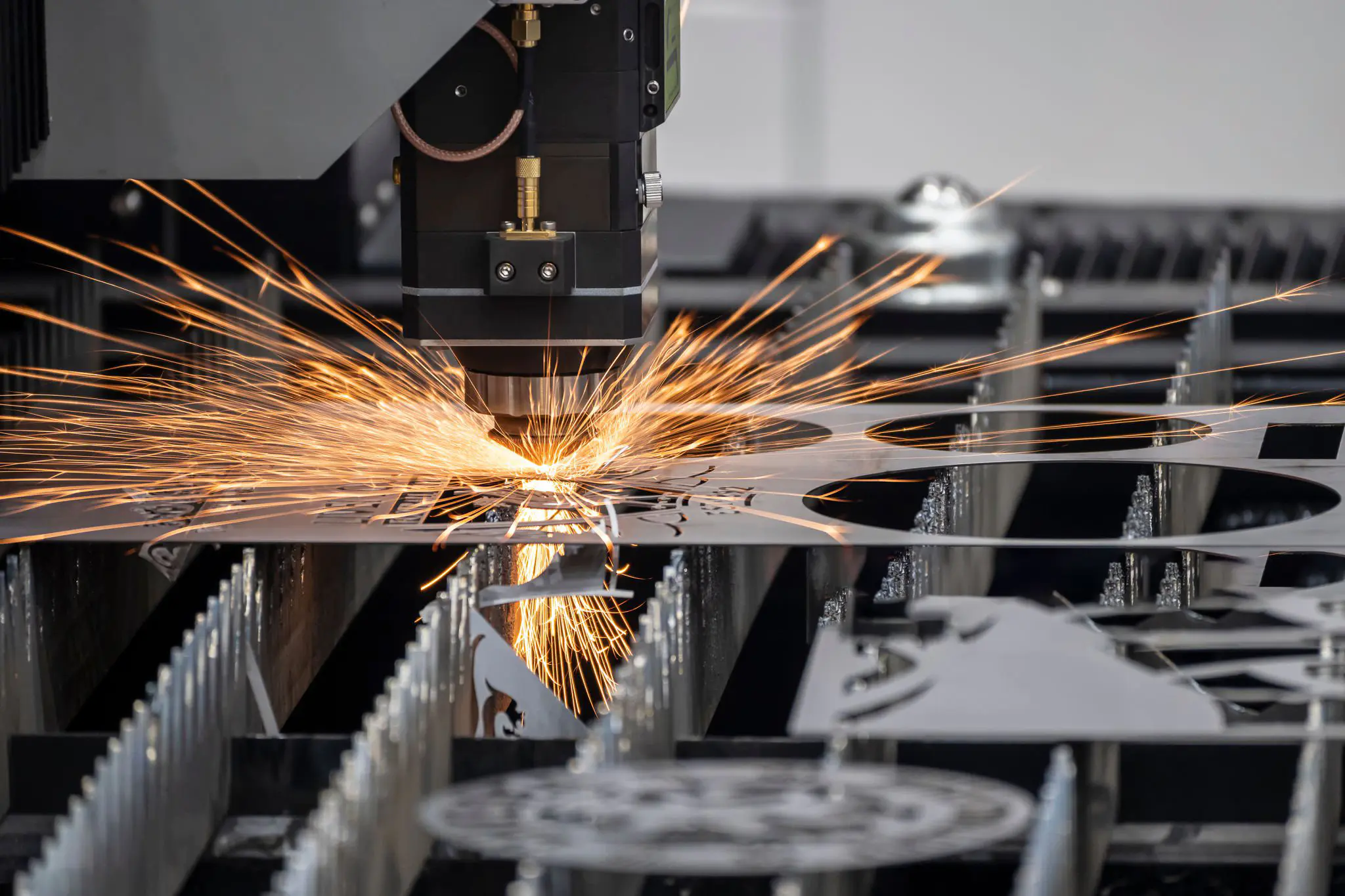
Sheet metal fabrication plays a critical role in industries ranging from automotive and aerospace to medical devices, electronics, industrial equipment, and life science instruments. However, achieving high-quality sheet metal components requires more than simply creating a CAD model. Proper design considerations directly influence manufacturing accuracy, production cost, assembly efficiency, and final product performance.
A well-designed sheet metal part considers bending requirements, material characteristics, manufacturing limitations, and Design for Manufacturing (DFM) principles from the beginning. By optimizing designs before production, engineers can reduce unnecessary revisions, improve dimensional consistency, and accelerate time-to-market.
Unlike machining processes that remove material from solid blocks, sheet metal fabrication involves cutting, forming, bending, and assembling thin metal sheets into functional structures.
A poorly designed sheet metal component can lead to:
Following proper design guidelines ensures that parts are easier to manufacture while maintaining required strength, appearance, and performance.
Key factors that influence sheet metal design include:
Bending is one of the most important processes in sheet metal manufacturing. Accurate bending determines the final geometry, structural strength, and assembly accuracy of a component.
The inside bend radius is a critical design factor. If the bend radius is too small, excessive stress can occur, causing cracks or deformation, especially in harder materials such as aluminum.
General recommendations:
A proper bend radius improves:
For complex components, engineers should work closely with fabrication specialists to determine the optimal bend radius based on material and thickness.
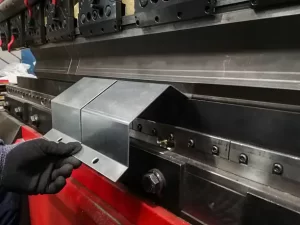
The location of holes, slots, and cutouts directly affects bending quality.
If holes are positioned too close to a bend line, deformation may occur during forming.
Recommended practices:
Proper feature placement reduces secondary operations and improves overall manufacturing efficiency.
During bending, the material stretches on the outside and compresses on the inside of the bend. This changes the final dimensions of the part.
Engineers should consider:
Accurate calculations help ensure that the finished component matches the original CAD design.
Design for Manufacturing (DFM) focuses on creating parts that are easy, reliable, and cost-effective to produce.
A DFM-optimized sheet metal design helps manufacturers:
Using commonly available sheet thicknesses simplifies manufacturing and reduces material procurement delays.
Common sheet metal materials include:
Advantages:
Common aluminum alloys:
Advantages:
Advantages:
Selecting standard materials improves production efficiency while maintaining required performance.
Complex geometries often increase manufacturing difficulty.
A cost-effective sheet metal design should:
For example, replacing multiple small components with a single bent sheet metal part can reduce assembly time and improve reliability.
Overly tight tolerances increase manufacturing costs.
When designing sheet metal parts:
Experienced manufacturers can help determine realistic tolerances based on production requirements.

Modern fabrication relies heavily on advanced bending equipment to achieve accurate and repeatable results.
CNC bending uses computer-controlled machines to precisely form sheet metal components according to digital designs.
Benefits include:
Compared with traditional manual bending methods, CNC-controlled processes provide improved repeatability, especially for complex geometries.
Aluminum sheet metal parts require special attention during bending because of their unique material properties.
Aluminum has lower elongation compared with some steel materials, making it more sensitive to aggressive bending.
Solutions:
Aluminum tends to return slightly toward its original shape after bending.
Manufacturers must compensate for:
Aluminum surfaces can be easily scratched during fabrication.
Proper handling and finishing processes help maintain:
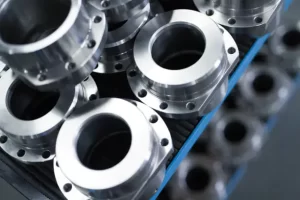
Modern customers require flexible manufacturing solutions that support both product development and large-scale production.
Professional precision sheet metal processing includes:
An integrated manufacturing approach allows engineers to move quickly from prototype validation to final production.
At CTTechX, our manufacturing capabilities support:
Precision sheet metal components are widely used across industries.
Applications include:
Applications include:
Applications include:
Applications include:
Applications include:
Effective sheet metal design is the foundation of successful manufacturing. By considering bend requirements, DFM principles, material properties, and production methods early in the design stage, engineers can create parts that are stronger, easier to manufacture, and more cost-efficient.
With advanced CNC bending, professional precision sheet metal processing, and reliable CNC sheet metal bending capabilities, CTT Technology helps companies accelerate product development and achieve consistent manufacturing performance from prototype to production.
Learn how DFM improves CNC bending accuracy, reduces defects, and lowers production costs with practical sheet metal design tips.
Learn everything about GD&T in CNC machining, including symbols, benefits, and best practices. Improve CNC machining precision and optimize CNC machining tolerances.
Learn essential sheet metal design guidelines for bends, DFM principles, and aluminum part fabrication. Discover how CNC bending, precision sheet metal processing, and CNC sheet metal bending improve manufacturability, accuracy, and production efficiency.
Learn how Design for Manufacturing (DFM) reduces production costs, improves quality, and optimizes sheet metal fabrication, laser cutting tolerances, and CNC machining.
Email to this supplier
Author:
Ms. CTT TECHNOLOGY (UK) LIMITED
E-mail:
Phone/WhatsApp:

Privacy statement: Your privacy is very important to Us. Our company promises not to disclose your personal information to any external company with out your explicit permission.