





Send Message
Privacy statement: Your privacy is very important to Us. Our company promises not to disclose your personal information to any external company with out your explicit permission.


In today's competitive manufacturing environment, precision, efficiency, and repeatability are critical to producing high-quality metal components. Whether manufacturing lightweight automotive structures, medical equipment, industrial machinery, or aerospace assemblies, manufacturers increasingly rely on CNC bending technologies to achieve consistent dimensional accuracy and complex geometries.
Among these advanced fabrication methods, CNC tube bending services and CNC sheet metal bending have become indispensable for producing durable, lightweight, and cost-effective components. Combined with modern precision sheet metal processing, these technologies help manufacturers reduce production costs, shorten lead times, and improve product performance.
This guide explains how CNC bending works, its advantages, applications, materials, quality considerations, and how to choose the right manufacturing partner for your next project.
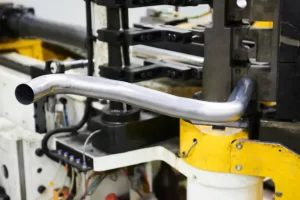
CNC tube bending is a computer-controlled manufacturing process that shapes metal tubes, pipes, and profiles into precise angles and complex curves without compromising structural integrity.
Unlike manual bending, CNC-controlled systems automatically adjust:
The result is exceptional repeatability, even for high-volume production.
Modern CNC tube bending machines can manufacture parts with tight tolerances while minimizing wrinkles, flattening, cracking, and springback.
Precision sheet metal processing encompasses a complete range of fabrication techniques used to transform flat metal sheets into finished components.
Typical processes include:
When integrated into one production workflow, these processes provide exceptional manufacturing efficiency while ensuring every component meets strict dimensional requirements.
Manufacturers across various industries increasingly prefer CNC bending because it delivers superior consistency compared to traditional forming methods.
Major advantages include:
Computer-controlled bending eliminates human error and produces highly consistent bend angles across thousands of identical parts.
Multiple bends can be completed in a single setup, allowing engineers greater design flexibility.
Automated programming significantly reduces setup time and increases manufacturing speed.
Accurate bending minimizes scrap and reduces unnecessary material waste.
Every production batch maintains identical dimensions, making CNC bending ideal for OEM manufacturing.
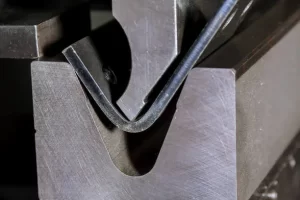
Although both technologies involve controlled deformation of metal, they serve different manufacturing purposes.
| CNC Sheet Metal Bending | CNC Tube Bending |
|---|---|
| Forms flat sheet metal | Forms tubes and pipes |
| Press brake machines | Rotary draw or mandrel bending machines |
| Used for brackets, enclosures, cabinets | Used for frames, handles, fluid tubes |
| Produces angular bends | Produces curved profiles |
| High structural rigidity | Excellent fluid and structural performance |
Many projects combine both technologies to manufacture complete assemblies.
Professional precision sheet metal processing supports a wide variety of engineering materials.
Common materials include:
Excellent corrosion resistance and strength for medical, food processing, and marine applications.
Ideal for structural components requiring durability and cost-effectiveness.
Lightweight with excellent machinability, widely used in aerospace and electronics.
Offers superior electrical conductivity and thermal performance.
Preferred for decorative components and precision fittings.
High strength-to-weight ratio makes it ideal for aerospace and medical devices.
Manufacturers use CNC bending to produce:
These components require precise geometry for optimal vehicle performance.
Aircraft demand lightweight components with exceptional dimensional accuracy.
Applications include:
Medical manufacturers require contamination-free fabrication and tight tolerances.
Examples include:
Heavy-duty machinery incorporates numerous bent metal components such as:
Precision sheet metal processing supports:
Professional manufacturers typically follow these production stages:
Engineers analyze customer drawings, tolerances, materials, and production requirements.
Appropriate tubing or sheet materials are selected based on strength, corrosion resistance, and application requirements.
Engineers generate CNC programs directly from CAD models to ensure dimensional accuracy.
Automated machines execute precise bends while controlling force, feed rate, and rotation.
If required, bent components are welded into complete assemblies.
Options include:
Finished components undergo dimensional inspection using CMMs, gauges, and other precision measurement tools.
High-quality manufacturers implement strict quality management throughout production.
Typical inspection methods include:
Consistent quality control ensures every component meets customer specifications.
Selecting the right fabrication partner directly impacts product quality, delivery schedules, and overall manufacturing costs.
An experienced supplier provides:
These capabilities help customers shorten product development cycles while maintaining consistent production quality.
At CTT technology, we provide comprehensive precision sheet metal processing solutions tailored to the needs of global OEM manufacturers. From rapid prototypes to full-scale production, our integrated manufacturing capabilities ensure consistent quality, competitive lead times, and cost-effective fabrication.
Our capabilities include:
We serve industries including automotive, electronics, medical devices, aerospace, industrial equipment, and life science instrumentation with customized solutions designed to meet demanding engineering standards.
As manufacturing continues to demand greater precision, efficiency, and flexibility, CNC bending technologies have become a cornerstone of modern metal fabrication. Whether producing complex tubular structures or precision-formed sheet metal components, advanced CNC Sheet Metal Bending and precision sheet metal processing enable manufacturers to achieve superior product quality while optimizing production costs.
Partnering with an experienced fabrication specialist ensures every project benefits from advanced equipment, expert engineering support, rigorous quality control, and scalable production capabilities. If your next project requires reliable CNC tube bending services, custom sheet metal fabrication, or complete precision manufacturing solutions, CTT technology is ready to help transform your designs into high-performance components with accuracy and consistency.
Learn how DFM improves CNC bending accuracy, reduces defects, and lowers production costs with practical sheet metal design tips.
Learn everything about GD&T in CNC machining, including symbols, benefits, and best practices. Improve CNC machining precision and optimize CNC machining tolerances.
Learn essential sheet metal design guidelines for bends, DFM principles, and aluminum part fabrication. Discover how CNC bending, precision sheet metal processing, and CNC sheet metal bending improve manufacturability, accuracy, and production efficiency.
Learn how Design for Manufacturing (DFM) reduces production costs, improves quality, and optimizes sheet metal fabrication, laser cutting tolerances, and CNC machining.
Email to this supplier
Author:
Ms. CTT TECHNOLOGY (UK) LIMITED
E-mail:
Phone/WhatsApp:

Privacy statement: Your privacy is very important to Us. Our company promises not to disclose your personal information to any external company with out your explicit permission.