







Send Message
Privacy statement: Your privacy is very important to Us. Our company promises not to disclose your personal information to any external company with out your explicit permission.


Healthcare innovation depends on precision. Whether producing surgical instruments, diagnostic systems, imaging equipment, or laboratory analyzers, every component must meet exceptionally tight tolerances while maintaining consistent quality, reliability, and traceability. As medical technology becomes increasingly sophisticated, manufacturers require production partners capable of delivering complex parts with uncompromising accuracy.
At CTT technology, we specialize in medical device component manufacturing through advanced medical CNC machining, precision sheet metal fabrication, welding, and complete assembly solutions. From rapid prototyping to high-volume production, we help medical equipment manufacturers accelerate development while maintaining the highest standards of quality.
In this article, we'll explore why precision manufacturing matters in healthcare, common medical device components, manufacturing technologies, quality requirements, and how to choose the right production partner.
Unlike many industrial products, medical devices directly affect patient safety and clinical outcomes. Even microscopic dimensional deviations can compromise device performance, reliability, or regulatory compliance.
High-precision manufacturing ensures:
For manufacturers, precision also reduces rework, lowers production costs, and improves supply chain consistency.
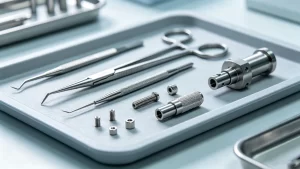
Medical equipment consists of thousands of highly engineered parts manufactured from stainless steel, aluminum, titanium, engineering plastics, and specialty alloys.
Typical components include:
Precision-machined parts used in:
These components require smooth surface finishes, precise geometries, and corrosion resistance.
Diagnostic systems rely on highly accurate mechanical assemblies, including:
Dimensional accuracy directly impacts measurement precision.
MRI, CT, ultrasound, and X-ray systems contain numerous precision-manufactured components such as:
Large assemblies must maintain tight tolerances while remaining lightweight and durable.
Life science instruments require:
Consistency is critical because laboratory instruments often operate continuously for years.
Manufacturers require compact, lightweight, and aesthetically finished components for:
Medical CNC machining plays a critical role in improving the quality, precision, and reliability of modern medical device manufacturing. By utilizing advanced CNC milling, CNC turning, and multi-axis machining technologies, manufacturers can produce complex medical components with exceptional accuracy, repeatability, and surface quality. CNC machining enables the production of intricate geometries, tight-tolerance features, thin-wall structures, and precision assemblies that are essential for surgical instruments, diagnostic equipment, imaging systems, and laboratory devices. Compared with traditional manufacturing methods, advanced CNC machining reduces human error, minimizes production inconsistencies, shortens development cycles, and improves overall manufacturing efficiency. For medical device manufacturers, adopting high-precision CNC machining processes ensures that components meet strict industry requirements while enhancing product performance, safety, and long-term reliability.
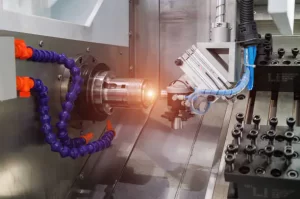
While CNC machining produces solid components, precision sheet metal fabrication is equally important for complete medical systems.
Applications include:
Modern fabrication combines:
These processes produce lightweight yet rigid structures that protect sensitive medical electronics.
Material selection depends on the device's application, sterilization requirements, and mechanical performance.
Ideal for:
Benefits:
Popular for imaging systems and diagnostic equipment because it offers:
Frequently used in:
Advantages include:
Common materials include:
These materials provide electrical insulation, chemical resistance, and reduced weight.
Medical components often require specialized finishing processes.
Common treatments include:
Proper finishing improves:
Quality assurance is essential throughout the medical device machining process.
Critical quality controls include:
Using:
Every production batch should include:
Stable manufacturing processes ensure:
Medical components often require contamination-controlled manufacturing environments that minimize dust, oil, and particulate contamination.
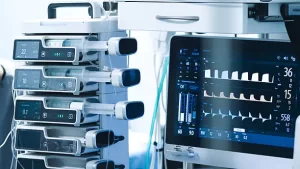
Bringing a medical device from concept to commercial production requires a manufacturing partner capable of supporting every stage of the product lifecycle. From rapid prototyping and design validation to pilot production and full-scale manufacturing, seamless transitions between development phases help reduce lead times, lower production costs, and accelerate time to market. Advanced medical CNC machining, precision sheet metal fabrication, welding, and assembly ensure that prototypes accurately reflect final production quality while enabling efficient scalability for larger volumes. By combining engineering expertise with flexible manufacturing capabilities, medical device manufacturers can optimize product performance, maintain consistent quality, and confidently move from initial concept to reliable mass production.
Selecting the right manufacturing partner is critical for long-term success.
Look for suppliers offering:
A full-service manufacturing partner simplifies supply chains while improving overall product quality.
As medical technology continues to evolve, the demand for precision-manufactured components will only increase. Advanced medical CNC machining, precision sheet metal fabrication, and integrated manufacturing solutions play a vital role in producing reliable, high-performance medical equipment that meets today's rigorous industry standards.
Partnering with an experienced manufacturer like CTT technology provides access to advanced production capabilities, scalable manufacturing, and comprehensive engineering support—from prototype development to full-scale production. Whether your project involves complex machined parts, precision enclosures, or complete medical assemblies, investing in high-quality medical device machining ensures the accuracy, durability, and consistency required to support innovation in modern healthcare.
Learn how DFM improves CNC bending accuracy, reduces defects, and lowers production costs with practical sheet metal design tips.
Learn everything about GD&T in CNC machining, including symbols, benefits, and best practices. Improve CNC machining precision and optimize CNC machining tolerances.
Learn essential sheet metal design guidelines for bends, DFM principles, and aluminum part fabrication. Discover how CNC bending, precision sheet metal processing, and CNC sheet metal bending improve manufacturability, accuracy, and production efficiency.
Learn how Design for Manufacturing (DFM) reduces production costs, improves quality, and optimizes sheet metal fabrication, laser cutting tolerances, and CNC machining.
Email to this supplier
Author:
Ms. CTT TECHNOLOGY (UK) LIMITED
E-mail:
Phone/WhatsApp:

Privacy statement: Your privacy is very important to Us. Our company promises not to disclose your personal information to any external company with out your explicit permission.