








Send Message
Privacy statement: Your privacy is very important to Us. Our company promises not to disclose your personal information to any external company with out your explicit permission.


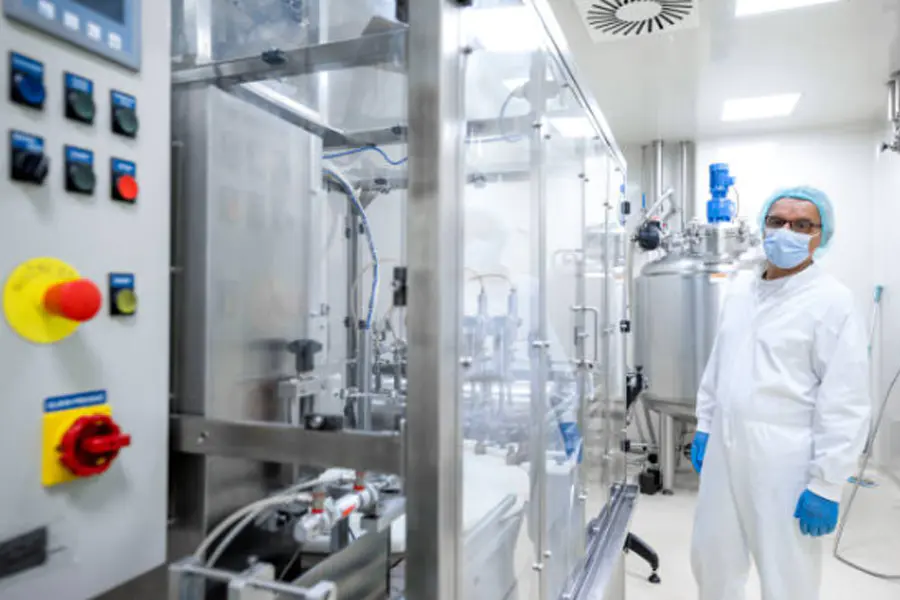
Biotechnology is rapidly transforming healthcare, pharmaceuticals, diagnostics, and scientific research. From DNA sequencing and molecular diagnostics to laboratory automation and cell therapy, modern biotechnology increasingly relies on advanced and highly precise equipment. Behind these innovations lies a critical foundation: precision manufacturing.
As biotechnology devices become more compact, intelligent, and complex, manufacturers must deliver higher levels of accuracy, consistency, and reliability. Precision manufacturing not only ensures product quality but also supports innovation, scalability, and regulatory compliance across the biotechnology industry.
This article explores why precision manufacturing is essential in biotechnology, the major industry trends shaping the future, and the challenges and opportunities facing manufacturers.
Precision manufacturing is one of the core foundations of the biotechnology industry. Biotechnology devices often operate at microscopic or even molecular levels, where extremely small deviations can affect experimental accuracy, diagnostic reliability, and product safety. Whether in DNA sequencing systems, microfluidic chips, cell analysis equipment, or molecular diagnostic devices, manufacturing precision directly impacts device performance and research outcomes.
At the same time, biotechnology equipment is evolving toward automation, miniaturization, and high-throughput functionality, making product structures increasingly complex. This creates higher demands for machining accuracy, surface quality, assembly precision, and contamination control. Technologies such as high-precision CNC machining, microfabrication, clean manufacturing, and advanced surface engineering are essential for ensuring stable operation, biocompatibility, and long-term reliability. Precision manufacturing is no longer simply a production process — it has become a key driver of innovation in modern biotechnology.
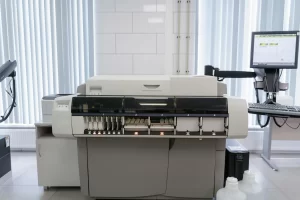
Biotechnology devices are becoming increasingly compact and integrated. Portable diagnostic systems, lab-on-a-chip platforms, and wearable medical technologies are driving demand for ultra-precision manufacturing capabilities.
This trend requires advanced technologies such as:
Manufacturers capable of achieving micron-level accuracy will play a major role in future biotechnology supply chains.
Automation is becoming a major trend in both biotechnology laboratories and manufacturing facilities. Modern precision manufacturing increasingly incorporates robotic systems, automated inspection equipment, AI-assisted process optimization, and smart factory management systems.
These technologies improve:
Smart manufacturing also helps reduce human error while improving scalability for high-volume biotechnology production.
Future biotechnology devices require materials with superior corrosion resistance, chemical stability, sterilization compatibility, and biocompatibility.
Common advanced materials include:
At the same time, advanced surface treatment technologies such as electropolishing, anodizing, and nano-coatings are becoming increasingly important for improving cleanliness, durability, and device performance.
CNC machining continues to be one of the most important manufacturing methods in biotechnology because of its flexibility, repeatability, and precision.
Future CNC manufacturing trends include:
High-precision CNC machining will continue to support the production of critical biotechnology components requiring tight tolerances and superior consistency.
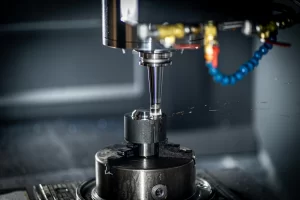
The future of biotechnology manufacturing is increasingly data-driven. Manufacturers are adopting digital technologies to improve quality management, process visibility, and production efficiency.
Key developments include:
Digital integration allows manufacturers to reduce downtime, improve process control, and optimize overall production performance.
As biotechnology equipment continues to evolve, precision manufacturing is facing increasing technical complexity. Modern biotechnology systems integrate optics, electronics, software, fluid control, and precision mechanical structures into highly compact platforms. This significantly increases the difficulty of machining and assembly while placing higher demands on micron-level manufacturing accuracy, system integration capability, and assembly consistency. Even small deviations can affect device functionality and experimental reliability.
At the same time, the biotechnology industry is heavily regulated by standards such as FDA regulations, ISO 13485, and GMP requirements. Manufacturers must not only ensure precision and product quality, but also establish comprehensive traceability and quality management systems covering material tracking, process inspection, clean manufacturing, and validation procedures. These compliance requirements increase both manufacturing complexity and operational costs.
In addition, the market is demanding faster product development cycles and greater customization. The rapid growth of precision medicine, molecular diagnostics, and laboratory automation requires manufacturers to shorten prototyping timelines, accelerate low-volume production, and quickly scale to mass production while maintaining strict quality standards. Balancing precision, flexibility, speed, and cost efficiency has become one of the biggest challenges for precision manufacturing companies in the biotechnology industry.
In the modern biotechnology industry, precision manufacturing companies are no longer simply component suppliers — they have become important partners in product development and technological innovation. As life science devices continue evolving toward higher precision, miniaturization, and intelligent integration, biotechnology companies increasingly rely on manufacturers with advanced capabilities in CNC machining, sheet metal fabrication, microfabrication, precision assembly, and clean manufacturing.
Beyond manufacturing parts, leading precision manufacturing companies also provide engineering support such as design optimization, manufacturability analysis (DFM), material selection, and process improvement. These capabilities help biotechnology companies shorten development cycles, reduce production costs, improve product reliability, and accelerate commercialization. As precision medicine, molecular diagnostics, and laboratory automation continue expanding, manufacturers with strong engineering expertise and advanced production technologies will play an increasingly critical role in the future biotechnology supply chain.
The future of precision manufacturing in biotechnology will continue to be driven by automation, miniaturization, digitalization, and advanced engineering technologies. As device complexity and performance requirements continue to rise, manufacturing companies must not only achieve higher machining precision, but also develop capabilities in system integration, clean manufacturing, and large-scale production. In this context, precision manufacturing is no longer a standalone production process, but a critical enabling foundation for innovation across high-end industries such as biotechnology, medical devices, new energy, and the automotive sector.
CTT Technology provides global customers with a one-stop solution for precision component R&D, manufacturing, and production. Our manufacturing capabilities cover CNC precision machining, complex structural part fabrication, sheet metal processing, and customized engineering solutions, enabling us to meet the requirements of high-precision, tight-tolerance, and complex-geometry components. By integrating advanced manufacturing technologies with a strict quality control system, we help our clients shorten development cycles, reduce manufacturing costs, and improve overall product performance.
If you are looking for a reliable precision manufacturing partner to support your biotechnology or advanced engineering projects, CTT Technology will provide you with professional, end-to-end engineering and manufacturing solutions.
Explore aerospace sheet metal processing, from precision cutting and forming to welding and finishing, for reliable custom aerospace components.
Discover how advanced CNC technology is transforming custom machined parts with higher precision, faster production, flexible volumes, and smarter manufacturing.
Learn how CNC machining tolerances impact automotive component accuracy and reliability, including standards, key factors, and precision manufacturing solutions.
Discover how precision machining supports HPP equipment manufacturing with high-quality custom metal parts, CNC machining, and sheet metal fabrication solutions.
Email to this supplier
Author:
Ms. CTT TECHNOLOGY (UK) LIMITED
E-mail:
Phone/WhatsApp:

Privacy statement: Your privacy is very important to Us. Our company promises not to disclose your personal information to any external company with out your explicit permission.