








Send Message
Privacy statement: Your privacy is very important to Us. Our company promises not to disclose your personal information to any external company with out your explicit permission.


CNC machining plays a key role in the manufacturing of medical and life science devices, where precision, reliability, and consistency are critical. From diagnostic systems to laboratory automation platforms, many components require tight tolerances and high-quality surface finishes.
It enables the production of complex geometries, rapid prototyping, and consistent batch manufacturing, making it a core technology in modern healthcare and life science engineering.
CNC machining is a manufacturing process that uses computer-programmed instructions to control machine tools such as mills, lathes, and CNC centers. It removes material from metal or plastic workpieces with high precision to create complex and accurate components.
Unlike manual machining, CNC machining provides higher accuracy, repeatability, and efficiency. CAD designs are converted into G-code, enabling automated production with minimal human intervention.
Due to its precision and flexibility, CNC machining is widely used in industries requiring tight tolerances and complex geometries, especially medical devices, life science instruments, aerospace, and electronics.
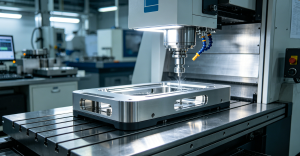
Medical and life science devices often operate in sensitive environments such as laboratories, hospitals, and cleanrooms. These applications require components with:
CNC machining ensures that components meet strict engineering and quality requirements, improving overall device reliability and performance.
CNC machining is widely used to produce critical parts such as:
These components are widely used in PCR machines, centrifuges, mass spectrometers, and laboratory automation systems.
Aluminum
Lightweight, corrosion-resistant, and highly machinable, widely used in analytical and portable instruments.
Stainless Steel
High strength and excellent chemical resistance, ideal for medical and pharmaceutical environments.
Titanium
Strong, lightweight, and biocompatible, commonly used in high-end medical applications.
Engineering Plastics
PEEK, ABS, and polycarbonate are used for insulation, lightweight structures, and chemical resistance applications.
CNC Milling
Used for complex 3D components such as housings, brackets, and structural parts.
CNC Turning
Ideal for cylindrical parts such as shafts, connectors, and fittings.
Multi-axis Machining
Enables high-precision complex geometries with fewer setups and higher efficiency.
Micro-machining
Used for ultra-small components in microfluidic and diagnostic systems.
CNC machining is widely applied across the life science industry due to its ability to produce high-precision and repeatable components for complex systems.
Diagnostic Equipment
CNC machining is used in PCR systems, immunoassay analyzers, and clinical diagnostic instruments. These devices require precise structural components to ensure accurate alignment of optical, thermal, and fluidic systems.
Laboratory Automation Systems
Automated systems for sample handling, liquid transfer, and high-throughput testing rely on CNC-machined frames, guides, and motion components to ensure accuracy and stability.
Biotechnology Research Equipment
Used in devices for cell culture, gene sequencing, and protein analysis. These systems often require custom components with tight tolerances and complex geometries.
Pharmaceutical Equipment
Applied in mixing systems, filling machines, and sterilization equipment. Components must meet strict hygiene and corrosion resistance requirements, often using stainless steel or engineered plastics.
Analytical and Imaging Instruments
Mass spectrometers, microscopes, and spectrophotometers rely on precision-machined structures to ensure stability and minimize vibration for accurate measurement.
Microfluidic Devices
CNC micro-machining enables precise fabrication of microchannels and microstructures used in lab-on-a-chip and diagnostic systems.
Overall, CNC machining supports innovation in the life science industry by enabling high-performance, reliable, and scalable instrument manufacturing.
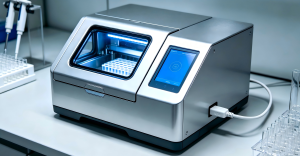
CNC machining offers significant advantages that make it particularly well-suited for medical and life science applications. Its ability to achieve extremely tight tolerances ensures that critical components such as optical mounts, fluidic parts, and structural frames maintain perfect alignment and functionality within complex instruments.
For medical and life science devices, these advantages translate directly into improved instrument accuracy, enhanced operational stability, and longer service life. As a result, CNC machining has become an indispensable manufacturing technology in the development of high-performance laboratory and healthcare equipment.
CNC machining is a foundational manufacturing technology for medical and life science devices. It enables the production of precise, reliable, and high-quality components required in advanced laboratory and healthcare systems.
As the industry continues to evolve toward higher automation and miniaturization, CNC machining will remain essential in supporting innovation and performance in medical technology.
Explore aerospace sheet metal processing, from precision cutting and forming to welding and finishing, for reliable custom aerospace components.
Discover how advanced CNC technology is transforming custom machined parts with higher precision, faster production, flexible volumes, and smarter manufacturing.
Learn how CNC machining tolerances impact automotive component accuracy and reliability, including standards, key factors, and precision manufacturing solutions.
Discover how precision machining supports HPP equipment manufacturing with high-quality custom metal parts, CNC machining, and sheet metal fabrication solutions.
Email to this supplier
Author:
Ms. CTT TECHNOLOGY (UK) LIMITED
E-mail:
Phone/WhatsApp:

Privacy statement: Your privacy is very important to Us. Our company promises not to disclose your personal information to any external company with out your explicit permission.