







Send Message
Privacy statement: Your privacy is very important to Us. Our company promises not to disclose your personal information to any external company with out your explicit permission.


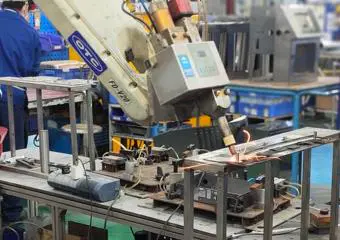
In the welding process, key welding techniques are not only the foundation for process implementation but also crucial for ensuring welding quality and safety. We need to understand that key welding techniques encompass many aspects, such as material selection, equipment application, and specific operating procedures. These techniques guide our welding projects, ensuring efficient connection between each step. Especially when selecting suitable welding materials, we must consider their physicochemical properties to meet practical needs. Simultaneously, the impact of pretreatment and post-treatment on the final weld quality cannot be ignored. For example, pretreatment removes surface oxides and impurities, while post-treatment helps improve the corrosion resistance and strength of the weld. By mastering these key points, we can not only improve our welding skills but also effectively reduce the defect rate and increase the overall success rate of the project. Therefore, comprehensive assessment and planning before each operation are essential to lay a solid foundation for our work.
In sheet metal welding, selecting suitable welding materials is our primary focus. Different materials have different physical and chemical properties; their selection must consider factors such as post-weld strength, corrosion resistance, and thermal expansion. Simultaneously, pretreatment and post-treatment are equally important. Before welding, the sheet metal should be thoroughly cleaned to ensure the surface is free of oil, rust, and other impurities, which could affect weld quality. After welding, appropriate post-treatment, such as heat treatment or coating, is necessary to improve the durability and aesthetics of the finished product.

Furthermore, mastering the correct use of welding equipment is crucial. When using a welding machine, it should be inspected regularly to ensure it is in good working order. The current and voltage should be adjusted appropriately according to the requirements of different materials and thicknesses to achieve optimal results. During operation, it is also important to maintain a suitable distance between the electrode and the workpiece, which can effectively prevent welding defects and improve the overall project quality. By comprehensively applying these steps and techniques, we can significantly improve the efficiency and safety of sheet metal welding, laying a solid foundation for subsequent work.
During the welding process, we need to pay attention to several important precautions to ensure welding quality and safety. First, the temperature and humidity of the welding environment directly affect the welding effect; therefore, we should try to work in a dry, well-ventilated place. Second, selecting suitable welding equipment is essential; for example, the model and power of the welding machine must be matched with the materials and structure to ensure it can effectively complete the task. Simultaneously, for different materials, we need to adjust welding parameters, such as current and voltage, to achieve the best fusion effect.
Furthermore, we cannot neglect the pretreatment of the workpiece, including removing surface oil and oxides, which can improve the weld tightness and reduce the defect rate. Post-treatment is equally crucial; appropriate cooling methods and heat treatment can enhance the weld strength, reduce internal stress accumulation, and thus reduce the probability of cracking. In addition, we should always pay attention to safety precautions, such as wearing appropriate protective equipment, to avoid harm from high temperatures and harmful fumes. By following these precautions, we can significantly improve the overall quality and safety of the welding process.
During the welding process, some common defects often affect the quality and performance of the final product. These defects include porosity, cracks, incomplete penetration, and inclusions. Porosity is usually caused by moisture or impurities in the welding material; therefore, we must carefully inspect the welding material to ensure it is dry and clean. Cracks are mainly caused by thermal stress concentration, which requires us to reasonably control the heating and cooling rates during welding to reduce stress generation. Incomplete penetration often occurs at the weld edges, resulting from insufficient wetting of the base material during operation, leading to a weak connection. Therefore, skilled techniques and proper operating methods are crucial. Additionally, contaminants may be due to the use of unclean materials or tools, reminding us of the importance of maintaining clean equipment and the environment. By understanding these common defects and their causes, we can better avoid these problems and improve weld quality.
The Impact of Welding Technology Advancements on Process Improvement
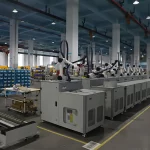
With the rapid development of technology, welding technology is constantly evolving, and these advancements have had a profound impact on improving welding processes. Firstly, we see the introduction of intelligent welding equipment, which ensures weld quality through precise control of welding parameters. Secondly, the development of automated welding technology allows us to improve efficiency in large-scale production and reduce the risk of human error. Thirdly, new welding materials and technologies, such as pulse welding and laser welding, have enriched our welding options, enabling us to handle a wider variety of materials and structures. Through these advanced methods, we can not only achieve higher strength and better corrosion resistance connections but also effectively reduce energy consumption and material waste. These technological advancements have propelled the entire industry to a higher level, making our work safer, more reliable, and more efficient. With the help of these emerging technologies, we have gained a deeper understanding and practical assurance of ensuring welding quality and improving production processes.
Discover how CTT Technology manufactures precision automotive parts—from engineering design to mass production. Explore our expertise in heavy truck components, bus chassis panels, CNC machining services, and custom CNC parts.
Explore compliance-driven precision manufacturing for medical devices, including custom production, full quality control, and engineering support for imaging, diagnostics, and life science equipment.
Discover precision metal parts for robotics with custom sheet metal fabrication, CNC machining, and scalable manufacturing solutions.
Benefiting from the booming biopharmaceutical industry and accelerated domestic substitution, the market for core equipment solutions for life sciences is experiencing rapid growth. This article focuses on global and Chinese market size forecasts, dissecting the core drivers of industry growth to help seize industry development opportunities.
Email to this supplier
Author:
Ms. CTT TECHNOLOGY (UK) LIMITED
E-mail:
Phone/WhatsApp:

Privacy statement: Your privacy is very important to Us. Our company promises not to disclose your personal information to any external company with out your explicit permission.