








Send Message
Privacy statement: Your privacy is very important to Us. Our company promises not to disclose your personal information to any external company with out your explicit permission.


In bending processes, equipment selection is crucial. Commonly used bending equipment includes CNC bending machines, hydraulic bending machines, and mechanical bending machines. CNC bending machines, with their high efficiency and precision, are widely used in mass production and are suitable for complex curves and various processing angles. In contrast, hydraulic bending machines, due to their greater force and stability, are more advantageous when handling thick materials and can easily achieve larger bending angles. Mechanical bending machines, with their simple structure and relatively low cost, are suitable for processing small batches of simple-shaped parts.
In practical applications, we need to select the appropriate equipment based on different materials, thicknesses, and product designs. For example, when processing aluminum alloys or stainless steel, we may prefer CNC or hydraulic equipment to ensure that deformation or cracks do not occur during bending. Therefore, we must not only pay attention to the type of equipment but also consider its application effect in the specific production environment to improve the overall efficiency and quality of the process.
In the bending process, controlling the bending angle is a crucial aspect that we must pay attention to. First, we need to use high-precision bending equipment to ensure consistent bending results in every operation. In recent years, CNC bending machines have been widely used; they can automatically adjust according to a set program to achieve more accurate angle control. Furthermore, the proper setting of the bending die is also crucial. The die design should match the material and thickness used to reduce errors caused by material properties.

During actual operation, we should also regularly calibrate the equipment to ensure its performance is always at its best. Changes in external environmental factors such as temperature and humidity can affect material properties, requiring a reassessment of bending parameters. In addition, using appropriate measuring tools, such as angle gauges or laser measuring instruments, can help us achieve more precise control. Through these methods and measures, we can significantly improve the accuracy of bending angle control and effectively increase production efficiency.
In the actual bending process, we often encounter defects that affect not only the product's appearance but also its performance. First, the most common defect is "cracks," which usually occur when the material strength is insufficient or the bending angle is too large. To address this issue, we need to select appropriate materials and control the bending angle to ensure operation within safe limits. Secondly, "deformation" is another challenging problem, usually caused by improper process parameters or inaccurate equipment settings. This can be reduced by optimizing the bending equipment settings and adjusting appropriate pressure and speed. Furthermore, "wrinkling" is also common, typically related to material thickness and bending radius. In this case, we recommend appropriate material treatment and selection of a suitable radius for better results. By meticulously managing production processes and continuously optimizing technical parameters, we can effectively reduce problems during production and improve overall product quality and production efficiency when dealing with these common defects.

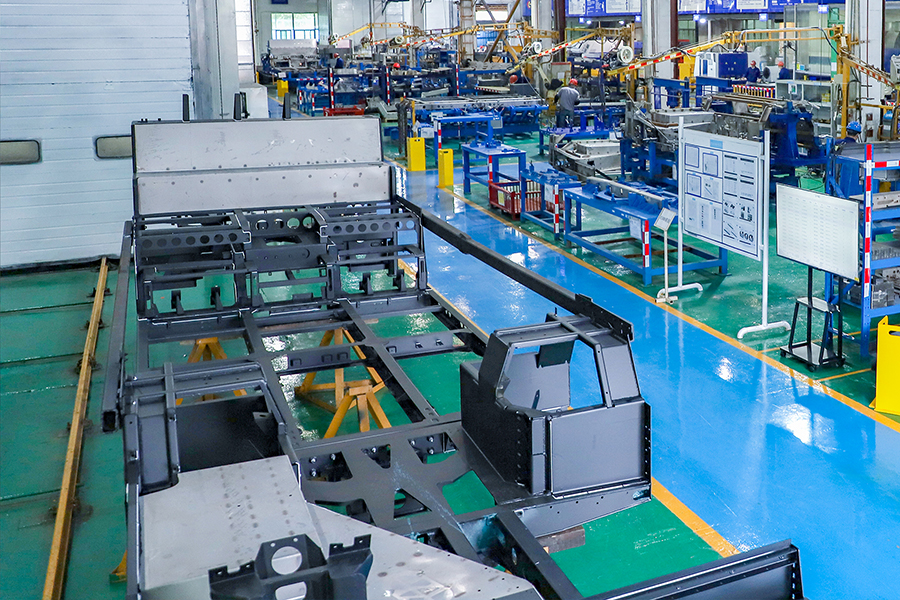
Bending technology plays a crucial role in multiple industries. We first see its widespread application in manufacturing, especially in metal processing and automotive manufacturing. In these industries, precise bending effectively enhances product strength and stability. For example, the bending design of automotive bodies not only needs to meet aesthetic requirements but also ensure the safety and impact resistance of the body structure; therefore, controlling the bending angle is particularly important in this process. Furthermore, we can see the increasing application of bending technology in the construction industry. In formwork fabrication and metal component installation, precise bending effectively reduces material waste and improves construction efficiency. Simultaneously, in home appliance manufacturing, such as refrigerators and washing machines, optimized design allows for more flexible internal structures, thereby enhancing product functionality and ease of use.
Finally, bending technology is equally important in the aerospace field, as various components must possess extremely high precision and strength to withstand harsh environmental challenges. Therefore, regardless of the industry, optimizing bending processes not only improves production efficiency but also ensures product quality, providing the market with more competitive and high-quality goods.
Learn how DFM improves CNC bending accuracy, reduces defects, and lowers production costs with practical sheet metal design tips.
Learn everything about GD&T in CNC machining, including symbols, benefits, and best practices. Improve CNC machining precision and optimize CNC machining tolerances.
Learn essential sheet metal design guidelines for bends, DFM principles, and aluminum part fabrication. Discover how CNC bending, precision sheet metal processing, and CNC sheet metal bending improve manufacturability, accuracy, and production efficiency.
Learn how Design for Manufacturing (DFM) reduces production costs, improves quality, and optimizes sheet metal fabrication, laser cutting tolerances, and CNC machining.
Email to this supplier
Author:
Ms. CTT TECHNOLOGY (UK) LIMITED
E-mail:
Phone/WhatsApp:

Privacy statement: Your privacy is very important to Us. Our company promises not to disclose your personal information to any external company with out your explicit permission.