








Send Message
Privacy statement: Your privacy is very important to Us. Our company promises not to disclose your personal information to any external company with out your explicit permission.


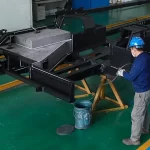
Medical sheet metal fabrication is an indispensable part of modern medical device manufacturing, and we place a high value on precision, durability, and safety in this process. Sheet metal fabrication involves not only the cutting, forming, and assembly of sheet metal, but also continuous innovation in process technology. Conducting medical sheet metal fabrication requires a thorough understanding of the characteristics of different materials and processing methods to ensure that the manufactured medical devices meet stringent industry standards. Furthermore, medical devices have extremely stringent requirements for product quality and performance; therefore, we must closely monitor quality control at every stage.
Against this backdrop, the importance of medical sheet metal fabrication is increasingly prominent. We must not only consider how to improve product quality, but also balance production efficiency and cost control. This requires our design solutions to achieve a balance between innovation and practicality. Therefore, we insist on using advanced processing technologies while continuously improving them in response to market demands to adapt to the rapid development of the medical industry. This not only enhances our market competitiveness but also provides end users with higher-performance, safer, and more reliable medical devices, contributing to the health of society as a whole.
In medical sheet metal fabrication, laser cutting, as an advanced processing technology, has become an indispensable tool. Laser cutting not only enables high-precision cutting of complex shapes but also minimizes heat-affected zones, effectively reducing material deformation. When using laser cutting, attention must be paid to beam focusing and cutting speed to ensure optimal cutting results and surface quality. Meanwhile, bending is also a crucial step in medical sheet metal processing. Proper bending techniques can effectively improve part accuracy and production efficiency. We must select appropriate dies and control bending angles to avoid material fatigue or cracking due to mechanical factors. Furthermore, welding technology is equally critical in medical sheet metal processing. Choosing the right welding method not only affects weld quality but also the reliability of the entire product. We typically determine the welding method based on material thickness, type, and product design requirements. In practice, we comprehensively consider the coordination between processes to ensure efficient connection between each step, thereby improving the effectiveness and quality stability of the entire production process.
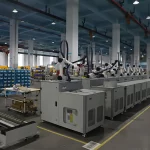
In medical sheet metal processing, process selection is crucial and influenced by various factors. First, product design requirements often directly determine the chosen processing technology. For example, different shape, size, and material requirements guide our choice between laser cutting, bending, or welding. Furthermore, production efficiency is also a crucial consideration. In high-volume production, we tend to choose technologies with high automation and the ability to complete processing tasks quickly to ensure delivery time and production efficiency. Meanwhile, cost control is also a key factor in determining process selection. With limited budgets, we may need to weigh the costs and benefits of different processes, such as choosing more cost-effective materials and technologies. Finally, industry standards and regulations also influence our decisions. Medical devices typically involve stringent safety and quality standards, so we need to ensure that the selected processes comply with relevant regulations to guarantee the compliance and reliability of the final product in the market. These factors combined make process selection in medical sheet metal processing more complex and diverse.

In the manufacturing process of medical devices, various sheet metal processing processes play a vital role. First, laser cutting technology, with its high precision and flexibility, significantly enhances our creativity in complex structural designs. This allows us to meet diverse medical needs while reducing material waste and improving production efficiency. Second, bending processes provide an important way to form sheet metal; skilled bending techniques ensure the geometric accuracy and structural strength of the product, thereby improving the overall stability and safety of the equipment. Furthermore, welding technology is particularly crucial when connecting various sheet metal parts, and the choice of different welding methods directly affects the strength and durability of the finished product. Choosing the appropriate welding method not only ensures a strong connection but also enhances the overall aesthetics, positively contributing to the competitiveness of our products in the market. In medical device manufacturing, we should comprehensively consider the coordination and cooperation between these processes to achieve high-quality, low-cost production. By deeply analyzing these important processes, we can better grasp the key elements in product design and manufacturing, providing end users with safer and more efficient medical devices.
Discover how CTT Technology manufactures precision automotive parts—from engineering design to mass production. Explore our expertise in heavy truck components, bus chassis panels, CNC machining services, and custom CNC parts.
Explore compliance-driven precision manufacturing for medical devices, including custom production, full quality control, and engineering support for imaging, diagnostics, and life science equipment.
Discover precision metal parts for robotics with custom sheet metal fabrication, CNC machining, and scalable manufacturing solutions.
Benefiting from the booming biopharmaceutical industry and accelerated domestic substitution, the market for core equipment solutions for life sciences is experiencing rapid growth. This article focuses on global and Chinese market size forecasts, dissecting the core drivers of industry growth to help seize industry development opportunities.
Email to this supplier
Author:
Ms. CTT TECHNOLOGY (UK) LIMITED
E-mail:
Phone/WhatsApp:

Privacy statement: Your privacy is very important to Us. Our company promises not to disclose your personal information to any external company with out your explicit permission.