








Send Message
Privacy statement: Your privacy is very important to Us. Our company promises not to disclose your personal information to any external company with out your explicit permission.


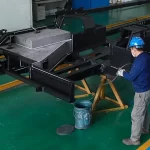
Sheet metal bending is one of the most commonly used metal forming processes in modern manufacturing. By applying external force to the material, the sheet undergoes plastic deformation and is shaped to the required angle and geometry. This process is typically performed using a press brake, which uses precise tooling and controlled pressure to ensure accuracy.
The bending workflow generally includes raw material preparation, programming, clamping, pressure application and final inspection. During preparation, selecting the appropriate sheet thickness and material is essential to achieving optimal results. In the programming stage, operators set bend angles and depths to ensure consistency and precision across batches. Proper clamping ensures material stability during bending. By gradually applying pressure in sequence, the sheet is formed into its designed shape.
This process not only requires technicians with strong expertise but also strict adherence to industry standards to ensure product quality and production efficiency.
Accuracy and quality are critical in sheet metal bending, as they directly affect product performance, assembly and long-term reliability. Understanding sheet metal bending tolerances is essential—tolerances define acceptable dimensional variations during production. Properly controlled tolerances ensure compatibility between components, while poor tolerance management may result in assembly issues and compromised product performance.

Several techniques help ensure bending precision. First, raw materials must be thoroughly inspected before processing to confirm thickness, hardness and other essential properties. Equipment condition is another key factor—press brakes must be regularly calibrated to minimize errors caused by wear or improper adjustments.
Additionally, clear operational guidelines should be implemented to ensure workers follow standardized procedures, resulting in improved consistency and reliability throughout production.
By applying these measures, bending accuracy can be significantly enhanced, providing a solid foundation for subsequent manufacturing processes.
Sheet metal bending is widely used across various manufacturing sectors.
In the automotive industry, components such as body frames, dashboards and chassis structures rely heavily on bending processes to achieve precise shapes that ensure safety and performance. This technique reduces material waste, increases efficiency and ensures high-quality output.
In the electronics industry, bending is essential for producing enclosures, brackets and structural parts, ensuring both durability and aesthetic appeal.
In the construction field, bending is used to create components such as ventilation ducts, stair treads and architectural panels, contributing to both structural integrity and modern design.

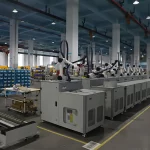
With increased automation and intelligent manufacturing, sheet metal bending is also widely applied in robotics and automated equipment. These industries require high precision and reliability, driving advancements in bending technologies and supporting greener, more efficient industrial development.
Sheet metal bending plays a fundamental role in transforming flat materials into complex three-dimensional structures. Through precise bending techniques, various components can be designed to improve both performance and aesthetics.
The process also significantly enhances product strength and rigidity—especially in high-load applications such as automotive and electromechanical equipment. By optimizing material usage and geometric design, bending allows components to be lightweight yet strong, which is crucial in today’s manufacturing landscape.
Additionally, combining advanced equipment with automation boosts production efficiency, reduces costs and strengthens market competitiveness. The process also enables tight dimensional control, improving consistency across parts.
As design trends shift toward customization and diversification, sheet metal bending provides the flexibility manufacturers need to meet various customer and market demands—fostering continuous technological innovation.
Overall, sheet metal bending enriches product diversity, enhances industry capability and helps manufacturers remain competitive in the global market.
Learn how DFM improves CNC bending accuracy, reduces defects, and lowers production costs with practical sheet metal design tips.
Learn everything about GD&T in CNC machining, including symbols, benefits, and best practices. Improve CNC machining precision and optimize CNC machining tolerances.
Learn essential sheet metal design guidelines for bends, DFM principles, and aluminum part fabrication. Discover how CNC bending, precision sheet metal processing, and CNC sheet metal bending improve manufacturability, accuracy, and production efficiency.
Learn how Design for Manufacturing (DFM) reduces production costs, improves quality, and optimizes sheet metal fabrication, laser cutting tolerances, and CNC machining.
Email to this supplier
Author:
Ms. CTT TECHNOLOGY (UK) LIMITED
E-mail:
Phone/WhatsApp:

Privacy statement: Your privacy is very important to Us. Our company promises not to disclose your personal information to any external company with out your explicit permission.