









Send Message
Privacy statement: Your privacy is very important to Us. Our company promises not to disclose your personal information to any external company with out your explicit permission.


The medical industry demands exceptional precision, reliability, and safety. Whether manufacturing surgical instruments, orthopedic implants, diagnostic equipment, or laboratory devices, selecting the right material is one of the most critical decisions in the product development process.
CNC machining remains one of the preferred manufacturing methods for medical components because it delivers tight tolerances, excellent surface finishes, and consistent quality. However, the success of a medical device depends not only on machining accuracy but also on the performance characteristics of the chosen material.
In this guide, we compare the most commonly used CNC machining materials for medical devices and explain how to select the best option for your application.
Medical devices often operate in demanding environments where they must withstand sterilization processes, bodily fluids, chemicals, and repeated use. Material selection directly affects:
Choosing the wrong material can compromise device performance, increase production costs, or create regulatory challenges.
Before selecting a material, engineers should evaluate several important requirements:
Materials that come into direct contact with human tissue or bodily fluids must not trigger adverse biological reactions.
Medical devices frequently undergo sterilization through steam, gamma radiation, ethylene oxide (EtO), or chemical disinfectants. Materials must maintain their properties after repeated sterilization cycles.
Applications such as surgical instruments and implants require high strength, fatigue resistance, and dimensional stability.
Medical environments expose devices to moisture, chemicals, and cleaning agents. Corrosion-resistant materials improve safety and longevity.
Lightweight materials improve patient comfort and enhance usability for handheld surgical instruments.
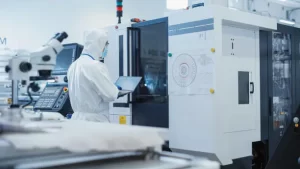
Titanium is one of the most widely used materials in the medical industry due to its outstanding combination of strength, biocompatibility, and corrosion resistance.
Advantages:
Typical Applications:
Considerations:
Titanium is more expensive than many alternative materials and requires specialized machining expertise due to its hardness and heat generation during cutting.
Medical-grade stainless steels such as 316L and 17-4 PH are commonly used for instruments and equipment components.
Advantages:
Typical Applications:
Considerations:
Stainless steel is heavier than titanium and may not be suitable for long-term implant applications where weight reduction is critical.
Aluminum alloys offer excellent machinability and are frequently used in non-implantable medical equipment.
Advantages:
Typical Applications:
Considerations:
Aluminum generally lacks the biocompatibility and wear resistance required for permanent implant applications.
Polyether Ether Ketone (PEEK) has become increasingly popular in advanced medical applications.
Advantages:
Typical Applications:
Considerations:
PEEK is significantly more expensive than standard engineering plastics but offers superior performance in demanding applications.
Engineering plastics such as Delrin (POM), Ultem (PEI), PTFE, and UHMW-PE are commonly machined for disposable and reusable medical components.
Advantages:
Typical Applications:
Considerations:
Material selection should account for sterilization requirements and long-term mechanical performance.
| Material | Biocompatibility | Strength | Corrosion Resistance | Weight | Relative Cost |
|---|---|---|---|---|---|
| Titanium | Excellent | Excellent | Excellent | Light | High |
| Stainless Steel | Very Good | Excellent | Very Good | Heavy | Medium |
| Aluminum | Good | Good | Good | Very Light | Low |
| PEEK | Excellent | Good | Excellent | Very Light | High |
| Medical Plastics | Good | Moderate | Good | Very Light | Low-Medium |
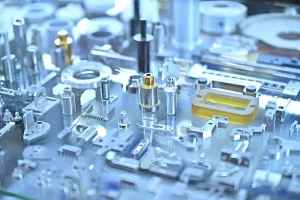
At CTT Technology, we provide precision CNC machining solutions for medical device manufacturers, startups, and OEMs worldwide, ranging from rapid prototyping to complex high-volume production. Our engineering team specializes in working with a wide range of medical-grade metals and plastics to produce components that meet stringent quality and performance standards. From simple brackets to complex welded assemblies, we deliver high-quality, precision-engineered solutions tailored to your needs.
Our capabilities include:
From surgical instruments and diagnostic devices to laboratory equipment and medical technology components, we help our clients bring innovative medical products to market faster and more efficiently.
Selecting the right CNC machining material is essential for achieving the performance, safety, and reliability required in medical devices. Titanium offers unmatched biocompatibility for implants, stainless steel provides excellent durability at a lower cost, aluminum enables lightweight equipment manufacturing, while PEEK and advanced medical plastics deliver unique benefits for specialized applications.
Working with an experienced manufacturing partner ensures that material selection, machining processes, and quality control align with your project requirements. By combining the right material with precision CNC machining, medical device manufacturers can achieve superior product performance and long-term reliability.
Compare CNC machining materials for medical devices. Learn the pros, cons, biocompatibility, durability, and cost of each material.
Discover how precision CNC machining supports medical devices with tight tolerances, high quality, compliance, and dependable performance.
Discover how medical CNC machining services deliver precision, reliability, and quality for surgical instruments, implants, diagnostic equipment, and healthcare devices.
Discover why custom CNC parts are vital in 2026 manufacturing, improving precision, rapid prototyping, production flexibility, and efficiency.
Email to this supplier
Author:
Ms. CTT TECHNOLOGY (UK) LIMITED
E-mail:
Phone/WhatsApp:

Privacy statement: Your privacy is very important to Us. Our company promises not to disclose your personal information to any external company with out your explicit permission.