








Send Message
Privacy statement: Your privacy is very important to Us. Our company promises not to disclose your personal information to any external company with out your explicit permission.


The medical industry demands an exceptional level of precision, reliability, and quality. From surgical instruments and diagnostic equipment to implantable devices and laboratory components, every medical part must meet strict performance and safety requirements. Even the smallest dimensional deviation can affect functionality and patient safety.
As medical technology continues to evolve, manufacturers require advanced production methods capable of delivering highly accurate and repeatable components. Medical CNC machining has become one of the most trusted manufacturing solutions for producing complex medical parts with tight tolerances and superior surface finishes.
In this article, we explore the importance of medical CNC machining services, common applications, material options, and how to choose the right manufacturing partner for your healthcare projects.
Medical CNC machining refers to the use of Computer Numerical Control (CNC) technology to manufacture precision components used in medical devices and healthcare equipment. CNC machines operate through programmed instructions, allowing manufacturers to produce complex geometries with exceptional accuracy and consistency.
Unlike conventional manufacturing methods, CNC machining offers:
These advantages make CNC machining ideal for both prototype development and full-scale medical production.
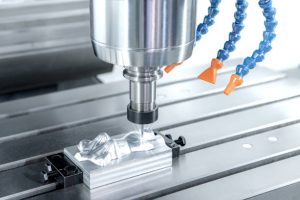
Medical devices often operate in highly sensitive environments where reliability is critical. Whether a component is used in a surgical tool, imaging device, or implantable product, precision directly impacts performance and safety.
Medical components must function exactly as intended. Poorly manufactured parts can lead to device failure, inaccurate diagnoses, or complications during medical procedures.
Healthcare products are subject to strict industry regulations and quality standards. Precision machining helps manufacturers maintain consistency and meet demanding specifications.
Accurate machining ensures that components fit together correctly, reducing wear, improving performance, and extending product lifespan.
Modern medical devices are becoming increasingly compact. CNC machining enables the production of small and intricate components without sacrificing precision.
CNC machining is widely used across various sectors of the medical industry.
These instruments require exceptional precision, smooth finishes, and corrosion resistance.
Implants must be manufactured from biocompatible materials with extremely tight tolerances.
Precision machining ensures reliable equipment performance and measurement accuracy.
Customized prosthetic and orthopedic components often require complex geometries that CNC machining can produce efficiently.
Electronic medical devices require durable and precisely manufactured housings to protect sensitive internal components.
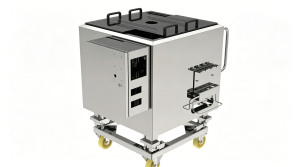
Material selection plays a critical role in medical manufacturing.
Medical-grade stainless steel is widely used because of its:
Titanium is highly valued for:
Aluminum offers:
Materials such as PEEK, Delrin, PTFE, and UHMW are frequently used for:
Modern CNC equipment can achieve extremely tight tolerances, making it suitable for mission-critical medical applications.
Automated machining processes reduce human error and ensure repeatable production results.
Medical device developers can quickly validate designs and accelerate product development cycles.
CNC machining supports everything from prototype quantities to high-volume production.
Multi-axis CNC machining enables the production of intricate designs that would be difficult or impossible with traditional manufacturing methods.
Selecting a manufacturing partner is just as important as selecting the right design and materials.
Consider the following factors:
Choose a supplier with experience producing medical components and understanding industry requirements.
Look for CNC milling, CNC turning, sheet metal fabrication, welding, assembly, and finishing services under one roof.
Reliable manufacturers implement comprehensive inspection procedures and strict quality control standards.
A qualified partner should have extensive experience machining both metals and engineering plastics used in medical applications.
The best suppliers can support projects from initial concept through full-scale production.
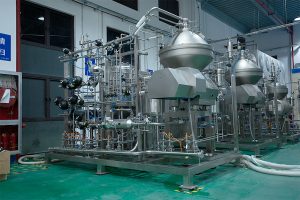
At CTT Technology, we provide precision CNC machining and sheet metal fabrication solutions for customers across the medical device industry. Whether you require rapid prototypes, low-volume production, or large-scale manufacturing, our experienced engineering and production teams are committed to delivering reliable, high-quality results.
Our Advantages:
From simple brackets and precision-machined components to complex welded assemblies, CTT Technology helps medical manufacturers bring innovative products to market with confidence, quality, and efficiency.
Medical CNC machining plays a vital role in modern healthcare manufacturing. Its ability to deliver precise, reliable, and repeatable components makes it an essential technology for producing medical devices, implants, surgical instruments, and diagnostic equipment.
By partnering with an experienced manufacturer like CTT Technology, medical companies can ensure product quality, accelerate development timelines, and meet the demanding requirements of today's healthcare industry.
Learn how DFM improves CNC bending accuracy, reduces defects, and lowers production costs with practical sheet metal design tips.
Learn everything about GD&T in CNC machining, including symbols, benefits, and best practices. Improve CNC machining precision and optimize CNC machining tolerances.
Learn essential sheet metal design guidelines for bends, DFM principles, and aluminum part fabrication. Discover how CNC bending, precision sheet metal processing, and CNC sheet metal bending improve manufacturability, accuracy, and production efficiency.
Learn how Design for Manufacturing (DFM) reduces production costs, improves quality, and optimizes sheet metal fabrication, laser cutting tolerances, and CNC machining.
Email to this supplier
Author:
Ms. CTT TECHNOLOGY (UK) LIMITED
E-mail:
Phone/WhatsApp:

Privacy statement: Your privacy is very important to Us. Our company promises not to disclose your personal information to any external company with out your explicit permission.