







Send Message
Privacy statement: Your privacy is very important to Us. Our company promises not to disclose your personal information to any external company with out your explicit permission.


In today's highly competitive manufacturing landscape, the demand for complex, high-precision components continues to grow across industries such as aerospace, medical devices, automotive, electronics, and industrial equipment. Traditional machining methods often struggle to meet the tight tolerances, intricate geometries, and demanding quality standards required for these applications.
Advanced CNC machining techniques have revolutionized the way manufacturers produce complex parts, enabling greater precision, efficiency, and repeatability than ever before. By combining sophisticated software, multi-axis machine tools, and automated processes, manufacturers can create intricate components while maintaining exceptional quality.
CNC (Computer Numerical Control) machining is an advanced manufacturing process that uses computer-programmed software to control machine tools and automate the production of precision components. By converting digital CAD designs into machining instructions, CNC machines can perform highly accurate cutting, milling, drilling, turning, and shaping operations on a wide range of materials.
Unlike conventional manual machining, CNC technology offers exceptional repeatability, consistency, and precision, making it ideal for producing both simple and highly complex parts. Modern CNC systems can achieve extremely tight tolerances while maintaining high production efficiency, even for intricate geometries and demanding engineering applications.
CNC machining is widely used across industries such as aerospace, automotive, medical devices, electronics, robotics, and industrial equipment manufacturing. Whether producing a single prototype or thousands of production parts, CNC technology provides manufacturers with the flexibility to meet strict quality requirements while reducing lead times and minimizing human error.
Today, advanced CNC machining technologies—including 5-axis machining, multi-axis turning, high-speed machining, and automated manufacturing systems—have further expanded the capabilities of precision manufacturing, enabling the production of increasingly complex components that were once difficult or impossible to manufacture efficiently.
Modern products are becoming increasingly sophisticated. Engineers are constantly designing parts with:
These characteristics often exceed the capabilities of conventional machining methods. Advanced CNC machining provides the flexibility and precision necessary to manufacture these challenging components while reducing production time and minimizing errors.
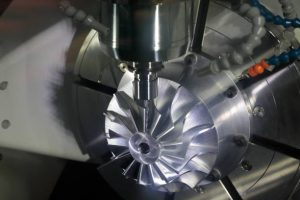
One of the most significant advancements in CNC manufacturing is 5-axis machining.
Unlike traditional 3-axis machines that move along the X, Y, and Z axes, 5-axis CNC machines add two rotational axes, allowing the cutting tool to approach the workpiece from virtually any direction.
This technology is widely used in aerospace turbine components, medical implants, automotive prototypes, and precision industrial equipment.
Many complex parts require both turning and milling operations. Traditionally, these processes were completed on separate machines, resulting in multiple setups and increased risk of dimensional inaccuracies.
Modern mill-turn centers combine both operations into a single machine, enabling manufacturers to complete highly complex parts in one setup.
Advantages:
Mill-turn technology is particularly valuable for producing shafts, connectors, housings, and precision mechanical components.
High-Speed Machining utilizes advanced cutting strategies, optimized tool paths, and high spindle speeds to remove material efficiently while maintaining excellent surface quality.
HSM is especially effective when machining aluminum, titanium, stainless steel, and other high-performance materials commonly used in aerospace and medical applications.
Some complex geometries cannot be produced using conventional cutting tools. Electrical Discharge Machining (EDM) offers an effective solution.
EDM removes material through controlled electrical discharges rather than mechanical cutting, making it ideal for intricate features and hard materials.
Because EDM generates minimal cutting forces, it is particularly useful for delicate or highly detailed components.
Advanced CNC machining relies heavily on sophisticated CAD/CAM software.
Computer-Aided Design (CAD) allows engineers to create detailed digital models, while Computer-Aided Manufacturing (CAM) converts those models into optimized machining programs.
Modern CAM systems can simulate entire machining processes before production begins, helping manufacturers identify potential issues and reduce costly mistakes.
Automation is transforming CNC machining operations worldwide.
By integrating robotic systems, automated tool changers, pallet systems, and real-time monitoring technologies, manufacturers can achieve greater productivity and consistency.
For both small-batch and high-volume production, automation helps maintain efficiency while ensuring precision standards are met.
Complex parts are often manufactured from difficult-to-machine materials, including:
Advanced machining strategies, specialized tooling, and optimized cutting parameters are essential to achieve the required precision while maintaining material integrity.
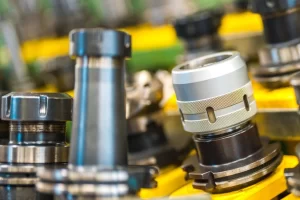
Aerospace components require exceptional precision, lightweight designs, and strict quality standards. Advanced CNC machining enables the production of complex structural and engine components with outstanding accuracy.
Medical equipment and implants demand biocompatibility, tight tolerances, and flawless surface finishes. Multi-axis machining and EDM play critical roles in manufacturing these components.
Automotive manufacturers rely on advanced CNC technologies to produce prototypes, performance parts, and precision assemblies efficiently.
Miniaturized electronic components often feature intricate geometries that require highly accurate machining processes.
Heavy-duty industrial machinery depends on durable, high-precision components capable of withstanding demanding operating conditions.
The success of any complex machining project depends not only on technology but also on the capabilities of the manufacturing partner.
When selecting a CNC machining supplier, consider:
An experienced manufacturing partner can optimize designs for manufacturability, reduce costs, and ensure consistent quality throughout the production process.
As product designs continue to evolve, advanced CNC machining techniques have become essential for producing complex parts with exceptional precision and reliability. Technologies such as 5-axis machining, mill-turn processing, EDM, high-speed machining, and smart automation enable manufacturers to overcome engineering challenges while improving efficiency and quality.
Whether developing aerospace components, medical devices, automotive parts, or industrial equipment, partnering with an experienced CNC machining provider ensures that even the most complex designs can be transformed into high-quality finished products.
At CTT Technology, we combine advanced CNC machining technologies, rigorous quality control, and extensive manufacturing expertise to deliver precision-engineered components for rapid prototyping, low-volume production, and large-scale manufacturing projects across a wide range of industries.
Explore aerospace sheet metal processing, from precision cutting and forming to welding and finishing, for reliable custom aerospace components.
Discover how advanced CNC technology is transforming custom machined parts with higher precision, faster production, flexible volumes, and smarter manufacturing.
Learn how CNC machining tolerances impact automotive component accuracy and reliability, including standards, key factors, and precision manufacturing solutions.
Discover how precision machining supports HPP equipment manufacturing with high-quality custom metal parts, CNC machining, and sheet metal fabrication solutions.
Email to this supplier
Author:
Ms. CTT TECHNOLOGY (UK) LIMITED
E-mail:
Phone/WhatsApp:

Privacy statement: Your privacy is very important to Us. Our company promises not to disclose your personal information to any external company with out your explicit permission.