








Send Message
Privacy statement: Your privacy is very important to Us. Our company promises not to disclose your personal information to any external company with out your explicit permission.


In 2026, modern manufacturing is evolving faster than ever before. Industries such as automotive, aerospace, medical devices, electronics, and industrial equipment are under constant pressure to deliver higher precision, faster production cycles, and more cost-efficient solutions.
In this environment, custom CNC parts have become a core foundation of advanced manufacturing. They are not only used for production but also for rapid prototyping, product validation, and scalable manufacturing—from single prototypes to mass production.
For companies that rely on performance, reliability, and speed, CNC machining is no longer optional. It is a strategic necessity.
Today’s products are becoming more compact, more complex, and far more demanding in terms of performance. A small deviation in tolerance can affect the entire system—especially in industries like aerospace or medical devices.
Custom CNC machining solves this challenge by delivering highly accurate and repeatable components through computer-controlled manufacturing processes.
Instead of relying on manual fabrication, every cut, hole, and surface finish is precisely executed according to digital design data. This ensures consistency across every batch, whether you are producing 10 parts or 10,000.
The result is not only better dimensional accuracy, but also improved assembly performance and long-term product reliability.
Speed has become one of the most important competitive advantages in manufacturing. Companies that can validate designs quickly are more likely to win in the market.
Custom CNC machining plays a key role in this process because it allows engineers to turn CAD designs into functional prototypes in a very short time. Unlike 3D printing or mock-up methods, CNC prototypes are made from real production materials, meaning they can be tested under real working conditions.
This helps teams quickly evaluate strength, fit, thermal performance, and durability before moving into full production.
In many cases, CNC prototyping significantly reduces development risk and shortens time-to-market.
One of the most powerful advantages of CNC machining is its flexibility across production stages. A single machining process can support the entire product lifecycle.
Manufacturers often start with a few prototypes, move into small-batch testing, and eventually scale into full production. CNC machining allows this transition without changing tooling systems or redesigning production workflows.
This flexibility is especially important for fast-moving industries where demand can shift quickly. Companies can scale up or down based on real market feedback, reducing both inventory risk and production waste.
Modern engineering is no longer limited to simple geometric parts. Products today often require complex structures, tight assembly integration, and multi-functional components.
Custom CNC machining makes this possible by supporting multi-axis machining and advanced fabrication techniques.
It is commonly used to produce:
At CTT Technology, we also support welded assemblies and sheet metal components that require both machining accuracy and structural strength.
This level of design freedom allows engineers to optimize products for performance rather than manufacturing limitations.
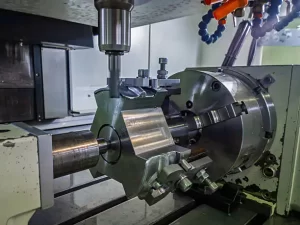
One of the biggest challenges in manufacturing is maintaining consistent quality over time. Traditional fabrication methods often introduce variations due to manual processes or tooling wear.
CNC machining eliminates much of this variability. Once a program is verified, the machine can reproduce identical parts with extremely high repeatability.
This ensures:
For industries with strict regulatory requirements, such as aerospace and medical manufacturing, this consistency is essential.
Although CNC machining is often associated with high precision, it is also a cost-efficient solution when evaluated across the full product lifecycle.
Instead of relying on multiple production stages or expensive tooling changes, CNC machining reduces unnecessary complexity. It also minimizes material waste by optimizing cutting paths and improving yield rates.
More importantly, it reduces hidden costs such as rework, delays, and quality failures.
When combined with efficient production planning, CNC machining becomes one of the most cost-effective solutions for both low-volume and high-volume manufacturing.
Global supply chains continue to face uncertainty, from logistics delays to material shortages. As a result, manufacturers are shifting toward more flexible and localized production strategies.
Custom CNC manufacturing helps improve supply chain resilience by reducing dependency on long and complex production networks. With a reliable CNC partner, companies can respond faster to demand changes and avoid production bottlenecks.
This is especially important for industries that require just-in-time manufacturing or frequent design updates.
Sustainability is no longer a secondary concern—it is now a key business requirement.
CNC machining contributes to more sustainable manufacturing in several ways. It reduces material waste through optimized cutting strategies, supports lightweight product design, and improves the lifespan of components through higher precision and better structural integrity.
In addition, on-demand production reduces the need for large inventories, which helps lower overall environmental impact.
Not all CNC suppliers offer the same level of capability. Choosing the right partner directly affects product quality, delivery time, and long-term production success.
Key factors to evaluate include technical expertise, material processing capabilities, quality control systems, and engineering support. Equally important is whether the supplier can support both rapid prototyping and scalable production.
At CTT Technology, we specialize in custom sheet metal fabrication and CNC machining services, supporting everything from early-stage prototypes to full-scale industrial production across multiple industries.
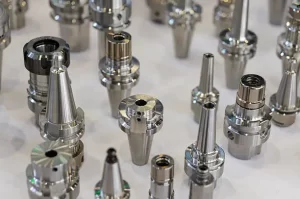
In 2026, custom CNC parts are no longer just manufacturing components—they are strategic enablers of innovation, speed, and scalability.
They help companies reduce development cycles, improve product performance, and maintain consistency across global production demands. Most importantly, they allow manufacturers to stay flexible in an increasingly competitive and fast-changing environment.
For companies looking to stay ahead, investing in high-quality CNC machining is not just a production decision—it is a long-term strategic advantage.
Explore aerospace sheet metal processing, from precision cutting and forming to welding and finishing, for reliable custom aerospace components.
Discover how advanced CNC technology is transforming custom machined parts with higher precision, faster production, flexible volumes, and smarter manufacturing.
Learn how CNC machining tolerances impact automotive component accuracy and reliability, including standards, key factors, and precision manufacturing solutions.
Discover how precision machining supports HPP equipment manufacturing with high-quality custom metal parts, CNC machining, and sheet metal fabrication solutions.
Email to this supplier
Author:
Ms. CTT TECHNOLOGY (UK) LIMITED
E-mail:
Phone/WhatsApp:

Privacy statement: Your privacy is very important to Us. Our company promises not to disclose your personal information to any external company with out your explicit permission.