








Send Message
Privacy statement: Your privacy is very important to Us. Our company promises not to disclose your personal information to any external company with out your explicit permission.


The medical industry demands some of the highest manufacturing standards in the world. From surgical instruments and diagnostic equipment to implantable devices and laboratory systems, every component must perform flawlessly under strict regulatory requirements. Even the smallest dimensional deviation can affect functionality, safety, and patient outcomes.
This is why medical device machining requires exceptional precision. Manufacturers must achieve tight tolerances, superior surface finishes, and consistent quality throughout the entire production process. Whether producing prototypes, small batches, or large-scale production runs, precision machining plays a critical role in ensuring the reliability and performance of medical devices.
Unlike many industrial applications, medical components directly impact human health. Parts used in medical devices often interact with sensitive biological systems, requiring exact dimensions and flawless performance.
High-precision machining ensures:
A minor manufacturing error that may be acceptable in other industries can lead to serious consequences in medical applications.
Medical device components frequently require extremely tight tolerances, often measured in microns. These tolerances ensure that parts function exactly as intended and integrate seamlessly with other components.
Examples include:
Advanced CNC machining technology allows manufacturers to achieve repeatable accuracy across both prototype and production quantities.
Modern medical devices are becoming increasingly sophisticated. Many components feature intricate geometries, thin walls, micro-sized features, and complex internal structures.
Precision CNC machining enables manufacturers to produce:
Multi-axis machining technology makes it possible to manufacture highly complex designs while maintaining dimensional accuracy and structural integrity.
Medical devices are manufactured from a wide range of specialized materials, including:
These materials often require specialized machining techniques to maintain their mechanical properties, corrosion resistance, and biocompatibility.
For example, titanium implants must be machined with exceptional care to avoid surface damage that could affect long-term performance inside the human body.
In medical applications, surface quality is often just as important as dimensional accuracy.
A superior surface finish can:
Advanced machining and finishing processes help manufacturers achieve the required surface characteristics while meeting strict medical standards.
Medical device manufacturers operate under stringent quality management systems and regulatory frameworks. Consistent manufacturing processes are essential for meeting requirements such as:
Precision machining helps ensure that every part meets the same specifications from the first unit to the thousandth unit, supporting compliance and reducing quality risks.
Innovation in healthcare continues to drive demand for rapid product development. Medical device companies often need functional prototypes for testing, validation, and regulatory approval.
Precision machining offers several advantages during the prototyping phase:
This allows engineers to identify potential issues early and bring new medical technologies to market faster.
Choosing the right manufacturing partner is critical for medical device projects. An experienced machining and fabrication supplier can provide:
The ability to maintain accuracy, consistency, and traceability throughout the manufacturing process is essential for supporting the demanding requirements of the medical industry. In addition, a reliable manufacturing partner can contribute valuable engineering expertise throughout the product development cycle. From design optimization and material selection to manufacturability analysis and cost reduction strategies, experienced suppliers help medical device companies improve product performance while accelerating time-to-market. Their ability to maintain consistent quality, meet tight deadlines, and adapt to changing production requirements makes them an essential extension of a medical manufacturer's supply chain. As regulatory standards continue to evolve, partnering with a trusted precision machining provider can significantly reduce project risks and support long-term business growth.
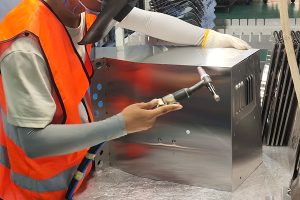
As a global provider of precision manufacturing solutions, CTT Technology offers end-to-end services ranging from design consulting and prototyping to mass production. We support small-batch, high-variety customization, with instant quotes for orders of 1 to 1,000 units and rapid delivery. Our team of experienced engineers provides one-on-one service and offers DFM design optimization recommendations. The company has established a comprehensive TQM quality management system. Additionally, we have established four overseas production bases in Thailand, the UK, Mexico, and Malaysia, along with a forward warehouse in Europe, enabling rapid localized delivery.
Medical device machining requires high precision because patient safety, product reliability, and regulatory compliance depend on it. Tight tolerances, advanced materials, superior surface finishes, and consistent manufacturing processes all contribute to the performance of modern medical devices.
As medical technologies continue to evolve, precision machining and custom fabrication will remain fundamental to developing innovative, safe, and effective healthcare solutions. Manufacturers that invest in advanced machining capabilities can help medical device companies accelerate innovation while maintaining the highest standards of quality and reliability.

2024-07-19
What is sheet metal processingExplore aerospace sheet metal processing, from precision cutting and forming to welding and finishing, for reliable custom aerospace components.
Discover how advanced CNC technology is transforming custom machined parts with higher precision, faster production, flexible volumes, and smarter manufacturing.
Learn how CNC machining tolerances impact automotive component accuracy and reliability, including standards, key factors, and precision manufacturing solutions.
Discover how precision machining supports HPP equipment manufacturing with high-quality custom metal parts, CNC machining, and sheet metal fabrication solutions.
Email to this supplier
Author:
Ms. CTT TECHNOLOGY (UK) LIMITED
E-mail:
Phone/WhatsApp:

Privacy statement: Your privacy is very important to Us. Our company promises not to disclose your personal information to any external company with out your explicit permission.