








Send Message
Privacy statement: Your privacy is very important to Us. Our company promises not to disclose your personal information to any external company with out your explicit permission.


In modern manufacturing, precision is everything. Whether you're producing aerospace brackets, medical instruments, automotive components, or industrial equipment, even the smallest dimensional variation can determine whether a part functions perfectly or fails during assembly.
That is why CNC machining tolerances are one of the most critical considerations during product design and manufacturing. Specifying tolerances that are too loose may compromise product performance, while unnecessarily tight tolerances can dramatically increase machining time, inspection requirements, and production costs.
Understanding how tolerances work enables engineers to strike the right balance between performance, manufacturability, and cost efficiency.
This guide explains the fundamentals of CNC machining, standard CNC tolerance ranges, factors affecting machining accuracy, industry standards, and practical tips for achieving reliable precision CNC machining.
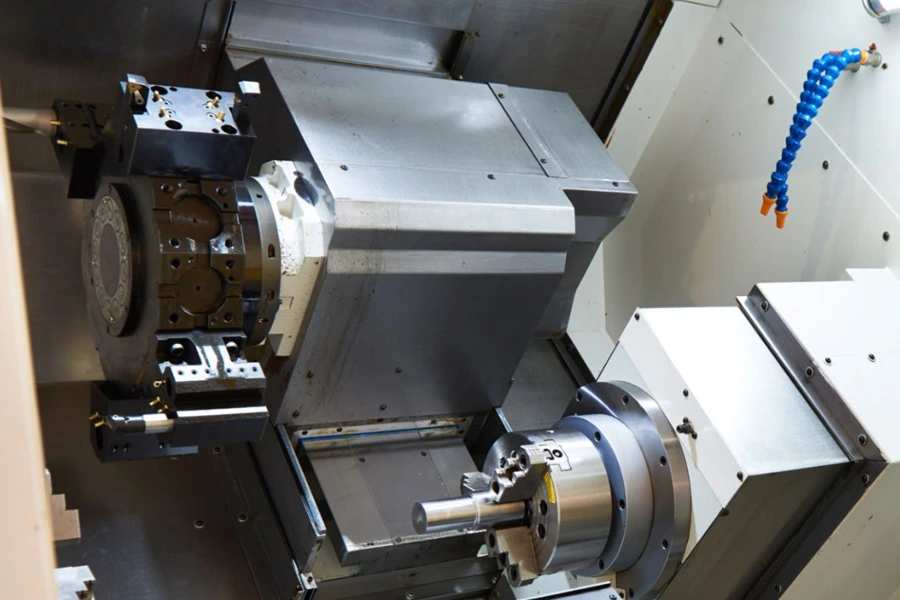
CNC machining is a subtractive manufacturing process that uses computer-controlled machine tools to remove material from solid workpieces. By following programmed toolpaths with exceptional accuracy, CNC machines can repeatedly manufacture complex components that meet tight dimensional requirements.
Today, CNC machining is widely used across industries because it offers excellent repeatability, outstanding material compatibility, and the flexibility to produce both prototypes and high-volume production parts.
Typical applications include:
Because every machining operation is digitally controlled, CNC manufacturing delivers a level of consistency that is difficult to achieve with conventional machining methods.
A CNC tolerance defines the acceptable amount of dimensional variation between the nominal size shown on an engineering drawing and the actual size of the finished part.
For example, if a shaft diameter is designed as 25.00 mm ±0.02 mm, any finished diameter between 24.98 mm and 25.02 mm will meet the design specification.
Tolerance does not represent manufacturing error—it represents the acceptable dimensional window within which a component can still perform its intended function. Every machined part contains slight variations due to material behavior, machine capability, cutting forces, and environmental conditions. Proper tolerance specification accounts for these natural variations while ensuring reliable product performance.
Many engineers focus primarily on CAD models and material selection, but tolerance decisions often have a much greater impact on the success of a manufacturing project. Proper tolerances influence nearly every stage of production, from machining efficiency to assembly quality.
A well-designed tolerance strategy provides several important advantages:
Choosing the correct tolerance is therefore not only an engineering decision but also a cost-management strategy.
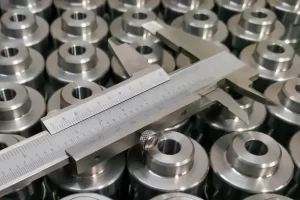
Unless otherwise specified, most CNC machining suppliers manufacture parts using standard machining tolerances that satisfy the majority of industrial applications. These tolerances provide an excellent balance between manufacturing efficiency and dimensional accuracy.
| Tolerance Grade | Typical Accuracy | Common Applications |
|---|---|---|
| ±0.50 mm | Rough machining | Structural components |
| ±0.20 mm | General machining | Brackets, housings |
| ±0.10 mm | Precision machining | Mechanical assemblies |
| ±0.05 mm | High precision | Automotive parts |
| ±0.02 mm | Ultra precision | Aerospace, medical |
| ±0.01 mm | Extreme precision | Optical equipment |
For most commercial products, tolerances between ±0.05 mm and ±0.10 mm provide more than enough accuracy while keeping manufacturing costs under control.
Achieving tight tolerances depends on far more than simply using a modern CNC machine. Multiple variables interact throughout the machining process, and each one can influence the final dimensional accuracy.
The performance of the CNC machine itself forms the foundation of machining precision. High-end machining centers incorporate rigid machine structures, precision ball screws, linear guideways, thermal compensation systems, and high-resolution encoders to minimize positioning errors.
Proper calibration and routine maintenance are equally important for maintaining long-term machining accuracy.
Different engineering materials respond differently to machining operations. Aluminum alloys generally offer excellent machinability and dimensional stability, whereas stainless steel and titanium generate higher cutting forces and more heat, making them more difficult to machine accurately.
Engineering plastics introduce another challenge because thermal expansion and moisture absorption may cause dimensional changes after machining.
Complex geometries naturally require tighter process control. Features such as thin walls, deep pockets, long unsupported sections, and extremely small internal radii are more susceptible to vibration and deformation during machining.
Designing components with manufacturability in mind often improves both dimensional consistency and production efficiency.
Even the most advanced CNC machine cannot maintain precision with worn cutting tools. Tool wear gradually changes cutting geometry, leading to dimensional drift and reduced surface quality.
To maintain consistent precision, manufacturers regularly monitor:
Stable fixturing is essential for precision machining. Poor workholding allows vibration or workpiece movement, which directly affects dimensional accuracy and surface finish. Well-designed fixtures help ensure repeatable positioning throughout the machining process.
Although standard CNC machining satisfies most commercial applications, industries such as aerospace, medical devices, and scientific instrumentation often require much tighter dimensional control.
| Feature | Standard CNC Machining | Precision CNC Machining |
|---|---|---|
| Typical Tolerance | ±0.10 mm | ±0.01–0.02 mm |
| Surface Finish | Standard | Superior |
| Inspection | Standard inspection | CMM inspection |
| Equipment | Standard CNC machines | High-precision machining centers |
| Applications | General industrial parts | Aerospace, medical, optics |
Precision CNC machining requires not only advanced equipment but also experienced engineers, optimized machining strategies, and comprehensive quality control procedures.
Many designers assume that specifying the tightest possible tolerance will automatically produce a better product. In reality, unnecessarily tight tolerances often increase production costs without providing any practical benefit.
Smaller tolerance windows require slower cutting speeds, additional finishing passes, more frequent inspections, specialized tooling, and stricter environmental controls. All of these factors contribute to longer production cycles and higher manufacturing costs.
Whenever possible, engineers should specify the loosest tolerance that still satisfies the functional requirements of the component. This design philosophy, commonly referred to as Design for Manufacturability (DFM), helps reduce costs while maintaining excellent product performance.
Successful CNC projects begin with realistic engineering specifications. Rather than applying extremely tight tolerances to every feature, designers should prioritize the dimensions that directly influence assembly and product function.
A few practical recommendations include:
Following these principles helps shorten lead times, reduce machining costs, and improve overall production quality.
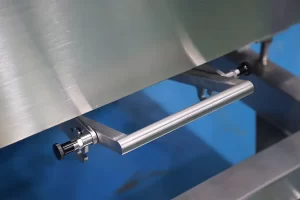
At CTT Technology, we specialize in delivering high-quality precision CNC machining solutions for customers requiring rapid prototyping, low-volume manufacturing, and mass production. Our experienced engineering team works closely with customers throughout every stage of product development, helping optimize designs for manufacturability while maintaining strict dimensional accuracy.
From simple machined brackets to complex welded assemblies and custom sheet metal components, we support demanding industries including automotive, electronics, medical devices, aerospace, industrial equipment, and life science instrumentation. By combining advanced machining technology, rigorous quality inspection, and flexible production capabilities, we consistently deliver precision components that meet the highest industry standards.
Understanding CNC machining tolerances is essential for designing cost-effective, high-performance components. Proper tolerance selection improves product quality, enhances assembly reliability, and avoids unnecessary manufacturing expenses.
Whether you're developing a single prototype or launching full-scale production, partnering with an experienced manufacturer ensures the right balance between precision, efficiency, and cost.
At CTT Technology, our expertise in CNC machining, optimized CNC tolerance control, and advanced precision CNC machining capabilities enables us to deliver reliable, high-quality parts for the world's most demanding industries. By combining engineering knowledge, rigorous quality inspection, and flexible production capacity, we help transform your designs into precision-engineered components with confidence.
Explore aerospace sheet metal processing, from precision cutting and forming to welding and finishing, for reliable custom aerospace components.
Discover how advanced CNC technology is transforming custom machined parts with higher precision, faster production, flexible volumes, and smarter manufacturing.
Learn how CNC machining tolerances impact automotive component accuracy and reliability, including standards, key factors, and precision manufacturing solutions.
Discover how precision machining supports HPP equipment manufacturing with high-quality custom metal parts, CNC machining, and sheet metal fabrication solutions.
Email to this supplier
Author:
Ms. CTT TECHNOLOGY (UK) LIMITED
E-mail:
Phone/WhatsApp:

Privacy statement: Your privacy is very important to Us. Our company promises not to disclose your personal information to any external company with out your explicit permission.