








Send Message
Privacy statement: Your privacy is very important to Us. Our company promises not to disclose your personal information to any external company with out your explicit permission.


The medical device industry demands exceptional precision, consistency, and reliability. Whether manufacturing surgical instruments, diagnostic equipment components, implantable devices, or laboratory equipment parts, every component must meet strict quality and regulatory requirements.
Modern medical device machining services play a critical role throughout the entire product development cycle. From early-stage prototypes to large-scale production runs, advanced CNC technology enables manufacturers to produce highly accurate components while maintaining compliance with industry standards.
This article explores how medical CNC machining supports medical innovation, the key benefits of precision manufacturing, and how companies can successfully transition from prototyping to full-scale production.
Medical devices often contain complex components that require micron-level accuracy and exceptional surface finishes. Even minor deviations can impact product performance, patient safety, and regulatory approval.
Medical device machining provides manufacturers with the ability to create:
As healthcare technologies continue to evolve, machining partners must deliver increasingly sophisticated parts with shorter development cycles and tighter tolerances.
The CNC machining medical industry relies heavily on automated manufacturing processes to achieve consistency and repeatability.
Medical components often require tolerances as tight as ±0.001 mm depending on application requirements. CNC machining ensures precise dimensional control for critical components used in diagnostic, surgical, and therapeutic equipment.
Once a machining program is validated, identical parts can be produced repeatedly with minimal variation. This consistency is essential for regulatory compliance and product reliability.
Advanced multi-axis CNC machining systems can manufacture intricate geometries that would be difficult or impossible to achieve through conventional manufacturing methods.
Medical CNC machining supports a wide range of materials, including:
These materials are commonly selected for their strength, corrosion resistance, biocompatibility, and sterilization compatibility.
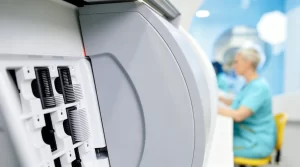
Rapid prototyping is a crucial step in modern medical device development, allowing manufacturers to evaluate designs quickly before committing to expensive tooling and large-scale production. Through medical CNC machining, engineers can produce highly accurate prototypes using production-grade materials, enabling realistic testing of form, fit, function, and assembly performance. This approach helps identify design improvements early in the development cycle, reduces engineering risks, shortens validation timelines, and ultimately accelerates the path from concept to market-ready medical devices.
Medical product development often involves multiple design revisions. CNC machining enables quick modifications without the delays associated with tooling changes.
This flexibility significantly reduces development timelines and accelerates time-to-market.
Successful manufacturing begins with proper design optimization.
Choosing the right material depends on:
Medical devices frequently require specialized surface finishes to:
Common finishing processes include:
Engineers should specify tolerances carefully. Overly restrictive tolerances can increase manufacturing costs without providing additional functional benefits.
Quality management is a cornerstone of medical manufacturing.
Medical device manufacturers often require suppliers that operate under quality management systems aligned with ISO 13485 standards.
Comprehensive traceability ensures every component can be tracked throughout the production process, including:
Advanced inspection equipment such as Coordinate Measuring Machines (CMMs) helps verify dimensional accuracy and ensure compliance with customer specifications.
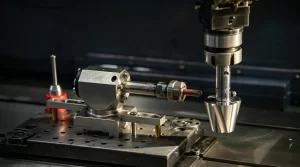
One of the biggest challenges in medical device manufacturing is successfully scaling production while maintaining quality.
Design for Manufacturability (DFM) is a critical step in the transition from prototype to production. Through detailed DFM analysis, manufacturers can identify opportunities to reduce production costs, improve manufacturing efficiency, simplify assembly processes, and maintain consistent quality standards. By optimizing the design for real-world manufacturing conditions, companies can minimize potential production challenges and achieve a more cost-effective and reliable manufacturing process.
Before moving into full-scale manufacturing, pilot production runs are used to validate the entire production process. These trial runs help verify process stability, production repeatability, inspection procedures, and overall supply chain readiness. Pilot production provides valuable data that allows manufacturers to identify and resolve potential issues early, ensuring a smoother transition to higher-volume production while maintaining strict quality requirements.
Once all validation activities have been successfully completed, manufacturers can confidently transition to full-scale production. Large-volume manufacturing offers significant advantages, including lower per-part costs, stable quality control, consistent lead times, and scalable production capacity. With a validated process and robust quality management system in place, medical device companies can efficiently meet growing market demand while maintaining the precision and reliability required by the healthcare industry.
Precision-machined instruments require excellent dimensional accuracy and durable surface finishes.
Complex components used in imaging and diagnostic systems demand high precision and reliability.
Components used in orthopedic systems often require advanced materials and strict quality controls.
Research and analytical instruments depend on highly accurate machined parts for reliable performance.
Machined housings, brackets, connectors, and heat management components are widely used in medical electronic systems.
When selecting a machining supplier, manufacturers should evaluate:
Look for a partner with proven experience serving medical device companies and understanding regulatory requirements.
Key capabilities include:
A reliable supplier should offer:
The ideal manufacturing partner supports both rapid prototyping and high-volume production, enabling seamless project growth.
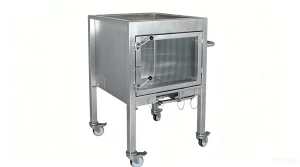
At CTT Technology, we provide comprehensive medical device machining services that support customers from concept development through full-scale production. Our expertise in medical CNC machining, precision sheet metal fabrication, and complex assembly enables us to deliver high-quality components for medical equipment manufacturers worldwide.
Whether you require rapid prototypes, low-volume production, or large-scale manufacturing, our engineering team works closely with you to ensure every component meets your technical, quality, and regulatory requirements.
With advanced manufacturing technologies, rigorous quality control, and a commitment to precision, CTT Technology helps bring innovative medical products to market faster and more efficiently.
As medical technologies become increasingly sophisticated, the demand for high-precision manufacturing continues to grow. Medical device machining serves as a critical bridge between innovative product concepts and reliable commercial production.
By leveraging advanced medical CNC machining technologies, manufacturers can accelerate development cycles, maintain strict quality standards, and scale production efficiently. Choosing an experienced machining partner ensures that medical device companies can deliver safe, effective, and reliable products to healthcare professionals and patients worldwide.
Explore aerospace sheet metal processing, from precision cutting and forming to welding and finishing, for reliable custom aerospace components.
Discover how advanced CNC technology is transforming custom machined parts with higher precision, faster production, flexible volumes, and smarter manufacturing.
Learn how CNC machining tolerances impact automotive component accuracy and reliability, including standards, key factors, and precision manufacturing solutions.
Discover how precision machining supports HPP equipment manufacturing with high-quality custom metal parts, CNC machining, and sheet metal fabrication solutions.
Email to this supplier
Author:
Ms. CTT TECHNOLOGY (UK) LIMITED
E-mail:
Phone/WhatsApp:

Privacy statement: Your privacy is very important to Us. Our company promises not to disclose your personal information to any external company with out your explicit permission.