








Send Message
Privacy statement: Your privacy is very important to Us. Our company promises not to disclose your personal information to any external company with out your explicit permission.


Automation has become one of the most influential forces reshaping modern manufacturing. As industries demand tighter tolerances, faster turnaround times, and greater production flexibility, manufacturers are increasingly adopting automated CNC fabrication systems to stay competitive.
From robotic material handling and automated tool changing to AI-powered process optimization and real-time quality monitoring, automation enables manufacturers to achieve levels of consistency and efficiency that were previously impossible.
For companies producing custom sheet metal components, precision-machined parts, and complex assemblies, automation is no longer just a competitive advantage—it is becoming an essential part of modern manufacturing.
This article explores how automation is transforming CNC fabrication, the technologies driving this evolution, and the benefits manufacturers can expect from investing in smart manufacturing solutions.
Automation in CNC fabrication refers to the integration of intelligent systems, robotics, software, and digital technologies into CNC machining and sheet metal fabrication processes.
Rather than relying heavily on manual intervention, automated production systems perform repetitive tasks with exceptional accuracy while minimizing human error.
Automation can be applied across nearly every stage of production, including:
Modern CNC fabrication facilities often combine these technologies into fully connected manufacturing cells capable of operating continuously with minimal supervision.
Several market trends are accelerating the adoption of automation.
Manufacturers worldwide face increasing shortages of skilled machinists and fabrication technicians. Automation helps bridge this gap while allowing experienced operators to focus on programming, process optimization, and quality management.
Industries such as aerospace, medical devices, and electronics require micron-level accuracy and exceptional process repeatability.
Automated systems eliminate many of the inconsistencies associated with manual operations.
Customers increasingly expect shorter lead times without sacrificing quality.
Automation enables manufacturers to produce more parts in less time while maintaining consistent quality standards.
Automation reduces labor costs, material waste, rework, and machine downtime, significantly lowering the total cost of production.
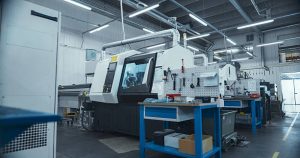
Industrial robots automatically load raw materials into CNC machines and remove finished components.
Benefits include:
Modern CNC machines automatically switch between dozens or even hundreds of cutting tools during machining.
Advantages include:
Coordinate Measuring Machines (CMM), laser scanners, and vision inspection systems automatically verify dimensional accuracy.
Real-time inspection allows manufacturers to detect deviations immediately, reducing scrap and ensuring every component meets specifications.
Artificial intelligence analyzes machining data to optimize:
AI can predict tool wear before failure occurs, reducing unexpected downtime.
Internet of Things (IoT) sensors continuously collect production data, including:
Manufacturers can remotely monitor production and identify issues before they impact productivity.
For fabricated assemblies, robotic welding delivers highly repeatable weld quality while significantly increasing throughput.
This technology is especially valuable for automotive, industrial equipment, and heavy machinery applications.
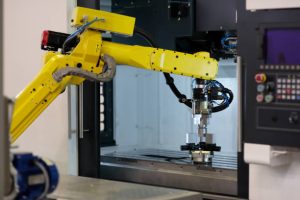
Automated systems consistently produce parts within extremely tight tolerances, reducing dimensional variation across production batches.
Machines can operate continuously with minimal interruption, maximizing production capacity.
Automation minimizes operator variability while improving repeatability and process consistency.
Reduced labor, less scrap, optimized tool usage, and fewer production errors contribute to significant long-term cost savings.
Robots perform dangerous, repetitive, and heavy-lifting tasks, reducing workplace injuries.
Automated manufacturing cells can quickly switch between prototypes, low-volume production, and high-volume manufacturing.
Automation is driving innovation across multiple industries.
High-volume production of brackets, chassis components, battery enclosures, and structural parts.
Precision machining of lightweight aluminum and titanium components requiring strict quality standards.
Manufacturing surgical instruments, implant components, and diagnostic equipment with exceptional precision.
Fabricating precision housings, heat sinks, shielding components, and connectors.
Producing custom machine frames, welded assemblies, and mechanical components with consistent quality.
Although automation offers significant advantages, manufacturers should also consider several challenges:
However, many companies recover their investment through higher productivity and reduced operational costs.
Several technologies will continue shaping the future of manufacturing:
As Industry 4.0 continues to evolve, manufacturers that embrace automation will be better positioned to deliver higher quality, shorter lead times, and greater manufacturing flexibility.
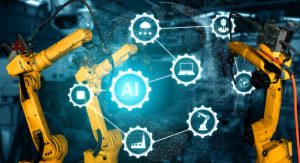
At CTT Technology, we combine advanced CNC machining, precision sheet metal fabrication, intelligent manufacturing technologies, and rigorous quality control to deliver reliable custom components for industries including aerospace, medical devices, electronics, automotive, industrial equipment, and life science instrumentation.
Whether you need rapid prototypes, low-volume production, or high-volume manufacturing, our experienced engineering team leverages modern automation and precision manufacturing processes to ensure exceptional quality, repeatability, and on-time delivery.
Automation is no longer the future of CNC fabrication—it is today's manufacturing standard. By integrating robotics, AI, IoT, and intelligent production systems, manufacturers can significantly improve precision, productivity, and operational efficiency while reducing costs and maintaining consistent quality.
As manufacturing continues its transition toward smart factories, companies that invest in automation will be better equipped to meet evolving customer demands and remain competitive in an increasingly digital industrial landscape.
Explore aerospace sheet metal processing, from precision cutting and forming to welding and finishing, for reliable custom aerospace components.
Discover how advanced CNC technology is transforming custom machined parts with higher precision, faster production, flexible volumes, and smarter manufacturing.
Learn how CNC machining tolerances impact automotive component accuracy and reliability, including standards, key factors, and precision manufacturing solutions.
Discover how precision machining supports HPP equipment manufacturing with high-quality custom metal parts, CNC machining, and sheet metal fabrication solutions.
Email to this supplier
Author:
Ms. CTT TECHNOLOGY (UK) LIMITED
E-mail:
Phone/WhatsApp:

Privacy statement: Your privacy is very important to Us. Our company promises not to disclose your personal information to any external company with out your explicit permission.