







Send Message
Privacy statement: Your privacy is very important to Us. Our company promises not to disclose your personal information to any external company with out your explicit permission.


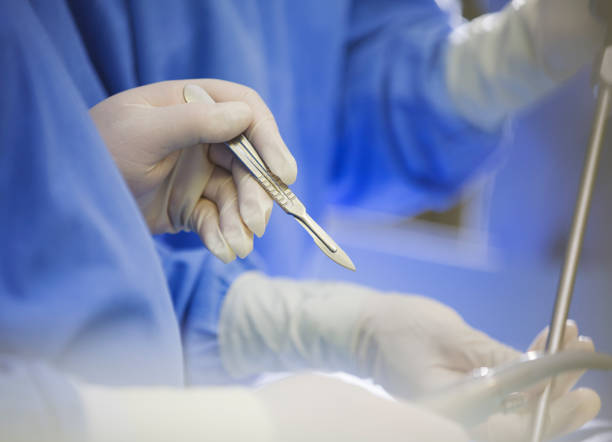
In the operating room, there is no room for error. Every scalpel, forceps, retractor, and laparoscopic tool must perform with absolute precision, reliability, and consistency. Behind every successful surgery lies an invisible foundation: the precision-engineered surgical instruments that enable surgeons to perform life-saving procedures with confidence.
Medical CNC machining has emerged as the gold standard for manufacturing surgical instruments and components. From simple handheld tools to complex robotic-assisted surgical systems, CNC machining medical industry applications demand the highest levels of accuracy, material integrity, and regulatory compliance. This article explores the critical role of medical device machining in surgical instrument production, the materials and technologies involved, and why choosing the right manufacturing partner is essential for success.
Surgical instruments are unique among manufactured components. They must withstand repeated sterilization cycles, maintain sharpness and structural integrity, and often interact directly with human tissue. Medical CNC machining addresses these challenges through several key advantages:
Surgical instruments require extremely tight tolerances—often measured in microns. CNC machining medical industry applications routinely achieve dimensional tolerances as precise as ±0.0001 inches (±0.00254 mm). This level of precision ensures that instruments fit together perfectly, move smoothly, and perform exactly as designed.
For minimally invasive surgical instruments—which are decreasing in size and becoming increasingly complex—medical device machining capabilities are particularly crucial. CNC technology can produce intricate geometries, micro-scale features, and smooth finishes that reduce the risk of contamination and improve surgeon control.
Modern surgical instruments often feature complex shapes: ergonomic handles, precision tips, locking mechanisms, and articulated joints. Medical CNC machining supports the production of these sophisticated geometries with high accuracy. Multi-axis CNC machining (including 3-axis, 4-axis, and 5-axis capabilities) enables the creation of components that would be impossible or prohibitively expensive to produce using conventional methods.
In surgical instrument manufacturing, every instrument in a batch must be identical. CNC machining medical industry processes provide repeatable and stable production, ensuring consistent quality across every batch. This consistency is essential for maintaining regulatory compliance and supporting device reliability.
Surgical instruments are manufactured from a wide range of materials, each selected for specific properties. Medical CNC machining accommodates virtually all of them:
| Material | Key Properties | Common Surgical Applications |
|---|---|---|
| Stainless Steel (304, 316, 410, 420) | Biocompatible, corrosion-resistant, sterilization-safe | Scalpels, forceps, retractors, orthopedic tools |
| Titanium (Ti-6Al-4V) | High strength-to-weight ratio, biocompatible, corrosion-resistant | Implantable instruments, cardiovascular tools, lightweight handles |
| PEEK (Polyether Ether Ketone) | Lightweight, biocompatible, radiolucent | Instrument handles, insulators, implant trial components |
| Medical-Grade Superalloys (Inconel, Hastelloy) | High heat and corrosion resistance | MRI/CT components, radiation-exposed parts |
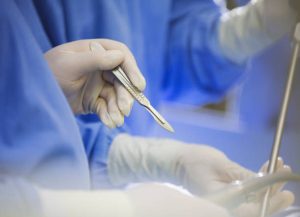
Precision alone is not sufficient in medical device machining. The medical device industry operates under stringent regulatory frameworks that demand documented quality management systems, traceability, and risk management.
ISO 13485 is the internationally recognized standard for quality management systems specifically designed for the medical device industry. Unlike ISO 9001, which focuses on continuous improvement and customer satisfaction, ISO 13485 focuses on maintaining the effectiveness of the QMS and meeting regulatory requirements.
For CNC machining medical industry suppliers, ISO 13485 certification translates to specific operational mandates:
CAPA (Corrective and Preventive Action): When non-conformances are found, root causes must be investigated and corrective actions validated
Risk Analysis (ISO 14971): Process Failure Mode and Effects Analysis (PFMEA) is performed before production begins
Device History Record (DHR): Comprehensive documentation including material certifications, certificates of conformance, First Article Inspection reports, and lot control numbers
FDA registration and compliance with 21 CFR Part 820 are also essential for suppliers serving the U.S. medical device market.
Surgical instruments must withstand repeated sterilization cycles—including autoclaving, ultrasonic cleaning, and exposure to harsh chemicals. Medical CNC machining must produce surfaces that are:
Smooth enough to prevent bacterial adhesion and tissue trauma
Resistant to corrosion and degradation from sterilization processes
Free from burrs, scratches, and contaminants
Different surgical applications require different surface finishes. Components that penetrate human tissue require particularly smooth surfaces, while other instruments may benefit from specific textures to improve grip and handling.
In medical device machining, the physical part is only half of the deliverable. The other half is the comprehensive data package that accompanies every component. This typically includes:
Material certifications (mill certs) with chemical and physical analysis
Certificates of Conformance
First Article Inspection reports
Outside process certifications (passivation, anodizing, heat treating)
Lot control numbers linking each part to its raw material and production run
Medical CNC machining supports a vast array of surgical instrument applications:
Orthopedic procedures require specialized instruments for bone cutting, drilling, fixation, and implant placement. CNC machining medical industry capabilities produce components such as torque wrenches, tool holders, drill guides, and custom orthopedic instruments.
Cardiovascular surgery demands instruments with exceptional precision and reliability. Medical device machining produces components for cardiovascular surgical tools, including micro-instruments for delicate procedures.
Laparoscopic and robotic surgical instruments require micro-scale components with complex geometries. Medical CNC machining enables the production of electrode holders, micro-tips, precision housings, and articulated instrument components.
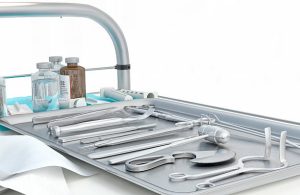
From scalpels and forceps to retractors and scissors, CNC machining medical industry processes ensure consistent quality and performance across high-volume production runs.
Medical CNC machining is the backbone of modern surgical instrument manufacturing. From the precision of micron-level tolerances to the rigor of ISO 13485 compliance, every aspect of CNC machining medical industry processes is designed to ensure that surgical instruments perform flawlessly when lives are on the line.
Choosing the right manufacturing partner is critical. CTT Technology combines advanced equipment, rigorous quality management, engineering expertise, and cost-effective production to deliver exceptional medical device machining solutions for surgical instruments and other medical devices.
Whether you are developing a new surgical instrument prototype or scaling up production for an established product line, CTT Technology has the capabilities, experience, and commitment to quality to bring your vision to life.
Explore aerospace sheet metal processing, from precision cutting and forming to welding and finishing, for reliable custom aerospace components.
Discover how advanced CNC technology is transforming custom machined parts with higher precision, faster production, flexible volumes, and smarter manufacturing.
Learn how CNC machining tolerances impact automotive component accuracy and reliability, including standards, key factors, and precision manufacturing solutions.
Discover how precision machining supports HPP equipment manufacturing with high-quality custom metal parts, CNC machining, and sheet metal fabrication solutions.
Email to this supplier
Author:
Ms. CTT TECHNOLOGY (UK) LIMITED
E-mail:
Phone/WhatsApp:

Privacy statement: Your privacy is very important to Us. Our company promises not to disclose your personal information to any external company with out your explicit permission.