








Send Message
Privacy statement: Your privacy is very important to Us. Our company promises not to disclose your personal information to any external company with out your explicit permission.


The medical industry demands exceptional precision, reliability, and consistency. Whether manufacturing surgical instruments, diagnostic equipment components, orthopedic implants, or laboratory devices, even the smallest dimensional deviation can affect product performance and patient safety.
For decades, traditional manufacturing methods such as casting, forging, manual machining, and stamping have been widely used in medical production. However, as medical devices become more complex and regulatory requirements become stricter, manufacturers increasingly rely on medical CNC machining to meet modern production standards.
This article compares medical CNC machining with traditional manufacturing methods and explains why CNC technology has become a preferred solution for the cnc machining medical industry.
Medical CNC machining is a computer-controlled manufacturing process used to produce highly precise medical components from metal and plastic materials.
Advanced CNC machines follow digital CAD/CAM instructions to remove material and create parts with tight tolerances and complex geometries.
Common applications include:
Because accuracy and repeatability are critical in healthcare, medical device machining often requires tolerances as tight as ±0.001 inches or better.
Traditional manufacturing refers to conventional production processes such as:
Casting
Molten metal is poured into molds to create desired shapes.
Forging
Metal is shaped using compressive forces and dies.
Manual Machining
Operators manually control cutting tools and equipment.
Stamping and Forming
Metal sheets are shaped through mechanical presses.
These methods remain valuable for certain applications but often face limitations when producing modern medical components with highly detailed features.
Medical CNC Machining
One of the greatest advantages of CNC machining is exceptional precision.
Modern CNC equipment can achieve:
For medical devices, where component fit and function are critical, precision directly impacts product quality and patient safety.
Traditional Manufacturing
Traditional processes often involve:
While acceptable for many industrial products, these variations can create challenges for highly regulated medical applications.
For precision-critical components, CNC machining provides superior accuracy.
Medical CNC Machining
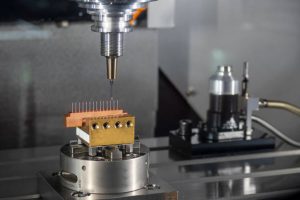
Modern 5-axis CNC machines can create:
This capability is especially valuable for minimally invasive surgical devices and custom implants.
Traditional Manufacturing
Complex geometries often require:
As design complexity increases, production efficiency decreases significantly.
CNC technology handles complex medical designs far more efficiently.
Medical CNC Machining
The medical industry uses a wide range of materials, including:
CNC systems can machine these materials with high precision while maintaining material integrity.
Traditional Manufacturing
Certain materials can be difficult or expensive to process using conventional methods. Some manufacturing techniques may also introduce material defects or require additional processing.
CNC machining offers superior flexibility and compatibility with a wide range of advanced medical materials.
Medical CNC Machining
Medical components often require smooth, contamination-resistant surfaces.
CNC machining delivers:
These benefits are particularly important for implants and surgical instruments.
Traditional Manufacturing
Casting and forging frequently require:
These extra steps increase production time and cost.
CNC machining delivers superior surface finishes while minimizing secondary processing requirements.
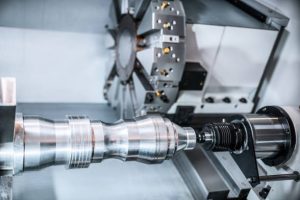
Medical CNC Machining
Product development cycles in healthcare are becoming increasingly shorter.
CNC machining enables:
Design updates can be implemented simply by modifying CAD files.
Traditional Manufacturing
Tooling and mold creation can take weeks or even months before production begins.
Design changes often require:
CNC machining enables faster turnaround times for prototyping and low-volume production.
Medical CNC Machining
CNC manufacturing supports:
Automation improves productivity while reducing labor dependency.
Traditional Manufacturing
Traditional methods may become cost-effective for extremely high-volume production but often require significant upfront tooling investment.
Winner: Depends on Production Volume
For prototypes and medium-volume production, CNC machining is typically more economical. For very large production runs, certain traditional methods may provide cost advantages.
Medical CNC Machining
The medical sector operates under strict quality requirements.
CNC machining supports compliance through:
These capabilities help manufacturers meet FDA, ISO 13485, and other industry standards.
Traditional Manufacturing
Manual processes may introduce variability that complicates quality validation and documentation.
CNC machining enables greater process control, traceability, and compliance with medical quality standards.
Many manufacturers assume traditional methods are always less expensive.
In reality, total manufacturing cost depends on several factors:
| Factor | CNC Machining | Traditional Manufacturing |
|---|---|---|
| Initial Tooling Cost | Low | High |
| Prototype Cost | Low | High |
| Design Changes | Easy | Expensive |
| Precision | Excellent | Moderate |
| Lead Time | Short | Longer |
| Large-Volume Cost | Moderate | Lower |
For many medical applications, especially custom devices and low-to-medium production runs, medical CNC machining often provides a lower total cost of ownership.
Several trends are driving increased adoption of CNC technology in healthcare manufacturing:
Personalized Medical Devices
Patient-specific implants and customized surgical tools require flexible manufacturing methods.
Minimally Invasive Surgery
Smaller and more sophisticated devices demand greater machining precision.
Faster Product Development
Medical companies need rapid prototyping and shorter development cycles.
Advanced Materials
New biocompatible materials require highly controlled machining processes.
Regulatory Requirements
Digital manufacturing systems simplify compliance and traceability.
These factors continue to accelerate growth across the cnc machining medical industry.
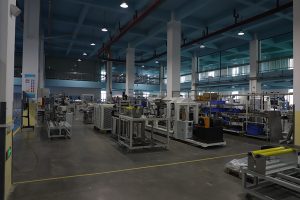
At CTT Technology, we provide precision manufacturing solutions for medical device manufacturers worldwide.
Our capabilities include:
From simple brackets to complex medical assemblies, our engineering team delivers reliable solutions that meet the demanding requirements of modern healthcare applications.
When comparing medical CNC machining with traditional manufacturing methods, CNC technology offers clear advantages in precision, flexibility, speed, surface quality, and regulatory compliance.
While traditional processes still play a role in certain high-volume applications, modern medical device machining increasingly depends on CNC technology to meet the evolving demands of healthcare innovation.
For manufacturers seeking reliable quality, faster development cycles, and tighter tolerances, medical CNC machining remains one of the most effective manufacturing solutions available today.
Learn how DFM improves CNC bending accuracy, reduces defects, and lowers production costs with practical sheet metal design tips.
Learn essential sheet metal design guidelines for bends, DFM principles, and aluminum part fabrication. Discover how CNC bending, precision sheet metal processing, and CNC sheet metal bending improve manufacturability, accuracy, and production efficiency.
Learn how Design for Manufacturing (DFM) reduces production costs, improves quality, and optimizes sheet metal fabrication, laser cutting tolerances, and CNC machining.
Learn everything about CNC machining tolerances, including standard tolerance ranges, ISO standards, GD&T, cost factors, and how precision CNC machining improves quality.
Email to this supplier
Author:
Ms. CTT TECHNOLOGY (UK) LIMITED
E-mail:
Phone/WhatsApp:

Privacy statement: Your privacy is very important to Us. Our company promises not to disclose your personal information to any external company with out your explicit permission.