






Send Message
Privacy statement: Your privacy is very important to Us. Our company promises not to disclose your personal information to any external company with out your explicit permission.


Scientific instruments are designed to measure, analyze, monitor, and process highly specialized data. From laboratory analytical equipment and spectroscopy systems to medical diagnostic instruments and industrial measurement devices, these systems often contain sensitive electronic components, precision sensors, optical assemblies, and complex internal mechanisms.
While the performance of a scientific instrument largely depends on its internal technology, its external enclosure plays an equally important role in protecting these components and maintaining reliable operation.
Custom metal enclosures provide more than structural protection. They help manage heat, reduce electromagnetic interference, support precise component integration, and create a durable housing that meets the functional and environmental requirements of different applications.
Unlike standard off-the-shelf housings, custom sheet metal enclosures can be engineered around specific equipment dimensions, internal layouts, installation conditions, and production requirements.
For scientific instrument manufacturers, choosing the right enclosure design and manufacturing partner is essential to achieving product reliability, manufacturing consistency, and long-term performance.
This article explores the key design considerations, material options, manufacturing processes, and production strategies involved in developing custom metal enclosures for scientific instruments.
Scientific instruments frequently operate in environments where dimensional accuracy, environmental stability, and component protection are critical.
A standard enclosure may not provide the required internal space, mounting configurations, ventilation, or structural characteristics for specialized equipment. Custom-designed housings address these limitations by aligning the enclosure with the instrument's actual engineering requirements.
Several important functions make custom metal enclosures particularly valuable.
Scientific instruments may contain printed circuit boards (PCBs), sensors, optical components, power supplies, and precision mechanical assemblies. These components can be affected by dust, moisture, accidental impacts, and other environmental conditions.
A properly designed metal housing creates a physical barrier between sensitive internal components and external hazards.
Depending on the application, designers can incorporate:
Sealed joints and carefully designed panel connections.
Protective covers and removable access panels.
Reinforced mounting points for internal components.
Appropriate ventilation or environmental sealing structures.
Corrosion-resistant materials and surface treatments.
The enclosure should be designed according to the instrument's actual operating environment rather than relying on a generic protective structure.
Many scientific instruments rely on sensitive electronic signals and precision measurements. Electromagnetic interference from nearby electrical equipment, motors, power supplies, or wireless devices may introduce unwanted noise into measurement systems.
Conductive metal enclosures can help reduce electromagnetic interference by creating a shielding structure around electronic components.
However, effective shielding depends on more than simply selecting a metal material. Electrical continuity between panels, grounding arrangements, enclosure openings, cable entry points, and joint configurations all influence shielding performance.
For instruments with demanding electromagnetic compatibility (EMC) requirements, these factors should be considered during the initial enclosure design stage.
Electronic components generate heat during operation. If heat accumulates inside an enclosure, it may affect component reliability, measurement accuracy, and equipment service life.
Custom metal enclosures can incorporate ventilation slots, heat-dissipation structures, mounting provisions for cooling fans, and openings for heat exchangers.
The thermal design should account for internal heat generation, ambient temperature, airflow direction, and the temperature sensitivity of individual components.
For precision laboratory equipment, thermal management is particularly important because temperature fluctuations may influence the stability of sensitive measurement systems.
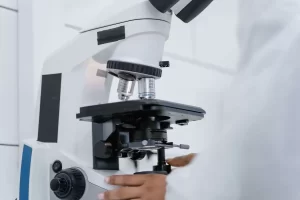
Material selection is one of the most important decisions in custom enclosure manufacturing. Different metals offer different combinations of strength, weight, corrosion resistance, thermal conductivity, machinability, and cost.
The ideal material depends on the instrument's operating environment, structural requirements, appearance, and budget.
Aluminum is widely used for scientific instrument housings because of its relatively low weight, good thermal conductivity, and corrosion resistance.
Its lightweight characteristics make it suitable for portable laboratory instruments, benchtop analytical devices, and compact electronic equipment.
Common advantages include:
Lightweight construction for easier equipment handling.
Good heat dissipation characteristics.
Excellent machinability and fabrication flexibility.
Compatibility with anodizing and other surface treatments.
Aluminum is particularly suitable when weight reduction and thermal management are important design priorities.
Stainless steel is often selected for equipment requiring high durability, corrosion resistance, and a cleanable external surface.
It is particularly relevant to scientific instruments used in pharmaceutical laboratories, life sciences, chemical analysis, and environments where exposure to cleaning agents or moisture is expected.
Common advantages include:
Strong corrosion resistance, depending on the selected grade.
Good mechanical strength and structural durability.
Suitable for demanding laboratory and industrial environments.
Compatibility with brushing, polishing, and other finishing processes.
Grades such as 304 and 316 stainless steel may be considered depending on the chemical exposure and environmental conditions.
Carbon steel is a practical option for scientific equipment requiring structural strength and cost-effective manufacturing.
It can be used for instrument cabinets, equipment frames, supporting structures, and larger equipment housings.
Protective finishes such as powder coating or painting can improve surface durability and help prevent corrosion.
However, the coating system and substrate preparation should be selected according to the expected operating environment.
| Material | Main Advantages | Typical Applications |
|---|---|---|
| Aluminum | Lightweight, thermal conductivity, machinability | Portable instruments, electronic housings |
| Stainless Steel | Corrosion resistance, durability | Laboratory and life science equipment |
| Carbon Steel | Strength, cost efficiency | Instrument cabinets, structural housings |
Material selection should consider the complete product lifecycle, including fabrication, assembly, transportation, cleaning, and maintenance.
Designing an effective enclosure requires coordination between mechanical engineering, electrical engineering, thermal management, and manufacturing.
A visually attractive enclosure is not necessarily a functional one. Its design must support both the technical performance of the instrument and the practical requirements of production.
Scientific instruments often contain multiple internal components that must be installed in precise positions.
The enclosure design should account for the dimensions and mounting requirements of:
Printed circuit boards and electronic assemblies.
Sensors, optical modules, and measurement components.
Power supplies and control units.
Displays, switches, connectors, and user interfaces.
Internal brackets, rails, and supporting structures.
Designers should also consider cable routing, assembly access, fastener positions, and maintenance clearances.
Accurate CAD models and detailed engineering drawings help identify potential interference issues before manufacturing begins.
Instrument enclosures must withstand their own weight, internal component loads, handling forces, and possible vibration during operation or transportation.
Sheet thickness, material properties, bend geometry, and reinforcement structures all affect overall rigidity.
For larger or heavier instruments, designers may incorporate internal support brackets, stiffening ribs, reinforced corners, or welded structural components.
The objective is to achieve sufficient mechanical stability without unnecessarily increasing material consumption or enclosure weight.
Thermal management should be considered during the early design stage rather than added after the enclosure has been manufactured.
Depending on the equipment's cooling requirements, possible design features include:
Ventilation openings and airflow channels.
Fan mounting positions.
Heat sink mounting interfaces.
Perforated panels and louvered structures.
Separation of heat-generating and temperature-sensitive components.
The location and size of ventilation openings should also consider dust protection, liquid exposure, and electromagnetic shielding requirements.
Scientific instruments may require regular calibration, component replacement, software upgrades, or routine maintenance.
A well-designed enclosure should provide convenient access without compromising structural integrity or protection.
Removable panels, hinged doors, screw-fastened covers, and modular internal mounting structures can simplify maintenance.
Designers should also consider how operators interact with the instrument, including display visibility, control panel positioning, connector accessibility, and cable management.
Once the enclosure design is finalized, manufacturing processes determine whether the finished components can achieve the required geometry, dimensional consistency, and appearance.
Custom sheet metal enclosures typically involve several interconnected fabrication operations.
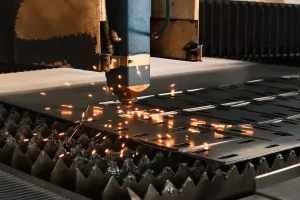
Laser cutting is commonly used to produce accurate profiles, mounting holes, ventilation openings, and complex geometric features from sheet metal.
It offers flexibility for customized designs and is particularly useful for prototype development and low-to-medium-volume production.
For scientific instrument enclosures, precise cutouts are essential for connector positioning, display installation, and component alignment.
CNC bending transforms flat sheet metal into three-dimensional components through controlled forming operations.
It is commonly used to manufacture enclosure panels, mounting brackets, structural supports, and chassis components.
Important considerations include material thickness, bend radius, bend allowance, tooling selection, and springback compensation.
A properly developed bending process helps maintain dimensional consistency and ensures that individual enclosure components fit together correctly.
Some scientific instrument housings require multiple sheet metal components to be joined into a rigid structure.
Depending on material and design requirements, welding methods such as TIG or MIG welding may be considered.
For applications where disassembly is important, mechanical fastening methods such as screws, rivets, and threaded inserts may be more appropriate.
The choice between welding and mechanical assembly should consider structural requirements, appearance, serviceability, and manufacturing efficiency.
Surface finishing improves the appearance, durability, and environmental suitability of metal enclosures.
Common options include:
Powder Coating: Provides a durable protective finish and a range of colors.
Anodizing: Commonly used for aluminum to improve surface hardness and corrosion resistance.
Brushing: Creates a consistent surface texture for stainless steel and aluminum.
Polishing: Produces a smoother and more refined appearance.
Protective Painting: Provides additional surface protection for suitable metal substrates.
The selected finish should be compatible with the base material and the instrument's intended operating environment.
One of the major challenges in scientific instrument development is transitioning from an engineering concept to a repeatable manufactured product.
A design that works in a CAD environment may still encounter practical issues during physical assembly, testing, and production.
For this reason, rapid prototyping plays an important role in custom metal enclosure development.
The manufacturing process begins with a review of 3D CAD models, 2D drawings, material specifications, and functional requirements.
Engineers evaluate potential manufacturing challenges, including:
Complex geometries and difficult bending features.
Insufficient clearances between internal components.
Potential deformation during welding.
Difficult-to-access fastening locations.
Surface finishing and assembly constraints.
Design for Manufacturing (DFM) helps identify these issues before they affect production costs or delivery schedules.
Prototype production allows engineers to evaluate the physical enclosure before committing to larger production quantities.
The first manufactured samples can be used to verify dimensional accuracy, component positioning, structural rigidity, appearance, and assembly compatibility.
Prototype testing may reveal issues such as misaligned mounting holes, insufficient cable clearance, unexpected interference, or inadequate ventilation.
These findings can then be incorporated into the next design revision.
After prototype validation, small-batch production provides an opportunity to manufacture initial product quantities while maintaining flexibility.
This stage is especially useful for scientific instrument manufacturers launching new products, producing specialized equipment, or supplying customized systems for research institutions.
A stable manufacturing process helps ensure that each unit meets the established engineering requirements.
As product demand increases, manufacturing processes can be optimized for higher production volumes.
Standardized engineering drawings, repeatable fabrication procedures, controlled assembly methods, and consistent quality inspection become increasingly important.
A manufacturing partner capable of supporting both prototyping and large-volume production can help reduce the need for supplier transitions as a product moves through its lifecycle.
Quality control is essential because even small dimensional or structural deviations can affect equipment assembly and performance.
For custom metal enclosures, inspection should cover both individual fabricated components and completed assemblies.
Important quality control procedures include:
Dimensional Inspection: Verify overall dimensions, hole positions, bend angles, flatness, and critical mounting features against engineering drawings.
Weld Quality Inspection: Check weld appearance, joint consistency, structural integrity, and potential distortion.
Surface Quality Inspection: Examine coatings, scratches, burrs, sharp edges, and other visual defects.
Assembly Verification: Confirm that panels, brackets, fasteners, connectors, and internal components fit together correctly.
Functional Testing: Where required, verify ventilation performance, grounding continuity, shielding effectiveness, ingress protection, and other application-specific requirements.
For products used in regulated industries, additional documentation and validation may be necessary. Applicable requirements should be established according to the instrument's intended market and use.
Custom instrument enclosures serve a wide range of technical and industrial applications. Their designs vary according to the equipment's function, operating environment, and internal architecture.
| Industry | Typical Equipment | Key Enclosure Requirements |
|---|---|---|
| Laboratory Research | Analytical instruments, spectrometers | Dimensional precision, thermal stability |
| Medical Devices | Diagnostic and testing equipment | Cleanability, component protection |
| Electronics | Measurement and testing systems | EMI shielding, heat dissipation |
| Aerospace | Testing and monitoring instruments | Structural strength, weight optimization |
| Industrial Equipment | Monitoring and control systems | Durability, environmental protection |
| Life Sciences | Laboratory analyzers and testing systems | Corrosion resistance, easy maintenance |
Each application requires a different combination of materials, structural features, finishing methods, and manufacturing tolerances.
Therefore, enclosure design should be based on the specific equipment rather than a one-size-fits-all approach.
Custom metal enclosures play a vital role in protecting sensitive components, maintaining operational stability, and ensuring the long-term reliability of scientific instruments. From material selection and structural design to precision fabrication, surface finishing, and quality inspection, every manufacturing stage contributes to the performance and functionality of the final product.
Choosing the right manufacturing partner is equally important. A supplier with strong engineering expertise and flexible production capabilities can help transform complex design requirements into high-quality components while supporting the entire product lifecycle, from rapid prototyping and small-batch production to large-volume manufacturing.
At CTT Technology, we specialize in custom sheet metal fabrication, delivering tailored solutions for scientific instruments, laboratory equipment, and industrial applications. Whether you need a simple metal housing or a complex welded enclosure assembly, we are committed to providing precision-engineered solutions that meet your specifications.
Discover custom metal enclosures for scientific instruments. Explore precision sheet metal fabrication, material selection, and scalable manufacturing solutions.
Discover how precision machining and custom sheet metal fabrication improve battery PACK enclosures, structural integrity, and manufacturing consistency.
Discover how CNC machining supports cell culture and bioprocessing equipment with precision components, custom sheet metal fabrication, and scalable manufacturing.
Explore precision machining for biopharmaceutical equipment, including material selection, design optimization, sheet metal fabrication, and quality control.
Email to this supplier
Author:
Ms. CTT TECHNOLOGY (UK) LIMITED
E-mail:
Phone/WhatsApp:

Privacy statement: Your privacy is very important to Us. Our company promises not to disclose your personal information to any external company with out your explicit permission.