








Send Message
Privacy statement: Your privacy is very important to Us. Our company promises not to disclose your personal information to any external company with out your explicit permission.


The medical manufacturing sector continues to evolve rapidly, driven by increasing demands for precision, regulatory compliance, faster product development, and cost efficiency. As medical devices become more complex and personalized, traditional manufacturing methods are no longer sufficient to meet industry expectations.
In 2026, medical CNC machining is undergoing a significant transformation powered by automation, artificial intelligence (AI), digital connectivity, and smart manufacturing technologies. These advancements are helping manufacturers achieve unprecedented levels of accuracy, consistency, and production efficiency.
This article explores the key trends shaping medical device machining in 2026 and how manufacturers can leverage these innovations to remain competitive in the rapidly evolving healthcare market.
The global healthcare industry increasingly relies on precision-engineered components for applications such as:
Unlike many industrial components, medical parts often require micron-level tolerances, exceptional surface finishes, and strict material traceability. As a result, CNC machining remains one of the most trusted manufacturing methods for producing high-precision medical components.
The growing demand for minimally invasive procedures, wearable healthcare technologies, and patient-specific devices is further driving investment in advanced CNC machining solutions throughout the medical industry.
Artificial intelligence is becoming a game-changing technology in medical CNC machining.
Modern CNC systems can now collect and analyze vast amounts of production data in real time. AI algorithms use this data to optimize machining parameters automatically, including:
By continuously learning from production results, AI systems help reduce cycle times while maintaining strict quality standards required for medical applications.
For manufacturers producing critical medical components, AI-driven machining provides a powerful tool for achieving repeatable quality at scale.

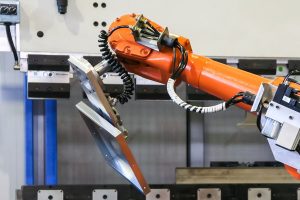
Automation has become essential for addressing labor shortages and rising production demands.
In 2026, many medical device machining facilities are implementing:
These technologies enable "lights-out manufacturing," where CNC machines operate continuously with minimal human intervention.
Machines can run around the clock, significantly increasing output capacity.
Automated systems eliminate many sources of human error.
Labor-intensive tasks can be completed more efficiently through robotics and automation.
Automated workflows reduce bottlenecks and shorten production lead times.
For medical manufacturers facing increasing demand for precision parts, automation provides a clear competitive advantage.
The cnc machining medical industry is embracing Industry 4.0 technologies faster than ever before.
Smart factories connect machines, software, sensors, and quality systems into a unified digital ecosystem.
Key technologies include:
Through interconnected systems, manufacturers gain complete visibility into production performance and quality metrics.
Smart manufacturing allows operators and engineers to monitor:
This real-time visibility enables faster decision-making and continuous process improvement.
Digital twin technology is becoming increasingly valuable in medical component production.
A digital twin is a virtual replica of a machine, manufacturing process, or production line.
Before machining begins, engineers can simulate:
For highly regulated medical applications, digital twins help ensure manufacturing processes are validated before production starts.
Medical devices are becoming smaller, more complex, and more customized.
To meet these demands, manufacturers are increasingly investing in advanced 5-axis and multi-axis machining technologies.
Compared with conventional machining, multi-axis systems offer:
Advanced multi-axis machining is particularly beneficial for:
As patient-specific medical devices continue to grow in popularity, multi-axis machining will remain a critical capability.
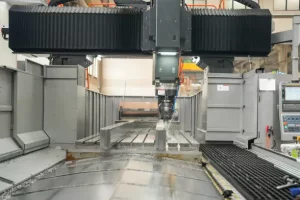
Quality assurance remains one of the most critical aspects of medical cnc machining.
In 2026, manufacturers are integrating inspection directly into production processes.
Examples include:
Rather than waiting until final inspection, manufacturers can identify and correct issues immediately.
In-process inspection helps:
This proactive quality strategy is particularly important for FDA-regulated and ISO-certified medical manufacturing environments.
Sustainability is becoming an increasingly important consideration across the medical manufacturing sector.
Manufacturers are adopting environmentally responsible practices such as:
Smart manufacturing technologies help track energy consumption and identify opportunities for continuous improvement.
As environmental regulations become stricter, sustainable manufacturing practices will become a key differentiator for medical suppliers.
To remain competitive in the rapidly evolving healthcare market, manufacturers should focus on:
Companies that embrace these technologies today will be better positioned to meet tomorrow's medical manufacturing challenges.
As an international high-tech enterprise specializing in the R&D, production, and sales of precision components, CTT Technology has developed the CBS business management platform through exceptional lean management and digital information systems, thereby establishing a distinctive CTT Technology smart manufacturing system.
Building on the foundations of 5S and standardization, and combining 3P preparation with PSP tools, CTT Technology has created efficient, high-quality production processes:
The integration of digital factories and lean production is the inevitable path for the transformation and upgrading of the manufacturing industry. This is not merely a technical upgrade, but a profound transformation of production methods, management philosophies, and corporate culture.
For manufacturing enterprises, successful integration requires adhering to the principle of “Lean as the Soul, Digital as the Foundation,” guided by value creation and advanced in a step-by-step manner. As demonstrated by CTT Technology, through the deep integration of lean management and digital technologies, companies can significantly improve production efficiency, reduce costs, enhance product quality, and strengthen their market competitiveness.
The future of medical CNC machining is being shaped by automation, artificial intelligence, digital connectivity, and smart manufacturing. These technologies are enabling medical device manufacturers to achieve higher precision, faster production, greater compliance, and improved operational efficiency.
As medical devices become more sophisticated and patient expectations continue to rise, the adoption of AI-driven machining, smart factories, digital twins, and advanced automation will become increasingly essential.
Manufacturers that invest in these innovations will be well positioned to deliver the quality, reliability, and scalability required in the next generation of medical device machining.
Explore aerospace sheet metal processing, from precision cutting and forming to welding and finishing, for reliable custom aerospace components.
Discover how advanced CNC technology is transforming custom machined parts with higher precision, faster production, flexible volumes, and smarter manufacturing.
Learn how CNC machining tolerances impact automotive component accuracy and reliability, including standards, key factors, and precision manufacturing solutions.
Discover how precision machining supports HPP equipment manufacturing with high-quality custom metal parts, CNC machining, and sheet metal fabrication solutions.
Email to this supplier
Author:
Ms. CTT TECHNOLOGY (UK) LIMITED
E-mail:
Phone/WhatsApp:

Privacy statement: Your privacy is very important to Us. Our company promises not to disclose your personal information to any external company with out your explicit permission.