








Send Message
Privacy statement: Your privacy is very important to Us. Our company promises not to disclose your personal information to any external company with out your explicit permission.


In today's competitive manufacturing environment, speed, accuracy, and flexibility are essential for bringing new products to market. Before investing in full-scale production, companies need a reliable way to validate designs, test functionality, and identify potential issues early in the development process. This is where rapid prototyping plays a critical role.
Rapid prototyping enables engineers and product developers to transform digital designs into physical parts quickly, reducing development risks and shortening product launch cycles. While technologies such as 3D printing are commonly associated with prototyping, CNC machining remains one of the most effective methods for producing highly accurate and functional prototypes that closely resemble final production parts.
This guide explains what rapid prototyping is, how CNC machining supports functional prototype development, and why manufacturers across various industries rely on CNC-machined prototypes to accelerate innovation.
Rapid prototyping is the process of quickly creating a physical model, component, or assembly based on a digital CAD design. The primary objective is to evaluate and improve a product's design before committing to mass production.
Unlike traditional manufacturing methods that may require expensive tooling and long lead times, rapid prototyping allows companies to:
Rapid prototypes can range from simple visual models to fully functional components capable of undergoing real-world testing.
While additive manufacturing is useful for concept models, CNC machining offers significant advantages when creating prototypes that require high precision, durability, and production-grade materials.
CNC machining can achieve extremely tight tolerances, making it ideal for prototypes that must fit with existing components or assemblies.
Benefits include:
This level of precision allows engineers to evaluate how a part will perform in actual operating conditions.
Unlike some prototyping methods that use substitute materials, CNC machining can process the same materials intended for final production, including:
Using production-grade materials provides more accurate testing results and reduces risks during product launch.
Because CNC machining requires no custom tooling for most prototype projects, manufacturers can quickly produce parts directly from CAD files.
This allows engineering teams to:
Faster validation means faster product development.
One of CNC machining's biggest advantages is its ability to bridge the gap between prototyping and manufacturing.
The same machining processes used for prototypes can often be scaled for:
This reduces the need for major design changes later in the product lifecycle.
The process begins with a detailed 3D CAD model that defines dimensions, tolerances, and material requirements.
Engineers review the design for manufacturability and identify opportunities to improve efficiency before machining begins.
Material selection depends on the intended application and testing requirements.
Common considerations include:
Selecting the appropriate material ensures realistic performance testing.
Manufacturing engineers generate CNC toolpaths using CAM software.
The program specifies:
Accurate programming is essential for achieving precise results.
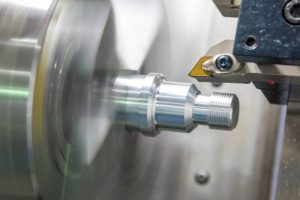
The prototype is manufactured using advanced CNC equipment such as:
Complex geometries can often be completed in a single setup, improving accuracy and efficiency.
Finished parts undergo rigorous inspection to verify:
Quality assurance ensures the prototype accurately represents the final product design.
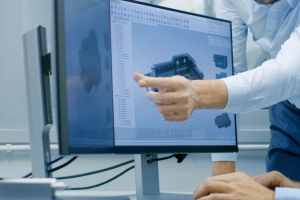
Automotive manufacturers use CNC prototypes for:
Rapid iteration helps shorten vehicle development cycles.
Medical companies rely on precision prototypes for:
Strict dimensional accuracy is essential for regulatory compliance and patient safety.
Aerospace applications demand:
CNC prototypes help validate designs before costly certification processes.
Electronics manufacturers frequently prototype:
Rapid prototyping accelerates product development in fast-moving technology markets.
Industrial machinery manufacturers use prototypes to test:
This reduces engineering risks before production deployment.
| Factor | CNC Machining | 3D Printing |
|---|---|---|
| Material Strength | Excellent | Moderate |
| Dimensional Accuracy | Very High | Moderate to High |
| Surface Finish | Superior | Often Requires Post-Processing |
| Production Materials | Yes | Limited |
| Functional Testing | Excellent | Limited |
| Complex Internal Features | Moderate | Excellent |
For visual concepts, 3D printing can be effective. However, when functional performance, material properties, and production readiness are important, CNC machining is often the preferred solution.
Early prototype testing helps companies identify issues before they become expensive production problems.
Key benefits include:
By validating designs early, manufacturers can make informed decisions and improve overall project success rates.
When selecting a CNC rapid prototyping supplier, consider the following factors:
Look for providers with advanced CNC equipment and experience handling complex geometries.
A capable supplier should offer a wide range of metal and plastic materials.
Verify that the manufacturer maintains strict inspection and quality control procedures.
Choose a partner that can support both prototype development and future production requirements.
Experienced engineering teams can provide valuable design-for-manufacturing (DFM) feedback that improves both performance and cost efficiency.
Rapid prototyping has become an essential part of modern product development, helping companies reduce risks, accelerate innovation, and bring products to market faster. While multiple prototyping technologies are available, CNC machining remains one of the most reliable methods for creating high-precision, functional prototypes using production-grade materials.
Whether developing automotive components, medical devices, industrial equipment, or custom sheet metal assemblies, CNC-machined prototypes provide the accuracy and performance needed to validate designs with confidence.
Partnering with an experienced manufacturing supplier ensures that your prototype not only meets design requirements but also lays the foundation for successful production and long-term product success.
Explore aerospace sheet metal processing, from precision cutting and forming to welding and finishing, for reliable custom aerospace components.
Discover how advanced CNC technology is transforming custom machined parts with higher precision, faster production, flexible volumes, and smarter manufacturing.
Learn how CNC machining tolerances impact automotive component accuracy and reliability, including standards, key factors, and precision manufacturing solutions.
Discover how precision machining supports HPP equipment manufacturing with high-quality custom metal parts, CNC machining, and sheet metal fabrication solutions.
Email to this supplier
Author:
Ms. CTT TECHNOLOGY (UK) LIMITED
E-mail:
Phone/WhatsApp:

Privacy statement: Your privacy is very important to Us. Our company promises not to disclose your personal information to any external company with out your explicit permission.