








Send Message
Privacy statement: Your privacy is very important to Us. Our company promises not to disclose your personal information to any external company with out your explicit permission.


In global manufacturing supply chains, selecting a reliable CNC parts manufacturer is not just a procurement decision—it directly affects product performance, production stability, and long-term business competitiveness. With hundreds of CNC machining suppliers available worldwide, how can you identify the right partner for your project? This guide breaks down the key evaluation criteria used by engineering teams and procurement managers when sourcing precision CNC parts and custom CNC machining services.
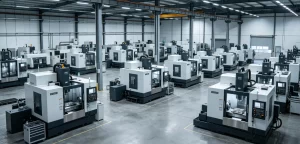
A reliable CNC parts manufacturer is not simply a factory with machines. It is a fully capable engineering-driven partner that can consistently deliver:
A strong supplier of precision CNC parts should be able to handle both simple components and highly complex engineered parts without compromising accuracy. Before choosing a CNC machining supplier, you should carefully assess their technical capabilities, including:
Different industries have different requirements for material performance, so suppliers must have extensive experience in material processing, including: aluminum alloys (such as 6061, 7075, etc.), stainless steel (304, 316, etc.), carbon steel and tool steel, copper, brass and other alloy materials and engineering plastics (POM, PTFE, nylon, etc.). The ability to understand materials directly affects processing stability, surface quality and final product performance.
When selecting a CNC machining supplier, the quality control system is one of the most important evaluation criteria. Without a strict quality control system, even advanced equipment cannot guarantee the consistency of precision CNC parts.
A qualified manufacturer should have:
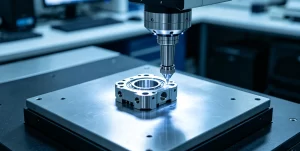
A high-level CNC parts manufacturer should actively support your design process through Design for Manufacturability (DFM).
This includes:
Strong engineering support helps reduce cost, shorten lead time, and improve product reliability.
A reliable CNC machining supplier should be able to support different stages of production, from rapid prototyping and small-batch trial production to large-scale mass production. When evaluating their production capacity and scalability, key indicators such as the number of CNC machines, level of automation, factory production line configuration, and overall monthly production capacity should be emphasized. If a supplier lacks good capacity expansion capabilities, they can easily become a bottleneck in the supply chain when orders increase or projects are upgraded, affecting overall delivery efficiency and production stability.
In global manufacturing, delivery stability is often as important as product quality. Unstable delivery can disrupt entire production schedules and downstream assembly operations. When evaluating a CNC parts manufacturer, consider:
Professional CNC machining suppliers should possess efficient communication skills:
Many buyers make the mistake of choosing the lowest price supplier. However, in CNC machining, low cost often comes with hidden risks such as:
A reliable CNC parts manufacturer focuses on total value optimization, balancing cost, quality, and long-term reliability.
When selecting a CNC machining supplier, experienced manufacturers have a better understanding of international quality standards and customer needs, and the following factors should be considered:
In conclusion, choosing the right CNC partner is a strategic decision. Selecting a reliable CNC parts manufacturer is not just about outsourcing production, but about establishing a long-term, stable manufacturing partnership. An ideal CNC machining supplier should possess the following qualities:
By evaluating suppliers based on these criteria, you can significantly reduce production risk and improve your overall supply chain efficiency.
Explore aerospace sheet metal processing, from precision cutting and forming to welding and finishing, for reliable custom aerospace components.
Discover how advanced CNC technology is transforming custom machined parts with higher precision, faster production, flexible volumes, and smarter manufacturing.
Learn how CNC machining tolerances impact automotive component accuracy and reliability, including standards, key factors, and precision manufacturing solutions.
Discover how precision machining supports HPP equipment manufacturing with high-quality custom metal parts, CNC machining, and sheet metal fabrication solutions.
Email to this supplier
Author:
Ms. CTT TECHNOLOGY (UK) LIMITED
E-mail:
Phone/WhatsApp:

Privacy statement: Your privacy is very important to Us. Our company promises not to disclose your personal information to any external company with out your explicit permission.