








Send Message
Privacy statement: Your privacy is very important to Us. Our company promises not to disclose your personal information to any external company with out your explicit permission.


In modern manufacturing, cost control is just as important as product quality. Whether producing precision sheet metal parts or scaling up mass production, inefficient design and manufacturing processes can significantly increase costs. This article explains how scientific sheet metal processing strategies can help companies reduce costs, improve efficiency, and enhance market competitiveness.
Sheet metal processing is a comprehensive cold-working technique for metal sheets. Without significantly changing the material volume, external force is applied to cause plastic deformation or separation, forming the desired shape.It is widely used in industries such as electronics, telecommunications, automotive, medical devices, and construction. Sheet metal products are everywhere in daily life—from televisions and rice cookers to mobile phones and nail clippers.
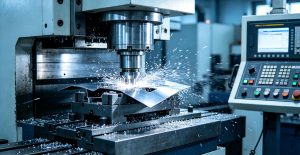
Sheet metal manufacturing involves multiple technologies, including cutting, forming, assembly, and finishing.
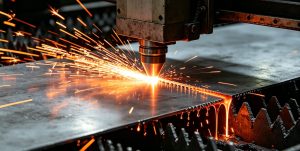
1. Optimize Design for Manufacturability (DFM)
2. Improve Material Utilization
3. Choose the Right Manufacturing Process
4. Reduce Secondary Operations
5. Standardize Design
6. Control Tolerances Properly
7. Optimize Batch Production
8. Work with a Professional Manufacturer
A professional sheet metal fabrication partner can provide cost-reduction advice, optimize production workflows, and ensure stable quality.
In conclusion, reducing sheet metal processing costs does not mean compromising quality; instead, it is achieved through smart engineering design and efficient manufacturing. CTT Technology provides precision sheet metal fabrication, CNC machining, laser cutting, and customized cost-reduction solutions, making a significant contribution to improving product quality and production efficiency.
Explore aerospace sheet metal processing, from precision cutting and forming to welding and finishing, for reliable custom aerospace components.
Discover how advanced CNC technology is transforming custom machined parts with higher precision, faster production, flexible volumes, and smarter manufacturing.
Learn how CNC machining tolerances impact automotive component accuracy and reliability, including standards, key factors, and precision manufacturing solutions.
Discover how precision machining supports HPP equipment manufacturing with high-quality custom metal parts, CNC machining, and sheet metal fabrication solutions.
Email to this supplier
Author:
Ms. CTT TECHNOLOGY (UK) LIMITED
E-mail:
Phone/WhatsApp:

Privacy statement: Your privacy is very important to Us. Our company promises not to disclose your personal information to any external company with out your explicit permission.