






Send Message
Privacy statement: Your privacy is very important to Us. Our company promises not to disclose your personal information to any external company with out your explicit permission.


In precision machining, tolerance optimization plays a critical role in balancing product quality, manufacturing efficiency, and production cost. Tolerances define the allowable variation in a part’s dimensions and directly affect machining complexity, inspection requirements, assembly performance, and overall manufacturing stability.
For industries such as aerospace, medical devices, automotive, electronics, and industrial equipment, precision machining often requires strict dimensional control to ensure product reliability and functional performance. However, specifying unnecessarily tight tolerances can significantly increase machining costs, lead times, and production challenges.
This article explores how to optimize tolerance in precision machining and achieve the best balance between functionality, manufacturability, and cost-effectiveness.
Tolerance refers to the acceptable variation in a component’s dimensions, geometry, or surface characteristics during manufacturing.
No machining process can produce perfectly exact dimensions every time. Tolerances define the allowable range within which a part can still function properly. The tighter the tolerance requirement, the more difficult and expensive the machining process becomes.
Common machining tolerances include:
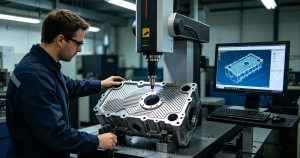
Many engineers believe that tighter tolerances automatically result in higher product quality, but in reality, excessive precision often increases manufacturing complexity without providing meaningful improvements in actual product performance. Overly strict tolerances can lead to longer machining times, additional inspection procedures, increased tooling wear, higher scrap rates, and greater production costs. Through proper tolerance optimization, manufacturers can achieve a better balance between precision, functionality, and manufacturing efficiency. By applying tight tolerances only to critical functional areas while using standard tolerances for non-essential features, companies can reduce machining costs, improve production efficiency, shorten lead times, simplify quality inspections, enhance machining stability, lower material waste and scrap rates, and achieve more consistent assembly performance. A practical and well-optimized tolerance strategy ultimately helps manufacturers maintain high product quality while significantly improving overall production efficiency and cost control.
Tolerance directly affects almost every aspect of CNC machining.
As tolerances become tighter, manufacturers often need:
These factors all increase production time and manufacturing costs.
For example, achieving a tolerance of ±0.005 mm requires far more precision and process control than a standard tolerance of ±0.05 mm. In many applications, the tighter tolerance may not provide additional functional benefits but can greatly increase production expenses.
Not every feature on a component requires ultra-high precision. Critical functional areas such as mating surfaces, bearing fits, sealing interfaces, and assembly alignment points may require tight tolerances. However, non-critical surfaces can often use standard tolerances without affecting performance.
By identifying which dimensions directly impact functionality, manufacturers can avoid excessive machining requirements.
This approach helps:
Standard machining tolerances are widely accepted across many manufacturing applications and are often sufficient for general-purpose components.
Using standard tolerances allows manufacturers to:
Custom ultra-tight tolerances should only be specified when absolutely required for product function or industry standards.
Different materials behave differently during CNC machining, and these variations have a direct impact on the achievable tolerance level and overall dimensional stability of a part. Each material responds uniquely to cutting forces, heat generation, and mechanical stress during the machining process, which means that the same tolerance specification may be easy to achieve on one material but extremely difficult or costly on another. For example, aluminum is relatively stable and easy to machine, allowing for tighter and more consistent tolerances. In contrast, stainless steel generates more heat and causes higher tool wear, which can affect dimensional accuracy. Titanium alloys are even more challenging, as they may deform under cutting stress, requiring specialized tooling and slower machining speeds. Plastics introduce another challenge, as they can expand or contract significantly with temperature changes, making tight tolerances harder to maintain.
Understanding these material-specific behaviors is essential for engineers when defining realistic and cost-effective tolerance requirements. Proper material selection should always take into account factors such as thermal expansion, machinability, structural rigidity, cutting stability, and the intended environmental conditions of the final application. By considering these characteristics early in the design stage, manufacturers can avoid overly strict or unrealistic tolerance specifications that increase machining difficulty and cost. Instead, they can establish practical tolerances that balance performance requirements with manufacturability, ensuring stable production quality, improved efficiency, and optimized overall manufacturing costs.
Complex geometries make maintaining tight tolerances more difficult. These characteristics can all lead to machining vibrations, part deformation, and dimensional instability.
Features such as:
Optimizing part geometry improves machining stability and helps maintain tolerance consistency more efficiently.
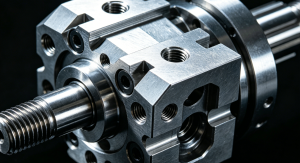
GD&T provides a standardized system for controlling geometric variation in manufactured parts. When used correctly, GD&T helps manufacturers clearly understand which features are functionally critical and which areas allow greater variation.
Proper GD&T optimization can:
Tolerance consistency depends heavily on machining process stability.
Precision machining companies must carefully control:
Stable manufacturing processes reduce dimensional variation and improve production consistency.
Early collaboration between product designers and machining engineers is one of the most effective ways to optimize tolerances.
Experienced precision machining suppliers can provide valuable recommendations regarding:
By addressing tolerance challenges during the design stage, companies can avoid costly redesigns and production delays later.
Precision machining is not simply about applying the tightest possible tolerances to every feature of a component. In modern manufacturing, true precision means achieving the required functional accuracy in the most efficient and cost-effective way possible. Over-specifying tolerances often creates unnecessary manufacturing challenges, including higher machining costs, longer production lead times, increased scrap risk, more complicated inspection procedures, and lower overall production efficiency. Extremely tight tolerances may require slower cutting speeds, additional machining operations, advanced equipment, and stricter quality control processes, all of which increase production expenses without necessarily improving the actual performance of the product. Well-optimized tolerances focus on the critical functional areas that truly require precision while allowing standard tolerances for non-essential features. This balanced approach helps manufacturers maintain product reliability, improve manufacturing stability, reduce unnecessary costs, and achieve more efficient and scalable production processes.
Tolerance optimization is one of the most important factors in precision machining efficiency and cost control. By applying practical tolerance strategies, simplifying part geometry, selecting appropriate materials, and improving manufacturing stability, companies can achieve high-quality machining results without unnecessary production expenses.
For precision machining projects, working with an experienced manufacturing partner is essential to achieving the right balance between accuracy, performance, and cost-effectiveness.


2026-01-08
Welding Process and Material Selection GuideExplore aerospace sheet metal processing, from precision cutting and forming to welding and finishing, for reliable custom aerospace components.
Discover how advanced CNC technology is transforming custom machined parts with higher precision, faster production, flexible volumes, and smarter manufacturing.
Learn how CNC machining tolerances impact automotive component accuracy and reliability, including standards, key factors, and precision manufacturing solutions.
Discover how precision machining supports HPP equipment manufacturing with high-quality custom metal parts, CNC machining, and sheet metal fabrication solutions.
Email to this supplier
Author:
Ms. CTT TECHNOLOGY (UK) LIMITED
E-mail:
Phone/WhatsApp:

Privacy statement: Your privacy is very important to Us. Our company promises not to disclose your personal information to any external company with out your explicit permission.