









Send Message
Privacy statement: Your privacy is very important to Us. Our company promises not to disclose your personal information to any external company with out your explicit permission.


In today’s competitive manufacturing industry, controlling production costs is essential for companies seeking higher efficiency and better profitability. Whether you are developing prototypes or scaling up for mass production, optimizing CNC machining expenses can significantly improve your overall project budget.
This article explores practical cost reduction tips for CNC machining services while maintaining high product quality and manufacturing efficiency.
One of the most effective ways to reduce CNC machining costs is to simplify the part design before production begins.
Complex geometries, deep cavities, sharp internal corners, and unnecessary tight tolerances all increase machining time and tooling requirements. A design optimized for manufacturability can greatly lower production expenses.
Design optimization suggestions:
Collaborating with an experienced CNC machining supplier early in the design phase can help identify potential manufacturing issues and reduce overall costs.
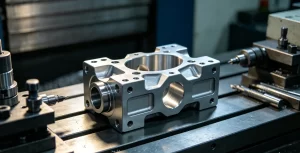
Material selection directly affects machining time, tool wear, and production cost.
Some materials are easier and faster to machine, while others require specialized tooling and slower cutting speeds.
Cost-effective material considerations:
Selecting the right balance between material performance and manufacturability is essential for controlling overall production costs while still meeting the functional requirements of the part. Factors such as strength, corrosion resistance, weight, durability, and operating environment should all be carefully evaluated alongside machining efficiency and material availability. In many cases, choosing a material that is easier to machine can significantly reduce production time, tooling wear, and manufacturing expenses without affecting product performance. By working closely with an experienced CNC machining supplier during the material selection stage, businesses can identify cost-effective alternatives that maintain quality, reliability, and long-term application performance.
Tighter tolerances increase machining complexity, inspection requirements, and production time, raising costs. Unless critical for the component’s function, using standard industry tolerances helps maintain quality while significantly reducing manufacturing expenses.
Every machining operation adds labor time, machine setup time, and production complexity. Designing parts that can be machined in fewer operations helps improve efficiency and lower costs. Efficient process planning is critical for cost-effective CNC manufacturing.
Methods to reduce operations:
Larger production quantities typically help reduce the cost per unit because setup costs, CNC programming, tooling preparation, and inspection expenses can be distributed across a greater number of parts. Adopting strategies such as batch production for recurring orders, standardized part designs, and long-term manufacturing planning can further improve cost efficiency and production consistency. For companies with ongoing manufacturing needs, building long-term partnerships with reliable CNC machining suppliers can also lead to better pricing, more stable lead times, and improved overall production efficiency.
Surface finishing processes can significantly affect manufacturing costs. While premium finishes may improve appearance or corrosion resistance, unnecessary finishing adds extra processing time and expense.
Common finishing options:
Choose finishes based on actual functional requirements rather than aesthetics alone whenever possible.
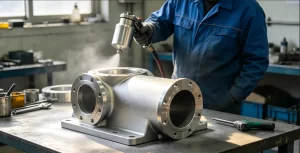
Choosing the right CNC machining and sheet metal fabrication partner can make a major difference in both quality and cost control.
An experienced manufacturer can provide:
In many manufacturing projects, combining CNC machining with processes such as sheet metal fabrication, welding, laser cutting, or stamping can significantly reduce overall production costs. This hybrid manufacturing approach helps minimize material waste, improve production efficiency, simplify assembly processes, and reduce machining complexity. In suitable applications, sheet metal fabrication can even replace fully machined components, providing a more cost-effective solution while still maintaining the required strength, precision, and product quality.
Reducing CNC machining costs does not simply mean choosing the cheapest supplier. The key is optimizing design, materials, production methods, and manufacturing efficiency while maintaining product quality and reliability. By focusing on design for manufacturability, selecting appropriate materials, simplifying machining operations, and partnering with experienced manufacturers, businesses can achieve significant cost savings across both prototype and mass production projects.
As a trusted custom manufacturing supplier, CTT Technology helps customers worldwide reduce production costs through precision CNC machining and advanced sheet metal fabrication solutions tailored to their industries and applications.
Learn how DFM improves CNC bending accuracy, reduces defects, and lowers production costs with practical sheet metal design tips.
Learn everything about GD&T in CNC machining, including symbols, benefits, and best practices. Improve CNC machining precision and optimize CNC machining tolerances.
Learn essential sheet metal design guidelines for bends, DFM principles, and aluminum part fabrication. Discover how CNC bending, precision sheet metal processing, and CNC sheet metal bending improve manufacturability, accuracy, and production efficiency.
Learn how Design for Manufacturing (DFM) reduces production costs, improves quality, and optimizes sheet metal fabrication, laser cutting tolerances, and CNC machining.
Email to this supplier
Author:
Ms. CTT TECHNOLOGY (UK) LIMITED
E-mail:
Phone/WhatsApp:

Privacy statement: Your privacy is very important to Us. Our company promises not to disclose your personal information to any external company with out your explicit permission.