







Send Message
Privacy statement: Your privacy is very important to Us. Our company promises not to disclose your personal information to any external company with out your explicit permission.


Modern manufacturing is no longer about choosing between CNC machining or sheet metal processing. Instead, manufacturers are increasingly adopting hybrid manufacturing, a production strategy that integrates multiple fabrication technologies to maximize precision, flexibility, and cost efficiency.
For industries such as aerospace, medical devices, electronics, automotive, industrial equipment, and scientific instrumentation, combining CNC machining with sheet metal processing enables engineers to produce highly complex parts with tighter tolerances, improved structural integrity, and reduced production costs.
This article explores how hybrid manufacturing works, why it is transforming precision manufacturing, and when businesses should combine CNC fabrication with sheet metal fabrication to gain a competitive advantage.
Hybrid manufacturing refers to an advanced production approach that integrates multiple manufacturing technologies—primarily CNC machining and sheet metal processing—into a single, unified workflow. Instead of relying on one standalone method, hybrid manufacturing combines the precision of CNC machining with the structural efficiency and scalability of sheet metal fabrication. This allows manufacturers to produce complex components that require both tight tolerances and durable structural forms within the same production system. By seamlessly merging processes such as cutting, bending, machining, and assembly, hybrid manufacturing significantly improves production efficiency, reduces lead times, and enhances overall product quality across industries such as automotive, aerospace, medical devices, and industrial equipment.
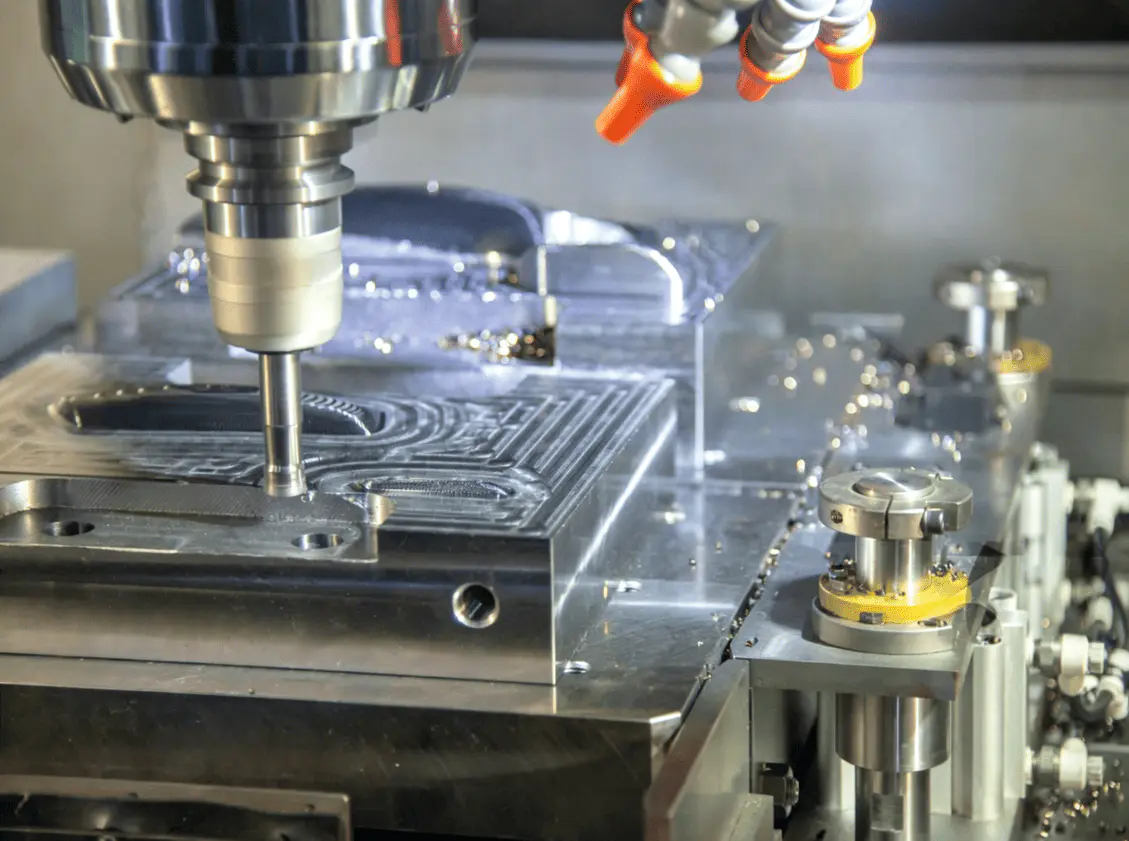
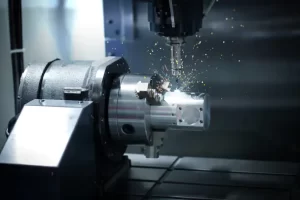
CNC machining plays a critical role in hybrid production systems. It is ideal for:
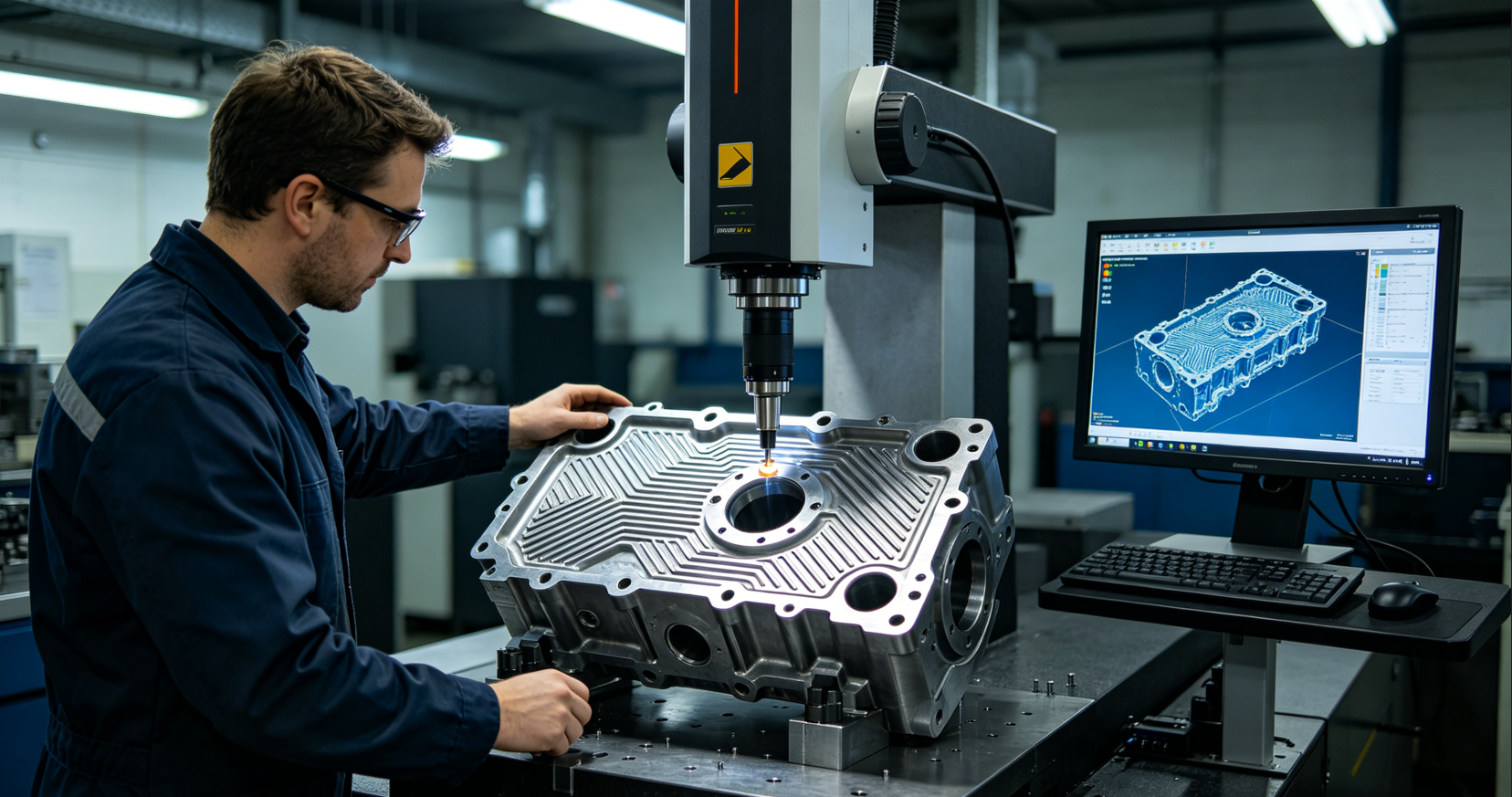
CNC machining ensures dimensional accuracy and repeatability, making it essential for aerospace and medical-grade components.
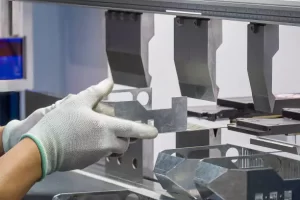
Sheet metal processing is a fundamental manufacturing method that plays a critical role in producing durable, lightweight, and cost-effective metal components across a wide range of industries. It involves key operations such as cutting, bending, stamping, and welding to transform flat metal sheets into functional parts and complex structures. This process is highly valued for its scalability, making it suitable for both rapid prototyping and large-scale production. In addition, sheet metal fabrication offers excellent strength-to-weight performance, design flexibility, and material efficiency, which makes it widely used in automotive body structures, electronic enclosures, industrial machinery, and various equipment housings where reliability and consistency are essential.
CNC fabrication integrates both CNC machining and sheet metal techniques into a unified workflow. This allows manufacturers to:
CNC fabrication integrates both CNC machining and sheet metal processes into a unified manufacturing workflow, enabling the production of highly complex and functionally optimized components. This approach allows manufacturers to seamlessly combine precision-machined features with robust sheet metal structures, improving both design efficiency and production consistency. This combination is especially powerful for industries requiring both structural strength and micron-level precision, such as aerospace, medical devices, and high-performance industrial equipment, where even the smallest dimensional deviation can impact safety, functionality, and long-term reliability, while the overall structure must still withstand demanding mechanical and environmental conditions.
Combining CNC machining and sheet metal processing reduces production cycles, enabling rapid prototyping and faster time-to-market.
Engineers can design without limitations, knowing both precision parts and structural components can be manufactured seamlessly.
Hybrid workflows optimize material usage and reduce machining time, making both small-batch and large-scale production more economical.
CNC machining ensures accuracy, while sheet metal processing ensures durability and scalability.
Hybrid manufacturing is widely used across:
Medical Device Enclosure: A diagnostic machine's housing is formed from a beautiful, durable sheet metal chassis (sheet metal processing), while the internal mounting frames for delicate optics and circuit boards are precision-machined (CNC fabrication) to ensure exact alignment.
Automotive Sensor Bracket: A lightweight bracket for a safety sensor is laser-cut and bent from aluminum sheet for the main structure. A small, machined stainless steel collar is then welded on to create a precise, durable mount for the sensor itself.
Aerospace Component: A complex avionics box uses a formed sheet metal shell for weight savings and EMI shielding. The internal connector interfaces and mounting points are CNC fabrication detailed to meet stringent aerospace tolerances.
Hybrid manufacturing is redefining modern production by combining the strengths of CNC machining, CNC fabrication, and sheet metal processing. This integrated approach allows manufacturers to achieve higher precision, better scalability, and faster production cycles.
As industries continue to evolve, hybrid manufacturing will remain a key driver of innovation and efficiency in global metal fabrication.
Explore aerospace sheet metal processing, from precision cutting and forming to welding and finishing, for reliable custom aerospace components.
Discover how advanced CNC technology is transforming custom machined parts with higher precision, faster production, flexible volumes, and smarter manufacturing.
Learn how CNC machining tolerances impact automotive component accuracy and reliability, including standards, key factors, and precision manufacturing solutions.
Discover how precision machining supports HPP equipment manufacturing with high-quality custom metal parts, CNC machining, and sheet metal fabrication solutions.
Email to this supplier
Author:
Ms. CTT TECHNOLOGY (UK) LIMITED
E-mail:
Phone/WhatsApp:

Privacy statement: Your privacy is very important to Us. Our company promises not to disclose your personal information to any external company with out your explicit permission.