





Send Message
Privacy statement: Your privacy is very important to Us. Our company promises not to disclose your personal information to any external company with out your explicit permission.


Precision manufacturing has become increasingly demanding as industries such as aerospace, medical devices, automotive, electronics, and industrial equipment continue to require complex components with extremely tight specifications. While dimensional measurements have traditionally been sufficient for many parts, today's high-performance applications require much more than simple length, width, and diameter measurements.
This is where GD&T in CNC machining becomes essential.
Geometric Dimensioning and Tolerancing (GD&T) provides a universal engineering language that clearly defines the allowable variation of part geometry while maintaining proper function, assembly, and interchangeability. When combined with advanced CNC machining technology, GD&T enables manufacturers to consistently achieve superior CNC machining precision while optimizing production efficiency.
In this guide, we'll explain everything you need to know about GD&T, its symbols, advantages, practical applications, and how it works together with CNC machining tolerances to produce high-quality precision parts.
Geometric Dimensioning and Tolerancing (GD&T) is an internationally recognized engineering language used to define the size, form, orientation, location, and profile of manufactured parts.
Unlike conventional dimensioning, which mainly specifies linear measurements, GD&T communicates how features must relate to one another to ensure proper function.
Instead of simply stating:
GD&T can additionally specify:
This allows manufacturers to understand not only the dimensions but also the functional requirements of each feature.
Modern CNC machines are capable of producing highly accurate components, but achieving consistent quality depends on clear engineering requirements.
Without GD&T, different manufacturers may interpret drawings differently, resulting in:
Using GD&T in CNC machining eliminates ambiguity and ensures every part is produced according to its intended function.
The benefits include:
Before discussing GD&T further, it's important to understand CNC machining tolerances.
Tolerance defines the acceptable variation between the designed dimension and the manufactured dimension.
For example:
Nominal diameter:
20.00 mm
Tolerance:
±0.02 mm
Acceptable size:
19.98–20.02 mm
The tighter the tolerance, the greater the machining challenge.
Typical CNC machining tolerances include:
| Industry | Typical Tolerance |
|---|---|
| General machining | ±0.10 mm |
| Precision machining | ±0.05 mm |
| Medical components | ±0.01 mm |
| Aerospace parts | ±0.005 mm or tighter |
However, dimensional tolerances alone cannot guarantee functional performance, which is why GD&T is widely adopted.
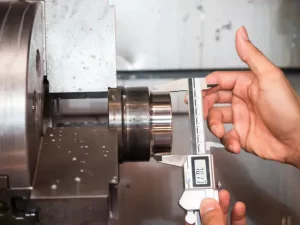
High CNC machining precision involves more than achieving exact dimensions.
A part may have the correct diameter but still fail if:
GD&T controls these geometric characteristics.
For example:
A bearing housing requires:
Without GD&T, each manufacturer might produce slightly different results despite meeting dimensional tolerances.
GD&T ensures every critical feature performs as intended.
Below are some of the most frequently used GD&T controls.
Controls how flat a surface must be.
Applications:
Benefits:
Ensures a line or axis remains straight within a specified tolerance.
Used for:
Controls the roundness of cylindrical features.
Common in:
Combines:
Essential for:
One of the most important GD&T controls.
It defines how accurately holes, slots, or other features must be located relative to datums.
Widely used for:
Controls the relationship between two surfaces.
Common applications:
Ensures two surfaces remain exactly 90 degrees.
Critical for:
Controls the overall shape of complex surfaces.
Ideal for:
Datums are the reference features used to establish measurement origins.
Think of datums as the coordinate system for manufacturing and inspection.
A drawing may define:
Datum A = Bottom surface
Datum B = Side face
Datum C = Center bore
All other measurements reference these datums.
Accurate datum selection significantly improves machining consistency.
Many industries rely heavily on GD&T in CNC machining.
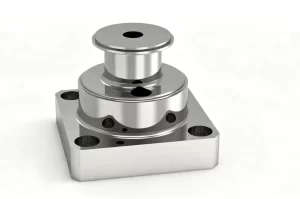
To maximize manufacturing efficiency, engineers should follow these guidelines:
Over-specifying tolerances increases machining and inspection costs.
Focus GD&T on functional features.
Select datum surfaces that represent how the part will be assembled or used.
Design realistic tolerances based on CNC machine capability and material characteristics.
Communication between design engineers and CNC manufacturers helps optimize manufacturability before production begins.
Coordinate Measuring Machines (CMMs), optical scanners, and advanced metrology systems ensure GD&T requirements are accurately verified.
Even experienced designers sometimes misuse GD&T.
Common errors include:
Proper GD&T training helps reduce these issues while lowering production costs.
Even the best GD&T drawings require an experienced manufacturing partner.
When selecting a CNC machining supplier, look for:
An experienced manufacturer can recommend design improvements that reduce costs without sacrificing performance.
At CTT Technology, precision manufacturing is supported by advanced CNC equipment, rigorous quality control, and extensive engineering expertise. We specialize in rapid prototyping, low-volume production, and high-volume manufacturing of custom sheet metal and precision-machined components across industries including automotive, aerospace, medical devices, electronics, industrial equipment, and life science instrumentation.
Our engineering team works closely with customers to interpret GD&T requirements, optimize CNC machining tolerances, and deliver consistent CNC machining precision throughout every stage of production. From simple brackets to complex welded assemblies, we provide reliable, cost-effective solutions tailored to your exact specifications.
As product designs become more complex and quality expectations continue to rise, GD&T in CNC machining has become an essential tool for ensuring accuracy, consistency, and manufacturability. By clearly defining geometric requirements beyond basic dimensions, GD&T helps engineers communicate design intent, reduce production errors, and improve assembly performance.
When paired with advanced CNC technology and an experienced manufacturing partner, optimized CNC machining tolerances and superior CNC machining precision lead to higher-quality components, lower production costs, and more reliable products. Whether you're developing a prototype or scaling to mass production, understanding and applying GD&T is a key step toward achieving precision manufacturing excellence.
Discover how precision machining and custom sheet metal fabrication improve battery PACK enclosures, structural integrity, and manufacturing consistency.
Discover how CNC machining supports cell culture and bioprocessing equipment with precision components, custom sheet metal fabrication, and scalable manufacturing.
Explore precision machining for biopharmaceutical equipment, including material selection, design optimization, sheet metal fabrication, and quality control.
Explore aerospace sheet metal processing, from precision cutting and forming to welding and finishing, for reliable custom aerospace components.
Email to this supplier
Author:
Ms. CTT TECHNOLOGY (UK) LIMITED
E-mail:
Phone/WhatsApp:

Privacy statement: Your privacy is very important to Us. Our company promises not to disclose your personal information to any external company with out your explicit permission.