







Send Message
Privacy statement: Your privacy is very important to Us. Our company promises not to disclose your personal information to any external company with out your explicit permission.


CNC machining is widely used across industries such as aerospace, medical devices, automotive, electronics, and industrial equipment because of its precision, consistency, and flexibility. However, the total cost of CNC machining can vary significantly depending on several manufacturing factors.
Understanding what drives CNC machining costs helps engineers, purchasing teams, and product developers make better decisions during product design and production planning. By optimizing materials, part geometry, machining strategies, and production volume, manufacturers can reduce expenses while maintaining high quality.
This guide explains the major factors that influence CNC machining costs and provides practical methods to improve manufacturing efficiency.
Material choice is one of the most important cost drivers in CNC machining. Different materials vary in price, machinability, hardness, and tool wear characteristics.
Common CNC Materials and Their Cost Impact
| Material | Cost Level | Machinability | Typical Applications |
|---|---|---|---|
| Aluminum | Low | Excellent | Aerospace, electronics |
| Stainless Steel | Medium-High | Moderate | Medical, food equipment |
| Titanium | High | Difficult | Aerospace, implants |
| Brass | Medium | Excellent | Precision fittings |
| Plastics (POM, PTFE, ABS) | Low-Medium | Easy | Consumer products |
Materials that are harder or more heat-resistant require slower cutting speeds and increase tool wear, leading to longer machining times and higher production costs.
Tips to Reduce Material Costs
The geometry of a component directly affects machining difficulty and production time.
Features That Increase CNC Costs
Highly complex parts often require advanced 5-axis machining, specialized tooling, or additional programming time.
Optimizing part design is one of the most effective ways to reduce CNC machining costs. Simplifying complex geometries, using standard hole and thread sizes, increasing internal corner radii, and minimizing unnecessary cosmetic features can significantly improve machinability and reduce production time. A well-designed part not only lowers tooling and setup requirements but also improves manufacturing efficiency, consistency, and overall cost-effectiveness.
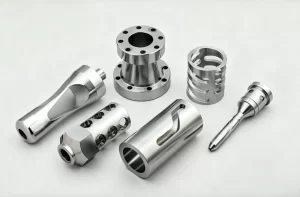
Machine runtime is one of the largest contributors to CNC machining costs. Longer machining cycles increase labor, electricity, and equipment usage costs.
Factors Affecting Machining Time
Reducing unnecessary operations can significantly improve production efficiency.
How to Reduce Machining Time
Modern CNC shops often use CAM software and automation systems to minimize cycle time.
Tighter tolerances increase manufacturing costs because they require slower machining speeds, more precise equipment, and additional quality inspections.
Typical Tolerance Cost Relationship
| Tolerance Level | Cost Impact |
|---|---|
| ±0.1 mm | Low |
| ±0.05 mm | Moderate |
| ±0.01 mm | High |
| ±0.005 mm | Very High |
Reducing tolerance-related costs starts with applying precision requirements only where they are truly necessary. Using standard machining tolerances for non-critical features can significantly improve production efficiency and reduce inspection complexity. Avoiding excessive geometric dimensioning and tolerancing (GD&T) also helps simplify machining processes and minimizes setup adjustments. A balanced tolerance strategy allows manufacturers to maintain functional performance while improving manufacturability and controlling overall production costs.
Surface finish requirements can significantly affect CNC machining costs because many finishing processes require additional labor, equipment, and production time. Depending on the application, manufacturers may need to perform anodizing, polishing, bead blasting, powder coating, electroplating, or passivation to improve appearance, corrosion resistance, or surface durability. These secondary operations often increase lead times and add extra quality control requirements.
To control manufacturing costs, companies should select surface finishes based on actual functional and aesthetic needs rather than over-specifying cosmetic treatments. Reducing unnecessary post-processing steps, simplifying surface texture requirements, and choosing machining-friendly finishes can help improve efficiency while maintaining product quality. A practical surface finishing strategy allows manufacturers to balance performance, appearance, and overall production cost.
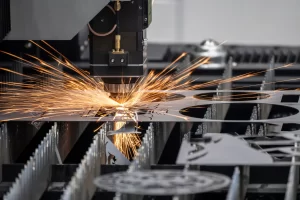
Production quantity has a major influence on per-part pricing.
Low-Volume vs High-Volume Production
| Production Type | Cost Characteristics |
|---|---|
| Prototype | High unit cost |
| Low-volume production | Moderate flexibility |
| Mass production | Lower unit cost |
In low-volume manufacturing, setup and programming costs are distributed across fewer parts, resulting in higher individual component costs.
Strategies for Better Cost Efficiency
Efficient production planning improves scalability and long-term manufacturing efficiency.
Advanced CNC equipment and specialized cutting tools can greatly improve machining capability, precision, and efficiency, but they also increase manufacturing costs. Processes such as 5-axis machining, Swiss machining, micro-machining, and hard metal cutting often require high-end machines, custom tooling, additional programming, and more frequent tool maintenance or replacement. To reduce unnecessary expenses, manufacturers should use standard tooling whenever possible, design parts compatible with common tool sizes, and avoid overly complex machining requirements unless they are essential for product performance.
Precision industries such as aerospace, medical, and semiconductor manufacturing require strict inspection procedures.
Common Inspection Methods
Comprehensive quality control improves reliability but adds additional production costs.
Reducing Inspection Costs
Strict inspection and quality control procedures can significantly improve product reliability, dimensional accuracy, and manufacturing consistency, especially in industries with extremely high precision and safety requirements. Comprehensive testing helps identify defects early, reduce the risk of product failure, and ensure compliance with industry standards and customer specifications. However, additional inspection processes also require advanced measurement equipment, skilled technicians, longer production cycles, and more documentation management, all of which contribute to higher overall manufacturing costs.
Manufacturing location and supply chain conditions can have a major impact on CNC machining costs. Differences in labor rates, raw material availability, transportation expenses, tariffs, and regional manufacturing capabilities all influence the final production price. In addition, long shipping distances and unstable supply chains may increase lead times and inventory risks, especially for projects requiring tight delivery schedules or specialized materials. Choosing the right manufacturing partner is not only about finding the lowest price, but also about balancing quality, communication efficiency, production capacity, and long-term supply chain stability to achieve reliable and cost-effective manufacturing.
Here are several practical ways to lower CNC machining expenses without sacrificing quality:
Design Optimization
Material Efficiency
Production Planning
Supplier Collaboration
Early collaboration often prevents expensive redesigns later in the project.
CNC machining costs are influenced by many interconnected factors, including material selection, part complexity, machining time, tolerances, surface finishing, tooling, and production volume.
Understanding these cost drivers allows manufacturers and product designers to make informed decisions that improve efficiency and reduce unnecessary expenses. By applying design optimization principles and working with experienced machining partners, companies can achieve both high precision and cost-effective production.
As manufacturing technologies continue evolving, smarter CNC strategies, automation, and digital manufacturing tools will play an increasingly important role in controlling production costs while maintaining exceptional quality.
Learn how DFM improves CNC bending accuracy, reduces defects, and lowers production costs with practical sheet metal design tips.
Learn everything about GD&T in CNC machining, including symbols, benefits, and best practices. Improve CNC machining precision and optimize CNC machining tolerances.
Learn essential sheet metal design guidelines for bends, DFM principles, and aluminum part fabrication. Discover how CNC bending, precision sheet metal processing, and CNC sheet metal bending improve manufacturability, accuracy, and production efficiency.
Learn how Design for Manufacturing (DFM) reduces production costs, improves quality, and optimizes sheet metal fabrication, laser cutting tolerances, and CNC machining.
Email to this supplier
Author:
Ms. CTT TECHNOLOGY (UK) LIMITED
E-mail:
Phone/WhatsApp:

Privacy statement: Your privacy is very important to Us. Our company promises not to disclose your personal information to any external company with out your explicit permission.