










Send Message
Privacy statement: Your privacy is very important to Us. Our company promises not to disclose your personal information to any external company with out your explicit permission.


In precision manufacturing, surface finish is a critical quality parameter that directly affects part performance, durability, friction behavior, and functional reliability. Industries such as automotive systems, medical devices, life science equipment, and new energy applications require highly controlled surface quality to ensure stable operation and long service life.
As manufacturing precision continues to improve, surface finish standards have become an essential part of engineering design, process control, and quality assurance systems.
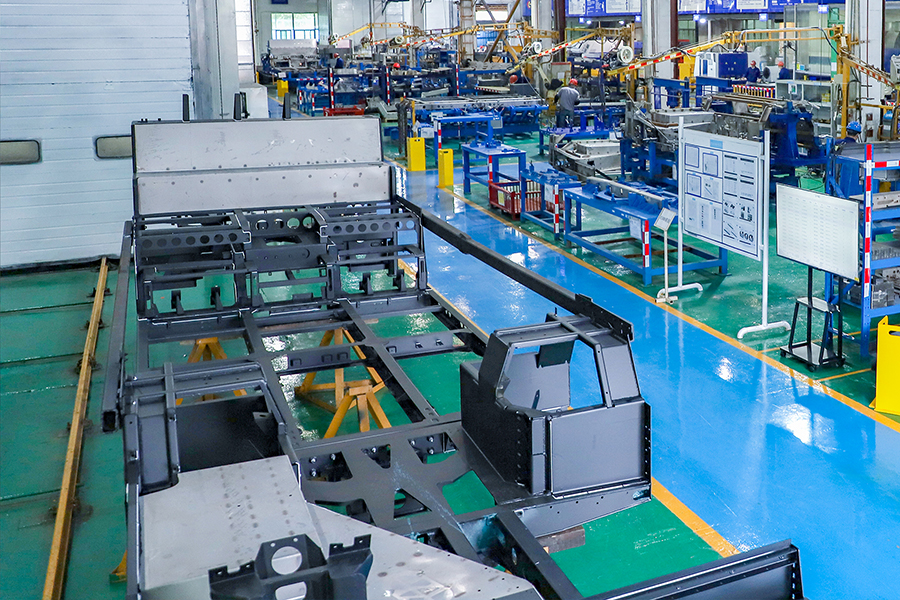
With strong manufacturing capabilities across multiple industries and long-term cooperation with global leading enterprises, CTT Technology delivers high-quality precision components supported by advanced CNC machining systems and intelligent manufacturing platforms.
Surface finish refers to the texture and smoothness of a machined surface after CNC processing. It is commonly measured using roughness parameters such as Ra (average roughness) and Rz (maximum profile height).
A smoother surface generally improves friction performance, sealing capability, and visual appearance, while a rougher surface may be required for coating adhesion or mechanical bonding.
Different industries define surface finish requirements based on functional needs and performance expectations.
Ra 3.2 μm – Standard machining finish for general industrial parts
Ra 1.6 μm – Medium finish for improved performance and appearance
Ra 0.8 μm – High-precision functional surfaces
Ra 0.4 μm or lower – Ultra-precision components for medical and aerospace applications
Selecting the correct surface finish level is essential for balancing performance, manufacturability, and production cost.
Automotive Industry: Surface finish affects wear resistance, friction performance, and assembly accuracy of components such as engine parts and chassis systems.
Medical Devices: Medical components require smooth, cleanable surfaces to ensure hygiene, biocompatibility, and safety in clinical applications.
Life Science Equipment: Precision instruments require stable and low-contamination surfaces to maintain measurement accuracy and reliability.
New Energy Systems: Battery and energy components require consistent surface quality to ensure electrical performance and structural stability.
Across all these industries, surface finish is directly linked to product safety and long-term reliability.
Surface finish quality is evaluated using specialized measurement technologies. Contact profilometers are commonly used to scan surface profiles and calculate parameters such as Ra and Rz. Optical inspection systems and 3D surface scanning technologies are also widely applied to provide more detailed surface analysis. In production environments, visual comparison against standard roughness samples may be used for quick verification. These combined methods ensure accurate, consistent, and reliable surface quality assessment in precision manufacturing.
Several machining and process parameters directly influence the final surface quality of CNC-machined parts. Controlling these factors is essential to achieving consistent, high-quality results in precision manufacturing.
Cutting Tool Condition and Geometry
The sharpness, coating, and geometric design of cutting tools significantly affect surface smoothness. Worn or improperly selected tools can cause rough surfaces, burrs, and dimensional inconsistencies.
Cutting Parameters (Feed Rate and Speed)
Feed rate and cutting speed play a critical role in determining surface finish. Higher feed rates often lead to rougher surfaces, while optimized cutting speeds help achieve smoother and more stable results.
Material Properties
Different materials respond differently to machining processes. Harder materials or those with uneven grain structures may result in more surface irregularities, requiring optimized machining strategies.
Machine Stability and Vibration
Machine rigidity and vibration control are key to maintaining surface quality. Excessive vibration during machining can create tool marks and reduce overall surface consistency.
Coolant and Machining Strategy
Proper coolant application helps reduce heat, minimize tool wear, and improve surface finish. Additionally, optimized machining strategies such as toolpath planning and step-over control can further enhance surface quality.
In modern precision manufacturing, surface finish optimization is increasingly driven by intelligent manufacturing systems. Unlike traditional experience-based machining, smart manufacturing integrates real-time data monitoring, process analysis, and adaptive control to ensure consistent surface quality across production batches.
By collecting machining data such as cutting force, spindle load, vibration, and temperature, systems can dynamically adjust machining parameters to reduce variation and improve stability. This data-driven approach minimizes human error and ensures more reliable surface finish control, especially in high-mix, low-volume production environments.
Integrated digital manufacturing platforms also improve coordination between engineering, production, and quality departments. Process parameters can be standardized, reused, and continuously optimized to enhance manufacturing consistency and efficiency.
Surface finish standards are a key factor in precision manufacturing, directly affecting product performance, durability, and reliability across industries such as automotive, medical, life science, and new energy.
Achieving stable surface quality requires a combination of optimized machining parameters, accurate measurement methods, and intelligent manufacturing systems. As manufacturing becomes more complex and data-driven, companies must adopt integrated production models to ensure consistent quality and efficiency.
With strong manufacturing capabilities across automotive components, medical devices, life science equipment, and new energy systems, CTT Technology delivers high-precision machining solutions supported by advanced CNC equipment, strict quality control systems, and intelligent manufacturing platforms. Through its CBS business system and long-term cooperation with global leading enterprises, CTT Technology ensures stable surface quality, reliable production performance, and scalable manufacturing capacity for global customers.
Learn how DFM improves CNC bending accuracy, reduces defects, and lowers production costs with practical sheet metal design tips.
Learn everything about GD&T in CNC machining, including symbols, benefits, and best practices. Improve CNC machining precision and optimize CNC machining tolerances.
Learn essential sheet metal design guidelines for bends, DFM principles, and aluminum part fabrication. Discover how CNC bending, precision sheet metal processing, and CNC sheet metal bending improve manufacturability, accuracy, and production efficiency.
Learn how Design for Manufacturing (DFM) reduces production costs, improves quality, and optimizes sheet metal fabrication, laser cutting tolerances, and CNC machining.
Email to this supplier
Author:
Ms. CTT TECHNOLOGY (UK) LIMITED
E-mail:
Phone/WhatsApp:

Privacy statement: Your privacy is very important to Us. Our company promises not to disclose your personal information to any external company with out your explicit permission.