









Send Message
Privacy statement: Your privacy is very important to Us. Our company promises not to disclose your personal information to any external company with out your explicit permission.


In today’s highly competitive manufacturing industry, companies are constantly searching for ways to reduce CNC machining costs while maintaining high product quality and precision. Whether in automotive components, life science equipment, medical instruments, or new energy systems, manufacturers must balance production efficiency, reliability, and cost control to remain competitive in global markets.
Reducing machining costs does not simply mean choosing the cheapest materials or cutting production steps. Instead, it requires a strategic combination of design optimization, intelligent manufacturing, process control, and supply chain management. Companies with advanced manufacturing systems and strong engineering capabilities are better positioned to improve efficiency while delivering consistent, high-quality products.
As a manufacturing partner serving multiple industries and collaborating with global Fortune 500 companies, CTT Technology continues to enhance production innovation through its CBS business management platform and intelligent manufacturing systems, helping customers achieve reliable and cost-effective precision manufacturing solutions.
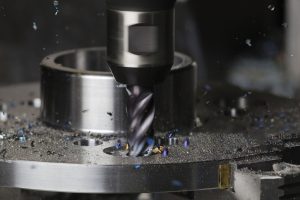
One of the most effective ways to reduce CNC machining costs is improving design for manufacturability (DFM). Complex geometries, deep cavities, sharp internal corners, and unnecessary cosmetic features can significantly increase machining difficulty, setup time, and tooling requirements.
Designing parts with standard hole sizes, reasonable tolerances, and machining-friendly structures can greatly improve production efficiency. Simplified designs reduce machining time, lower tool wear, and minimize the number of setups required during production. Early collaboration between engineers and manufacturers also helps identify potential cost-saving opportunities before production begins.
Material selection directly impacts machining efficiency, tooling life, and overall manufacturing cost. While high-performance materials may offer excellent strength or corrosion resistance, they are not always necessary for every application.
Choosing materials based on actual functional requirements can help control costs without affecting product performance. For example, aluminum alloys are often more cost-effective and easier to machine than stainless steel or titanium. In addition, selecting standard stock materials can reduce procurement costs and minimize material waste during machining.
A balanced material strategy allows manufacturers to achieve the required mechanical properties while maintaining production efficiency.
Machining time is one of the largest contributors to CNC production costs. Longer cycle times increase machine usage, labor costs, and energy consumption. Improving machining efficiency is essential for reducing overall manufacturing expenses.
Modern CNC manufacturers use advanced CAM software, optimized toolpaths, high-speed machining strategies, and automated process monitoring to shorten production cycles. Reducing unnecessary tool changes and improving fixture design can also enhance operational efficiency.
By implementing intelligent manufacturing systems and automated production management, manufacturers can achieve more stable processes, reduce downtime, and improve overall productivity.
Tighter tolerances often require slower cutting speeds, additional inspection processes, and higher-precision equipment, all of which increase manufacturing costs. However, not every feature on a part requires ultra-high precision.
Manufacturers can reduce costs by applying strict tolerances only to critical functional areas while using standard tolerances for non-essential features. A balanced tolerance strategy improves manufacturability, simplifies production processes, and reduces inspection complexity without compromising product quality or performance.
Reasonable tolerance planning is especially important in industries such as medical devices, automotive systems, and precision instruments, where both performance and cost efficiency are critical.
Secondary operations such as polishing, anodizing, electroplating, heat treatment, and coating can add significant time and expense to CNC manufacturing projects. While surface treatments are often necessary for appearance, corrosion resistance, or durability, over-specifying finishing requirements can unnecessarily increase production costs.
Manufacturers should carefully evaluate whether each secondary process is truly required for the product’s function and application environment. Simplifying surface finish specifications and reducing unnecessary cosmetic requirements can help shorten lead times and improve overall manufacturing efficiency.
Automation has become a key factor in reducing CNC machining costs while maintaining consistent quality. Intelligent manufacturing systems can improve scheduling efficiency, optimize machine utilization, monitor production status in real time, and reduce human error.
Companies with advanced digital manufacturing capabilities are able to improve process stability, shorten delivery cycles, and achieve more efficient large-scale production. Integrated business management systems also enhance supply chain coordination, quality traceability, and operational transparency.
By combining automation with precision manufacturing expertise, companies can deliver reliable products with higher production efficiency and lower long-term operational costs.
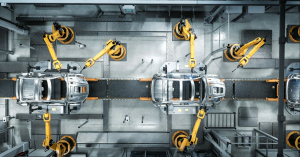
Efficient supply chain management plays an important role in cost control. Poor planning, unstable material supply, and inefficient production scheduling can lead to delays, inventory waste, and increased manufacturing expenses.
Manufacturers can improve efficiency by standardizing components, optimizing production batches, and strengthening supplier collaboration. Working with experienced manufacturing partners also helps reduce communication delays and improve project execution.
Stable supply chain systems are particularly important for industries with strict quality requirements and fast product development cycles.
Quality control is essential in precision manufacturing, especially for industries such as life sciences, medical equipment, automotive systems, and new energy applications. However, excessive inspection processes can increase production time and operating costs.
A more effective approach is establishing stable manufacturing processes that reduce variability and prevent defects before they occur. Advanced inspection technologies, process automation, and standardized quality management systems help manufacturers maintain consistent quality while improving efficiency.
Reliable quality control systems not only reduce rework and scrap rates but also improve customer confidence and long-term product reliability.
Reducing CNC machining costs without sacrificing quality requires a holistic approach that combines smart engineering decisions with advanced manufacturing capabilities. From design optimization and material selection to process efficiency, automation, and quality control, every stage of production plays a critical role in achieving cost-effective and reliable outcomes.
With strong manufacturing capabilities across automotive chassis and components, life science equipment, medical instruments, and new energy industries, CTT Technology is well-positioned to support customers with high-precision and scalable production solutions. By leveraging its CBS business system management platform and intelligent manufacturing system, the company continuously improves production efficiency, process stability, and quality consistency.
Through long-term cooperation with over 500 leading global enterprises, CTT Technology has developed deep expertise in delivering complex, high-value projects with strict quality requirements. This combination of engineering capability, digital manufacturing, and global experience enables CTT Technology to help customers reduce CNC machining costs while maintaining exceptional product quality and reliability in demanding industrial applications.
Discover how CTT Technology manufactures precision automotive parts—from engineering design to mass production. Explore our expertise in heavy truck components, bus chassis panels, CNC machining services, and custom CNC parts.
Explore compliance-driven precision manufacturing for medical devices, including custom production, full quality control, and engineering support for imaging, diagnostics, and life science equipment.
Discover precision metal parts for robotics with custom sheet metal fabrication, CNC machining, and scalable manufacturing solutions.
Benefiting from the booming biopharmaceutical industry and accelerated domestic substitution, the market for core equipment solutions for life sciences is experiencing rapid growth. This article focuses on global and Chinese market size forecasts, dissecting the core drivers of industry growth to help seize industry development opportunities.
Email to this supplier
Author:
Ms. CTT TECHNOLOGY (UK) LIMITED
E-mail:
Phone/WhatsApp:

Privacy statement: Your privacy is very important to Us. Our company promises not to disclose your personal information to any external company with out your explicit permission.