








Send Message
Privacy statement: Your privacy is very important to Us. Our company promises not to disclose your personal information to any external company with out your explicit permission.


When planning a manufacturing project, one of the most important considerations is cost. However, cost is only one part of the decision—factors such as production volume, part complexity, material selection, and required tolerances are equally critical. Two of the most common production methods in modern manufacturing are CNC machining and casting. Each offers distinct advantages and limitations, as well as different cost structures that can significantly affect the overall project budget.
CNC machining provides high precision, flexibility, and is ideal for prototypes and small-to-medium batch production. Casting, on the other hand, is well-suited for large-scale production and complex geometries where the initial investment in molds can be spread over thousands of units. By understanding the differences between these two manufacturing techniques, engineers and product designers can make informed choices that optimize both cost and quality, avoid unnecessary delays, and ensure a smooth production process from prototype to full-scale manufacturing.
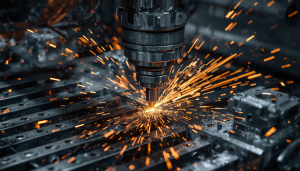
CNC (Computer Numerical Control) machining is a subtractive manufacturing process where material is removed from a solid block using precision cutting tools. It is widely used in industries such as aerospace, automotive, medical devices, and industrial equipment.
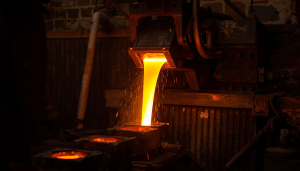
Casting is a manufacturing process in which molten metal or plastic is poured into a mold and allowed to solidify. Common casting methods include sand casting, die casting, and investment casting. Casting is often used for automotive parts, machinery components, and decorative items.
| Factor | CNC Machining | Casting |
|---|---|---|
| Initial Tooling | Low | High |
| Per-Unit Cost (Low Volume) | Moderate | High |
| Per-Unit Cost (High Volume) | High | Low |
| Material Waste | Moderate | Low |
| Lead Time | Short | Long |
Selecting the appropriate manufacturing method is critical for ensuring cost efficiency, product quality, and timely delivery. The decision largely depends on factors such as production volume, part complexity, material choice, and required tolerances. Here’s a detailed guide to help you make the right choice:
Ultimately, the choice between CNC machining and casting depends on balancing cost, precision, and production needs:
By carefully evaluating your project’s volume, part complexity, material requirements, and timeline, you can select the method that optimizes both cost efficiency and product quality.
Both CNC machining and casting offer unique benefits depending on your production needs. CNC machining provides precision and flexibility, making it suitable for smaller batches or intricate designs. Casting is more cost-effective for large-scale production and parts with complex geometries. Choosing the right manufacturing method can significantly impact cost, quality, and time-to-market for your product.

Explore aerospace sheet metal processing, from precision cutting and forming to welding and finishing, for reliable custom aerospace components.
Discover how advanced CNC technology is transforming custom machined parts with higher precision, faster production, flexible volumes, and smarter manufacturing.
Learn how CNC machining tolerances impact automotive component accuracy and reliability, including standards, key factors, and precision manufacturing solutions.
Discover how precision machining supports HPP equipment manufacturing with high-quality custom metal parts, CNC machining, and sheet metal fabrication solutions.
Email to this supplier
Author:
Ms. CTT TECHNOLOGY (UK) LIMITED
E-mail:
Phone/WhatsApp:

Privacy statement: Your privacy is very important to Us. Our company promises not to disclose your personal information to any external company with out your explicit permission.