







Send Message
Privacy statement: Your privacy is very important to Us. Our company promises not to disclose your personal information to any external company with out your explicit permission.


As global manufacturing continues to evolve toward higher efficiency and tighter tolerances, CNC precision machining has become a core technology for mass production across industries such as automotive, aerospace, medical devices, electronics, and industrial equipment.
Mass production not only requires high output capacity but also demands consistent quality, dimensional accuracy, and stable production efficiency. To remain competitive, manufacturers must adopt advanced CNC precision machining strategies that improve productivity while maintaining strict quality standards.
This article explores key CNC machining strategies that help manufacturers optimize mass production performance and achieve reliable large-scale manufacturing.
In large-scale manufacturing, even small dimensional deviations can lead to assembly issues, product failures, material waste, and increased production costs. Maintaining precision across thousands of parts is far more challenging than producing small prototype batches.
Precision machining strategies help manufacturers:
Stable machining processes are essential for maintaining both product quality and manufacturing profitability in high-volume production environments.
Process standardization is one of the most important foundations of efficient CNC mass production.
Standardized machining procedures help ensure consistent results across multiple production batches and machine operators. This includes:
By reducing process variability, manufacturers can improve repeatability and reduce production errors.
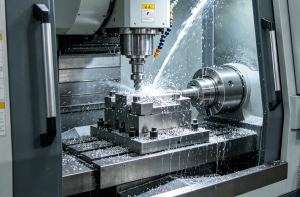
Efficient toolpath programming directly affects machining speed, surface quality, and tool life.
Advanced CAM software allows manufacturers to optimize cutting paths for:
High-speed machining strategies and adaptive toolpaths also help improve efficiency while maintaining dimensional accuracy during continuous production.
Automation plays a critical role in modern CNC mass production.
Manufacturers increasingly use automated systems such as:
Smart manufacturing systems can collect production data, monitor machine conditions, and detect process abnormalities in real time.
Automation helps manufacturers reduce labor costs, minimize downtime, and improve overall production consistency.
Tool performance has a direct impact on machining precision and production efficiency.
Effective tool management strategies include:
Predictive tool management helps prevent unexpected tool failures that could interrupt mass production or damage parts.
Stable workholding is essential for maintaining machining accuracy during high-volume production.
Well-designed fixtures help:
Custom fixtures and modular workholding systems are commonly used to improve production efficiency and consistency.
Multi-axis CNC machining allows manufacturers to process complex geometries more efficiently.
Compared with traditional 3-axis machining, 4-axis and 5-axis machining offer several advantages:
Multi-axis systems are especially valuable for industries requiring high precision and complex component designs.
Maintaining quality consistency is critical in CNC mass production.
Modern manufacturers implement in-process inspection systems to monitor machining accuracy throughout production rather than relying only on final inspection.
Common quality control methods include:
Early defect detection helps reduce scrap rates and improve overall manufacturing stability.
Material properties significantly affect machining efficiency and tool performance.
Choosing materials with suitable machinability can help:
Manufacturers must balance material strength, durability, and machining performance when selecting materials for mass production.
Cycle time optimization is one of the most effective ways to improve mass production efficiency.
Manufacturers commonly reduce cycle time by:
Even small reductions in machining cycle time can significantly improve overall production capacity during large-scale manufacturing.
Modern CNC manufacturing increasingly relies on digital production analysis and data-driven optimization.
By analyzing machining data, manufacturers can identify inefficiencies related to:
Industrial IoT systems and smart manufacturing technologies allow manufacturers to continuously optimize production performance and improve operational efficiency.
As manufacturing technologies continue to advance, CNC precision machining is becoming more automated, intelligent, and interconnected.
Emerging technologies such as AI-assisted machining, digital twins, predictive maintenance, and advanced automation systems are helping manufacturers achieve higher precision, faster production speeds, and lower operating costs.
Future CNC mass production will increasingly focus on flexible manufacturing, real-time process optimization, and fully integrated smart factory systems.
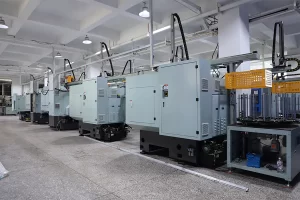
CNC precision machining plays a critical role in modern mass production by ensuring dimensional accuracy, production efficiency, and consistent product quality. Through strategies such as process standardization, automation, optimized tooling, advanced inspection systems, and smart manufacturing integration, CNC precision machining plant can significantly improve production performance while maintaining strict quality standards.
As global competition continues to increase, adopting advanced CNC machining strategies will remain essential for achieving efficient, reliable, and scalable manufacturing operations. CTT Technology provides custom CNC precision machining solutions for high-volume production. Our machining services support a wide range of industries, including automotive, electronics, medical devices, aerospace, and industrial equipment. From simple precision parts to complex machined assemblies, we deliver high-quality, high-precision customized solutions tailored to specific project requirements. With advanced manufacturing capabilities, strict quality control systems, and efficient production management, we are committed to helping global customers achieve reliable, scalable, and cost-effective manufacturing results.
Explore precision machining for biopharmaceutical equipment, including material selection, design optimization, sheet metal fabrication, and quality control.
Explore aerospace sheet metal processing, from precision cutting and forming to welding and finishing, for reliable custom aerospace components.
Discover how advanced CNC technology is transforming custom machined parts with higher precision, faster production, flexible volumes, and smarter manufacturing.
Learn how CNC machining tolerances impact automotive component accuracy and reliability, including standards, key factors, and precision manufacturing solutions.
Email to this supplier
Author:
Ms. CTT TECHNOLOGY (UK) LIMITED
E-mail:
Phone/WhatsApp:

Privacy statement: Your privacy is very important to Us. Our company promises not to disclose your personal information to any external company with out your explicit permission.